- Animals
- ›Molluscs
- ›Gastropods
- ›Heterobranchs
- ›Euthyneura
- ›Tectipleura
- ›Sea Hares and Akera Snails
- ›Aplysioidea
- ›Seahares
- ›Aplysia
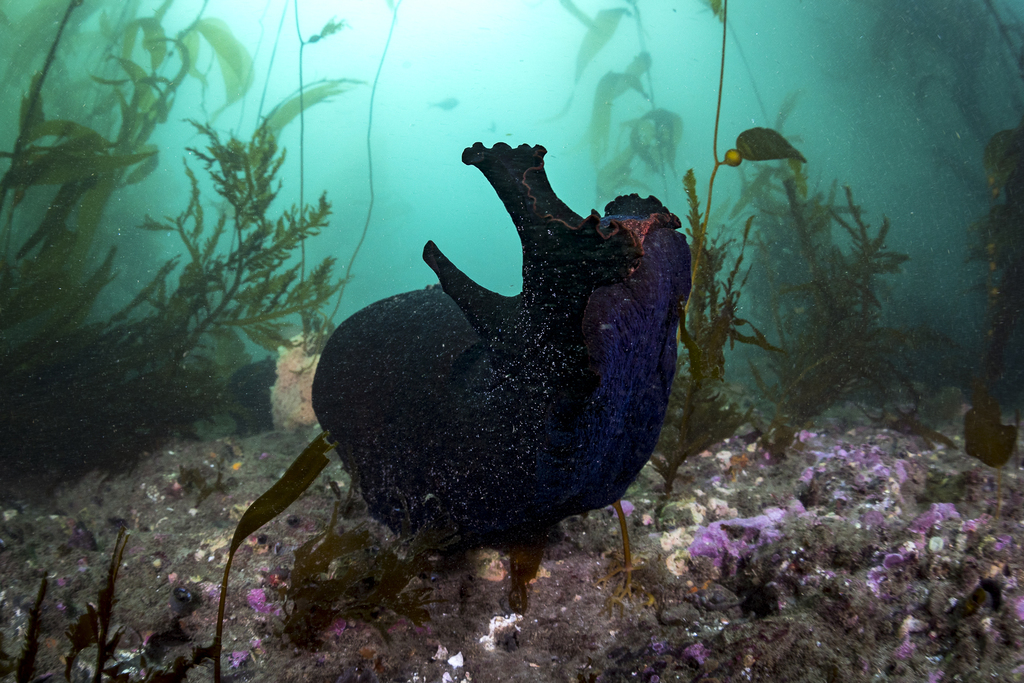
Black Seahare
Aplysia vaccaria
Aplysia vaccaria, also known as the black sea hare and California black sea hare, is a species of extremely large sea slug, a marine, opisthobranch, gastropod mollusk in the family Aplysiidae.
It is the largest sea slug species.
From the article Aplysia vaccaria on Wikipedia (CC BY-SA), quoted section by section
Description
The black sea hare can grow to be very large; the longest recorded specimen measured 99 cm (39 in) when crawling (thus fully extended), and weighed nearly 14 kg (31 lb). Unlike Aplysia californica, the body of this species is relatively firm, and the parapodia are joined behind the siphon. Unlike many other members of the same family and genus, this species is incapable of producing ink.
Range & habitat
This sea hare species lives in the northeast Pacific Ocean off California, United States, and Baja California, Mexico, including the Gulf of California.
Wikipedia: “Distribution”
What it does
All Aplysia species are herbivorous. This species eats brown seaweeds and kelp, which give the animal its typically very dark coloration.
Wikipedia: “Feeding habits”
Where it lives
Recorded sightings
—
geo-referenced records in GBIF, from museums, herbaria and field observers.
Drag the globe to turn it. Dots are where records exist, not a range map; darker means more records.
In the stacks
Searching the stacks…
Every page naming Aplysia vaccaria in the Biodiversity Heritage Library →
This page is assembled live from iNaturalist, GBIF, Wikipedia, the Source Library and the Internet Archive. It is not yet part of the hand-edited codex. iNaturalist taxon 49857.