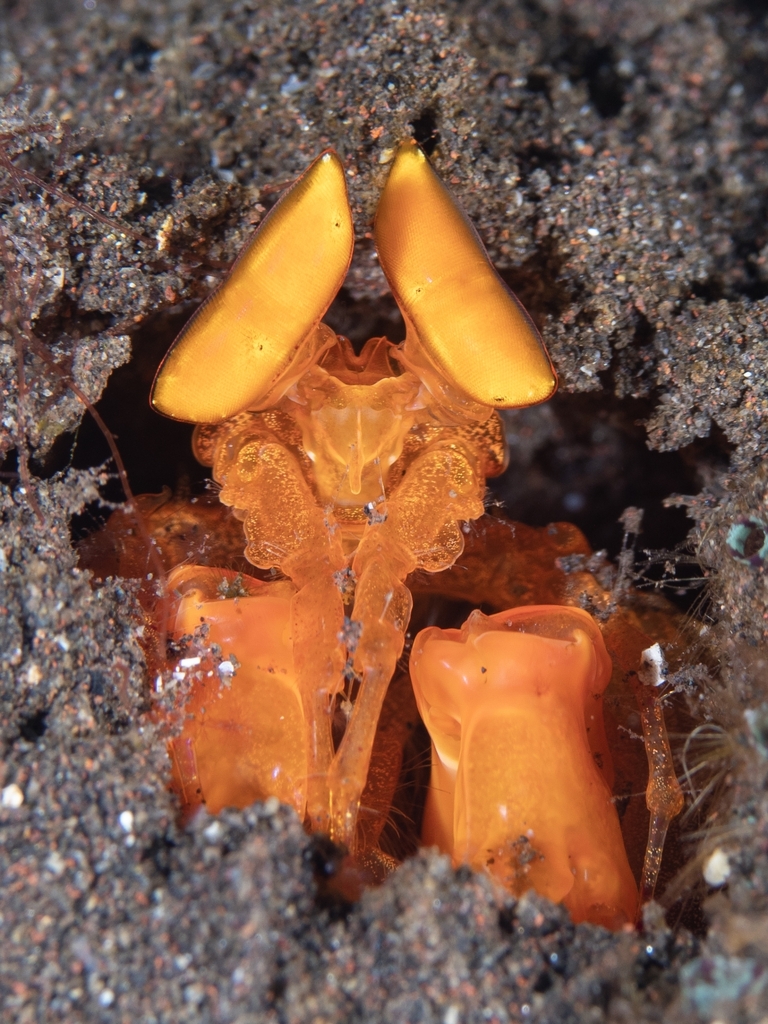
Mantis Shrimps
Stomatopoda
Mantis shrimp are carnivorous marine crustaceans of the order Stomatopoda (from Ancient Greek στόμα (stóma) 'mouth' and πούς (poús) 'foot'). Stomatopods branched off from other members of the class Malacostraca around 400 million years ago, with more than 520 extant species of mantis shrimp known. All living species are in the suborder Unipeltata, which arose around 250 million years ago. They are among the most important predators in many shallow, tropical and subtropical marine habitats. Despite being common in their habitats, they are poorly understood, as many species spend most of their lives sheltering in burrows and holes.
Dubbed "sea locusts" by ancient Assyrians, "prawn killers" in Australia, and now sometimes referred to as "thumb splitters" due to their ability to inflict painful wounds if handled incautiously, mantis shrimp possess powerful raptorial appendages that are used to attack and kill prey either by spearing, stunning, or dismembering; the shape of these appendages are often used to classify them into groups: extant mantis shrimp either have appendages which form heavily mineralized "clubs" that can strike with great power, or they have sharp, grasping forelimbs used to swiftly seize prey (similar to those of mantises, hence their common name).
1 branches of this order, most-observed first
See this branch on the Wheel of Life →
Where it lives
Recorded sightings
—
geo-referenced records in GBIF, from museums, herbaria and field observers.
Drag the globe to turn it. Dots are where records exist, not a range map; darker means more records.
In the stacks
Searching the stacks…
Every page naming Stomatopoda in the Biodiversity Heritage Library →
This page is assembled live from iNaturalist, GBIF, Wikipedia, the Source Library and the Internet Archive. It is not yet part of the hand-edited codex. iNaturalist taxon 49796.