- Animals
- ›Arthropods
- ›Crustaceans
- ›Typical Crustaceans
- ›Barnacles and Copepods
- ›Barnacles and Allies
- ›Barnacles
- ›Normal Barnacles
- ›Thoracican Barnacles
- ›Symmetrical Sessile Barnacles
- ›Balanoidea
- ›Balanidae
- ›Balanus
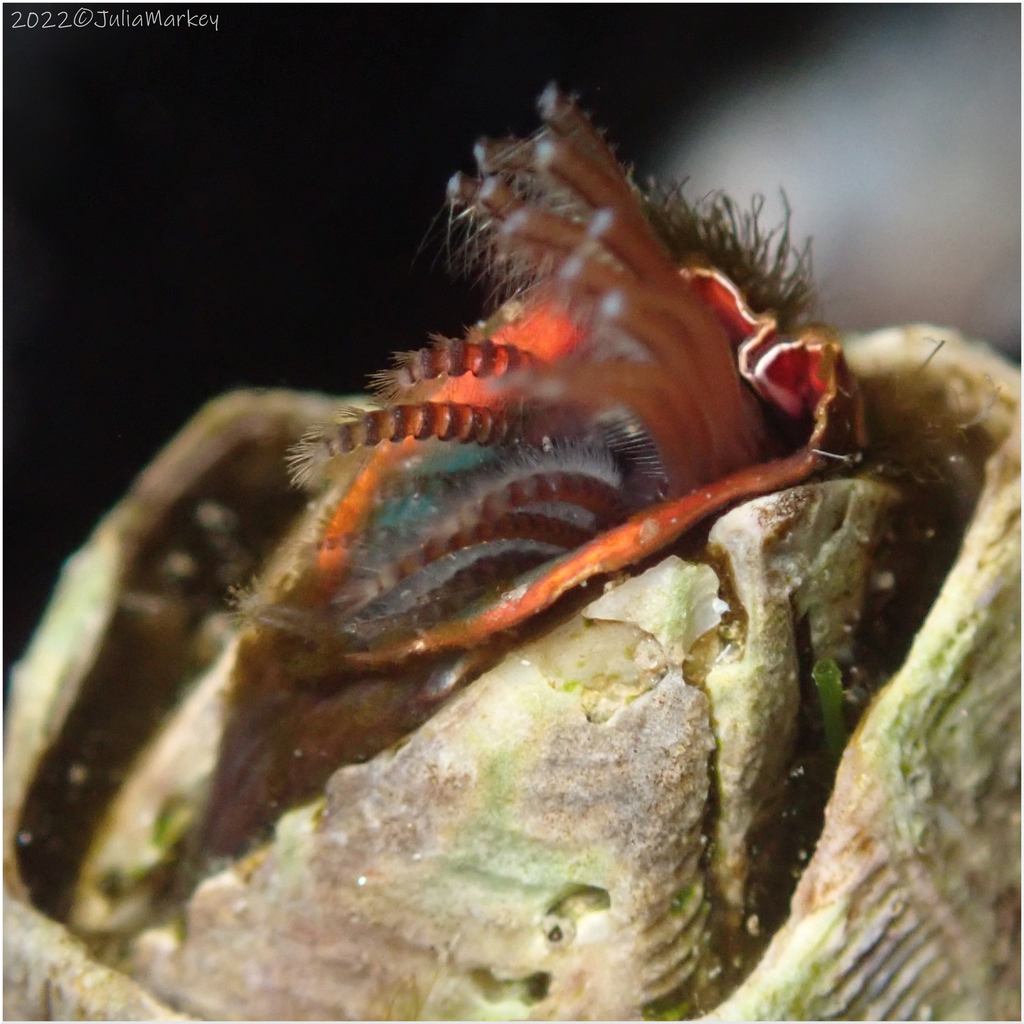
Giant Acorn Barnacle
Balanus nubilus
Balanus nubilus, commonly called the giant acorn barnacle, is the world's largest barnacle, reaching a diameter of 15 centimetres (5.9 in) and a height of up to 30 centimetres (12 in), and containing the largest known muscle fibres.
From the article Balanus nubilus on Wikipedia (CC BY-SA), quoted section by section
What it does
Balanus nubilus is a northeast Pacific species that ranges from southern Alaska to Baja California. It is frequently found growing on rocks, pier pilings and hard-shelled animals at depths of up to 90 m (300 ft). Like other acorn barnacles, B. nubilus is a filter feeder; it, in turn, is sometimes eaten by sea otters, sea stars, crabs and the Native Americans of the Pacific Northwest. Abandoned shells of B. nubilus are used by the crab Glebocarcinus oregonensis for shelter.
== References ==
Wikipedia: “Ecology”
Where it lives
Recorded sightings
—
geo-referenced records in GBIF, from museums, herbaria and field observers.
Drag the globe to turn it. Dots are where records exist, not a range map; darker means more records.
In the stacks
Searching the stacks…
Every page naming Balanus nubilus in the Biodiversity Heritage Library →
This page is assembled live from iNaturalist, GBIF, Wikipedia, the Source Library and the Internet Archive. It is not yet part of the hand-edited codex. iNaturalist taxon 49127.