- Animals
- ›Molluscs
- ›Cephalopods
- ›Octopuses, Squids, and Cuttlefishes
- ›Squids and Cuttlefishes
- ›Inshore Squids
- ›Pencil Squids
- ›Heterololigo
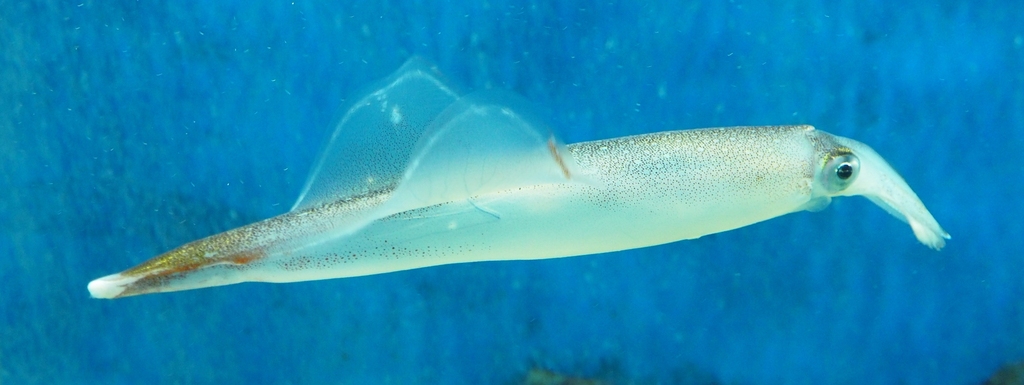
Spear Squid
Heterololigo bleekeri
Heterololigo is a monotypic genus of squids containing the single species Heterololigo bleekeri. It was formerly classified in the genus Loligo; some authors still include it there, but DNA evidence supports its separation into a genus of its own. This species is known by the common name spear squid, or yari-ika in Japanese.
From the article Heterololigo on Wikipedia (CC BY-SA), quoted section by section
Description
It can be distinguished from other species in its family by its shorter tentacles.
Range & habitat
This squid is native to the western Pacific Ocean along the coast of Asia. It spawns in spring and summer in the northern part of its range, and in winter farther south. They are pelagic, found from around 0–100 m (0–328 ft).
Wikipedia: “Habitat and distribution”
What it does
Like most Cephalopods, they are gonochoric. Male adults will usually die after spawning, and female adults after brooding. A unique aspect of the reproduction of this species has been well studied. The female has two sperm-storage sites in its body. There are two types of males, the larger "consort" males and the smaller "sneaker" males. Consorts insert sperm into the oviduct of the female, and sneakers place sperm into specialized tissue near the female's mouth. The two male types produce different types of sperm, as well: the large consorts produce sperm with short flagella, while the sneaker males have sperm with longer flagella. The consort sperm fertilize eggs internally, while sneaker sperm fertilize the eggs as they emerge from the female's body and brush past the external sperm-deposition site near the mouth. These alternative reproductive tactics appear to be determined by birth date.
Wikipedia: “Reproduction”
Where it lives
Recorded sightings
—
geo-referenced records in GBIF, from museums, herbaria and field observers.
Drag the globe to turn it. Dots are where records exist, not a range map; darker means more records.
In the stacks
Searching the stacks…
Every page naming Heterololigo bleekeri in the Biodiversity Heritage Library →
This page is assembled live from iNaturalist, GBIF, Wikipedia, the Source Library and the Internet Archive. It is not yet part of the hand-edited codex. iNaturalist taxon 474808.