- Animals
- ›Arthropods
- ›Crustaceans
- ›Typical Crustaceans
- ›Malacostracans
- ›Decapods, Isopods, and allies
- ›Decapods and Krill
- ›Decapods
- ›Crabs, Lobsters, Shrimps, and Allies
- ›Caridean Shrimps
- ›Nematocarcinoidea
- ›Rhynchocinetidae
- ›Rhynchocinetes
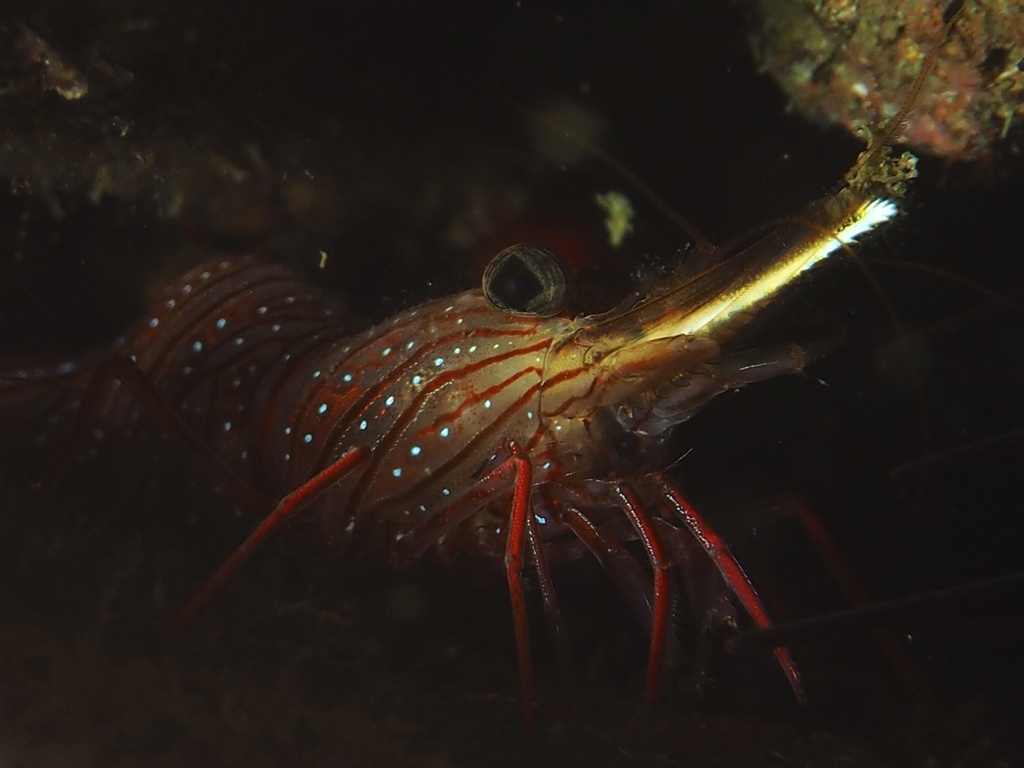
Rhynchocinetes uritai
Rhynchocinetes uritai also known as the camel shrimp, camelback shrimp, or dancing shrimp is a non-aggressive crustacean of the family Rhynchocinetidae. They are saltwater shrimp, and are common in saltwater aquariums.
From the article Rhynchocinetes uritai on Wikipedia (CC BY-SA), quoted section by section
Description
The camel shrimp is a hardy saltwater shrimp, It is covered with red and white stripes that run across its entire body. R. uritai has a movable rostrum or beak that is generally facing upwards. Male camel shrimp have larger chelipeds or claw compared to the female camel shrimp. The claw is formed when the shrimp reaches maturity.
What it does
Rhynchocinetes uritai is found under cracks and crevasses, coral deposits, and rock caves because those habitats provide safe cover from predators. They are often seen with other camel shrimp in their habitat. The common predators of Rhynchocinetes uritai are herring, salmon, sculpin and flatfishes. Rhynchocinetes uritai is a carnivorous shrimp and it feeds on detritus, phytoplankton, zooplankton, and frozen or freeze-dried bits of seafood. In captivity, camel shrimp will accept a varied diet of prepared fresh and frozen foods suitable for carnivores, examples of this are: vitamin enriched flakes, freeze dried krill, or live adult brine shrimp or nauplii.
Wikipedia: “Ecology”
Where it lives
Recorded sightings
—
geo-referenced records in GBIF, from museums, herbaria and field observers.
Drag the globe to turn it. Dots are where records exist, not a range map; darker means more records.
In the stacks
Searching the stacks…
Every page naming Rhynchocinetes uritai in the Biodiversity Heritage Library →
This page is assembled live from iNaturalist, GBIF, Wikipedia, the Source Library and the Internet Archive. It is not yet part of the hand-edited codex. iNaturalist taxon 469085.