- Animals
- ›Arthropods
- ›Crustaceans
- ›Typical Crustaceans
- ›Malacostracans
- ›Decapods, Isopods, and allies
- ›Decapods and Krill
- ›Decapods
- ›Crabs, Lobsters, Shrimps, and Allies
- ›Caridean Shrimps
- ›Palaemonoidea
- ›palaemonid shrimps
- ›Macrobrachium
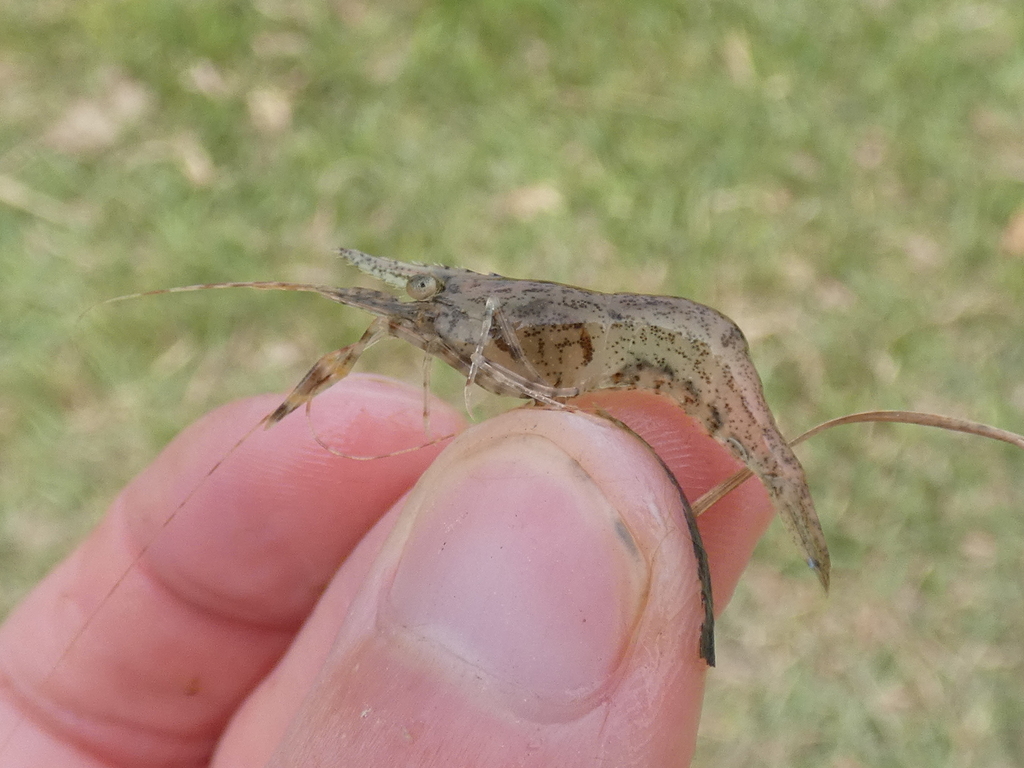
Rusty longarm shrimp
Macrobrachium dayanum
Macrobrachium dayanum (commonly known as the Kaira river prawn) is a small freshwater prawn, described by John Robertson Henderson in 1893. It is found in Bangladesh, Myanmar, Nepal, and Germany.
From the article Macrobrachium dayanum on Wikipedia (CC BY-SA), quoted section by section
Description
Macrobrachium dayanum is a small shrimp, reaching up to 92 mm in males and 84 mm in females. It has an upturned rostrum with 7-11 teeth on the upper edge and 4–7 on the lower. The chela is shorter than the palm and tuberculated, with females having shorter second pereiopods than males. The fingers are about two-thirds the palm length and may have a few short hairs. The body is typically flesh-colored with black pigments, sometimes appearing ash-colored, and features dark brown bands on the chelipeds, antennae, and flagellae. The second cheliped is generally darker, while the swimmers are light ash, and the eggs are yellowish-green.
Range & habitat
Macrobrachium dayanum is found in freshwater ponds and flowing waters, including rivers and estuaries in Bangladesh. It is also distributed in Myanmar, Nepal, and North Rhine-Westphalia, Germany. Multivariate analysis indicates it inhabits the Chenab and Ravi river systems as well.
Wikipedia: “Habitat and distribution”
In human culture
Macrobrachium dayanum is regarded as economically important and a good source of protein, edible by humans. It is sold in local markets at a price approximately double that of Indian major carp.
== References ==
Wikipedia: “Aquaculture”
Where it lives
Recorded sightings
—
geo-referenced records in GBIF, from museums, herbaria and field observers.
Drag the globe to turn it. Dots are where records exist, not a range map; darker means more records.
In the stacks
Searching the stacks…
Every page naming Macrobrachium dayanum in the Biodiversity Heritage Library →
This page is assembled live from iNaturalist, GBIF, Wikipedia, the Source Library and the Internet Archive. It is not yet part of the hand-edited codex. iNaturalist taxon 434985.