- Animals
- ›Nematodes
- ›Chromadoreans
- ›Chromadoria
- ›Rhabditida
- ›Tylenchina
- ›Tylenchoidea
- ›Heteroderidae
- ›Heteroderinae
- ›Heterodera
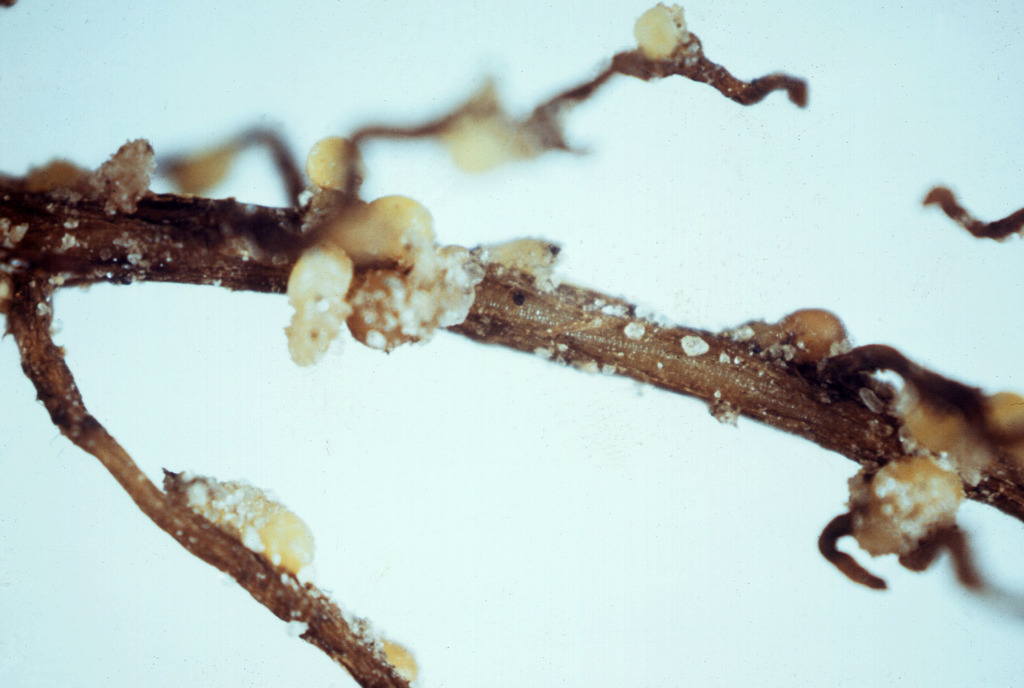
Soybean Cyst Nematode
Heterodera glycines
The soybean cyst nematode (SCN), Heterodera glycines, is a species of nematode and agricultural pest notable for being the most damaging to soybean crop yields in the U.S., targeting the roots of soybean and other legume plants. When infection is severe SCNs cause stunting, yellowing, impaired canopy development, and yield loss. The symptoms caused by SCNs can go easily unrecognized by farmers—in some cases there are no warning symptoms before a loss of 40% of the yield. Due to the slight stunting and yellowing, many farmers may mistake these symptoms as environmental problems when in fact they are SCNs. Another symptom of SCNs that may affect farmers' yields is stunted roots with fewer nitrogen-fixing nodules. Due to the fact that soybean cyst nematodes can only move a few centimeters in the soil by themselves, they mostly are spread via tillage or plant transplants. This area of infection will look patchy and nonuniform making diagnosis more difficult for farmers. They can be seen in the roots of summer soybean plants if the roots are taken out very carefully and gently washed with water. The egg masses should be seen as bright white or yellow "pearls" on the roots. The later the roots are pulled the harder it will be to diagnose due to the SCNs female dying and turning a much darker color, forming a "cyst".
Where it lives
Recorded sightings
—
geo-referenced records in GBIF, from museums, herbaria and field observers.
Drag the globe to turn it. Dots are where records exist, not a range map; darker means more records.
In the stacks
Searching the stacks…
Every page naming Heterodera glycines in the Biodiversity Heritage Library →
This page is assembled live from iNaturalist, GBIF, Wikipedia, the Source Library and the Internet Archive. It is not yet part of the hand-edited codex. iNaturalist taxon 430144.