Banksiamyces
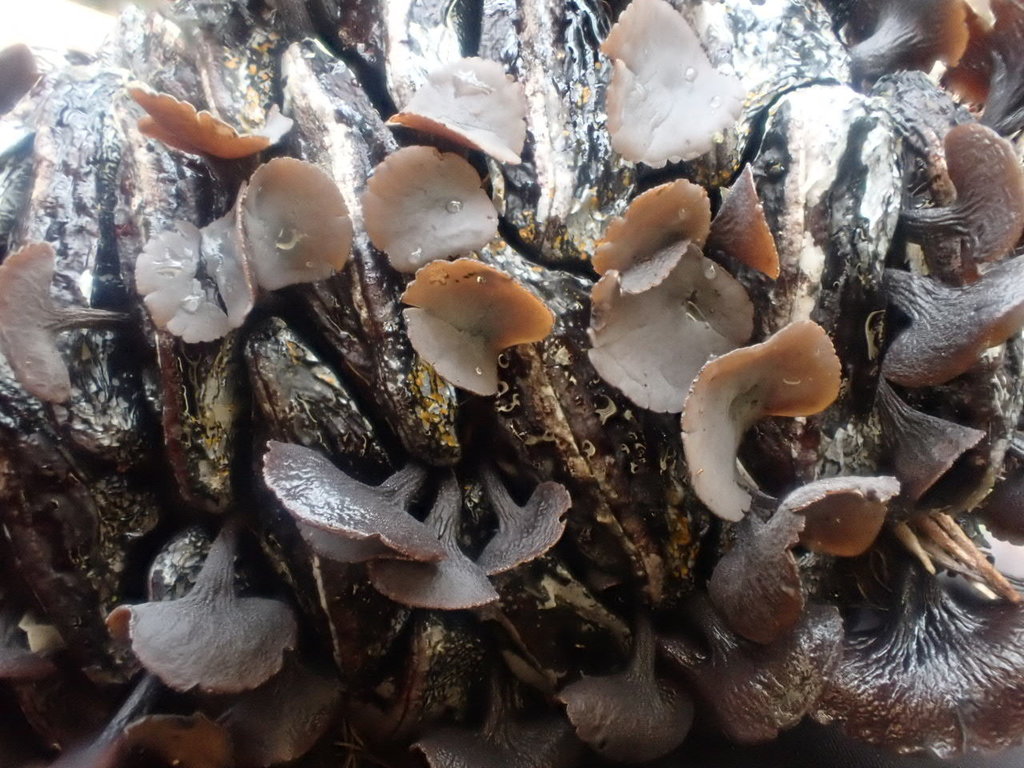
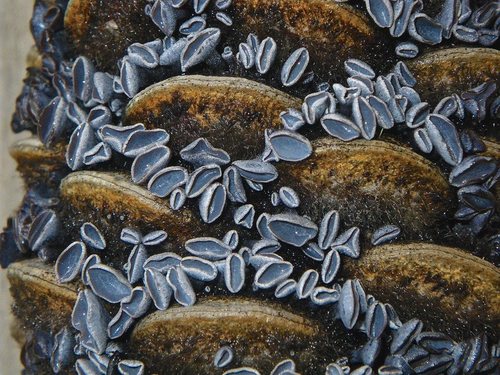
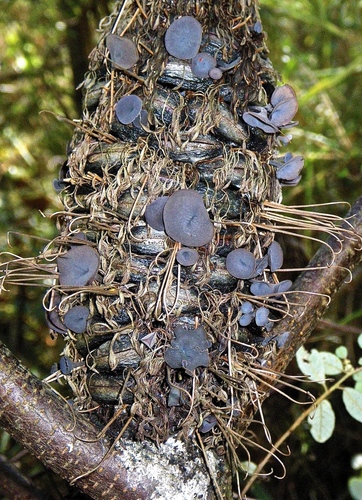
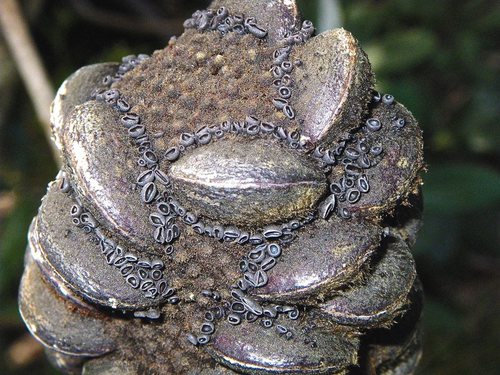
Banksiamyces is a genus of fungi in the order Helotiales, with a tentative placement in the family Helotiaceae. The genus contains four species, which grow on the seed follicles of the dead infructescences or "cones" of various species of Banksia, a genus in the plant family Proteaceae endemic to Australia. Fruit bodies of the fungus appear as small (typically less than 10 mm diameter), shallow dark cups on the follicles of the Banksia fruit. The edges of dry fruit bodies fold inwards, appearing like narrow slits. The first specimens of Banksiamyces, known then as Tympanis toomansis, were described in 1887. Specimens continued to be collected occasionally for almost 100 years before becoming examined more critically in the early 1980s, leading to the creation of a new genus to contain what was determined to be three distinct species, B. katerinae, B. macrocarpus, and B. toomansis. A fourth species, B. maccannii, was added in 1984.
Where it lives
Recorded sightings
—
geo-referenced records in GBIF, from museums, herbaria and field observers.
Drag the globe to turn it. Dots are where records exist, not a range map; darker means more records.
In the stacks
Searching the stacks…
Every page naming Banksiamyces in the Biodiversity Heritage Library →
This page is assembled live from iNaturalist, GBIF, Wikipedia, the Source Library and the Internet Archive. It is not yet part of the hand-edited codex. iNaturalist taxon 353946.