- Animals
- ›Molluscs
- ›Gastropods
- ›Caenogastropods
- ›Apple Snails, River Snails, and Allies
- ›Ampullarioidea
- ›Apple Snails
- ›Pomaceinae
- ›Pomacea
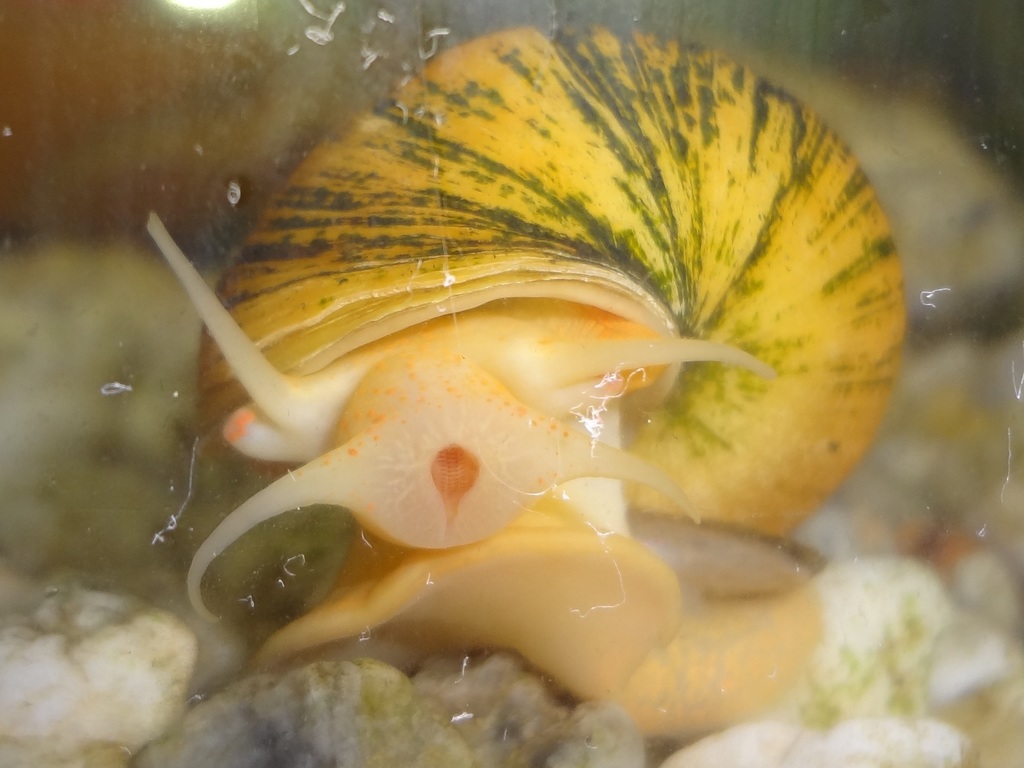
Golden Mystery Snail
Pomacea bridgesii
Pomacea bridgesii, common name the gold Inca snail, spike-topped apple snail or mystery snail, is a South American species of freshwater snail with gills and an operculum, an aquatic gastropod mollusk in the family Ampullariidae. These snails were most probably introduced to the United States through the aquarium trade.
From the article Pomacea bridgesii on Wikipedia (CC BY-SA), quoted section by section
Description
Mystery snails possess structurally complex eyes at the tip of a cephalic eyestalk. They are able to regenerate the eye completely after amputation through the mid-eyestalk. They are born with both gills and lungs. Mystery snails also possess a siphon which is a small tube used to breathe air. They frequently surface to breathe.
Wikipedia: “Anatomy”
Range & habitat
This species is non-indigenous in Hawaii since 1960 (Pomacea bridgesii diffusa), southeast Asia since the 1980s, and Florida since the early 1980s (Pomacea bridgesii diffusa).
Wikipedia: “Non-indigenous distribution”
Where it lives
Recorded sightings
—
geo-referenced records in GBIF, from museums, herbaria and field observers.
Drag the globe to turn it. Dots are where records exist, not a range map; darker means more records.
In the stacks
Searching the stacks…
Every page naming Pomacea bridgesii in the Biodiversity Heritage Library →
This page is assembled live from iNaturalist, GBIF, Wikipedia, the Source Library and the Internet Archive. It is not yet part of the hand-edited codex. iNaturalist taxon 151007.