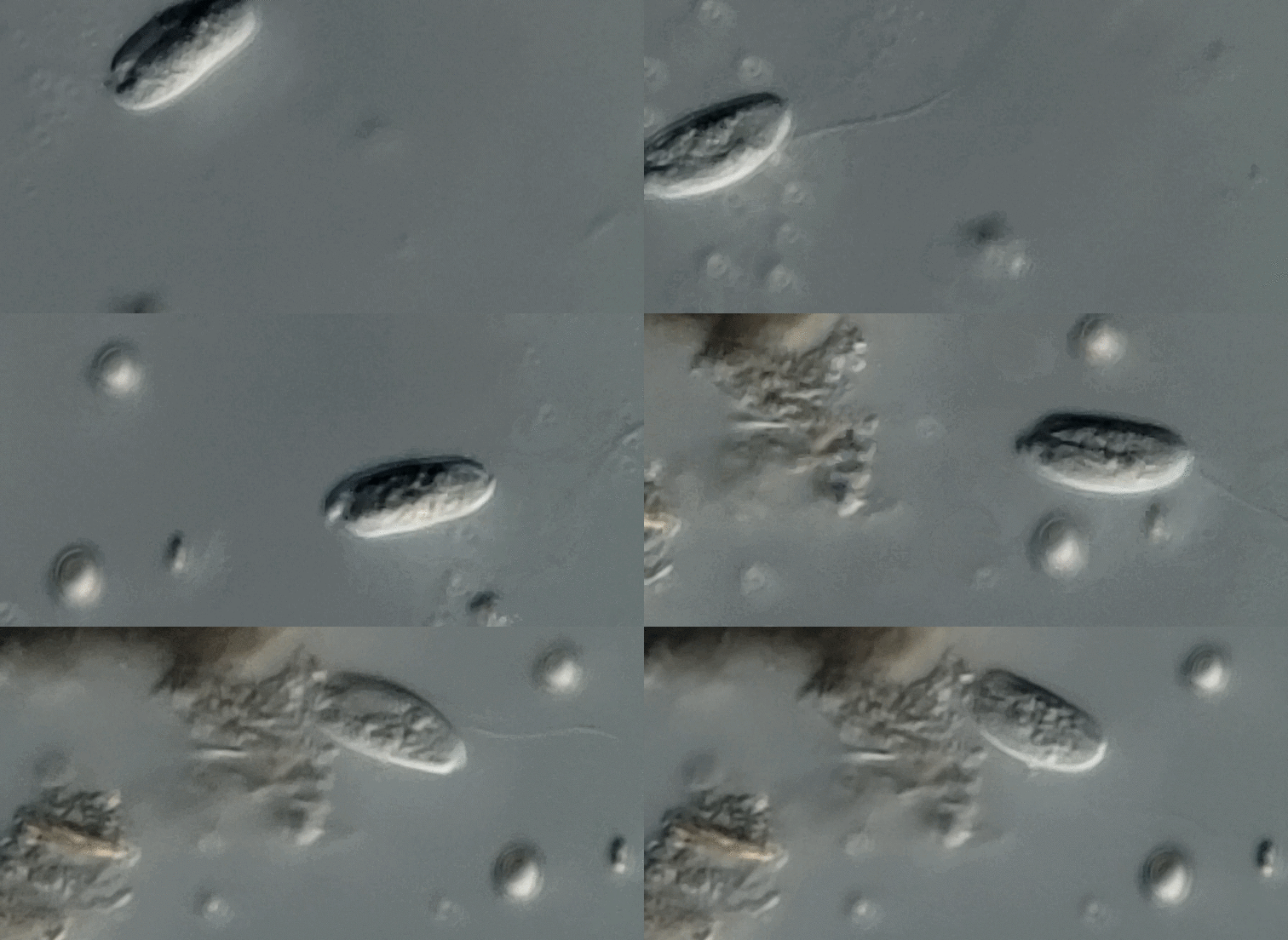
Symbiontida
Symbiontida is a basal class of flagellate Euglenozoa. As euglenozoans may be basal eukaryotes, the Symbiontida may be key to studying the evolution of eukaryotes, including the incorporation of eukaryotic traits such as the incorporation of alphaproteobacterial mitochondrial endosymbionts.
Euglenozoa are a large group of flagellate Discoba. They include a variety of common free-living species, as well as a few important parasites, some of which infect humans. Euglenozoa are represented by four major classes, i.e., Kinetoplastea, Diplonemea, Euglenida, and Symbiontida. Euglenozoa are unicellular, mostly around 15–40 μm (0.00059–0.00157 in) in size, although some euglenids get up to 500 μm (0.020 in) long.
1 branches of this class, most-observed first
See this branch on the Wheel of Life →
Where it lives
Recorded sightings
—
geo-referenced records in GBIF, from museums, herbaria and field observers.
Drag the globe to turn it. Dots are where records exist, not a range map; darker means more records.
In the stacks
Searching the stacks…
Every page naming Symbiontida in the Biodiversity Heritage Library →
This page is assembled live from iNaturalist, GBIF, Wikipedia, the Source Library and the Internet Archive. It is not yet part of the hand-edited codex. iNaturalist taxon 1446783.