
protozoans
Protozoa
Protozoa (sing.: protozoan or protozoon; alternative plural: protozoans) are a polyphyletic group of single-celled eukaryotes, either free-living or parasitic, that feed on organic matter such as other microorganisms or organic debris. Historically, protozoans were regarded as "one-celled animals".
When first introduced by Georg Goldfuss, in 1818, the taxon Protozoa was erected as a class within the Animalia, with the word 'protozoa' meaning "first animals", because they often possess animal-like behaviours, such as motility and predation, and lack a cell wall, as found in plants and many algae.
11 branches of this kingdom, most-observed first

slime molds
phylumMycetozoa

euglenoids
phylumEuglenozoa

Amoebae
phylumAmoebozoa

Choanozoa
phylumChoanozoa
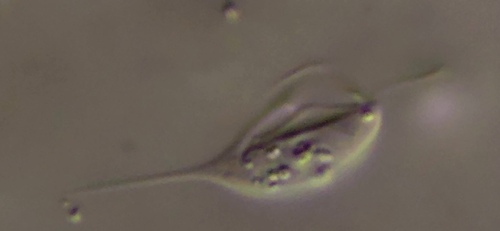
Metamonads
phylumMetamonada

Percolozoa
phylumPercolozoa
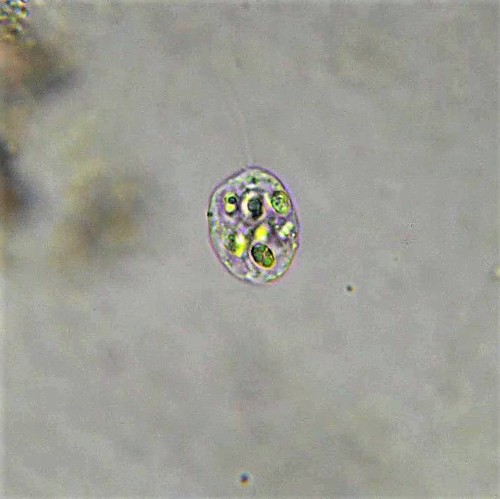
Podiates
phylumSulcozoa
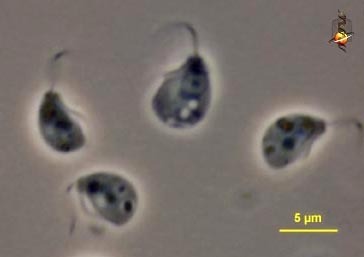
Loukozoa
phylumLoukozoa
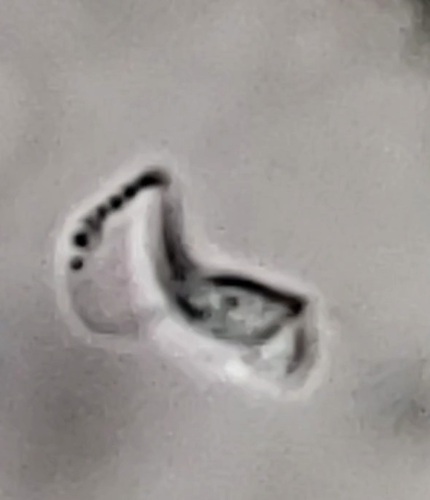
Cyclomonas
genusCyclomonas
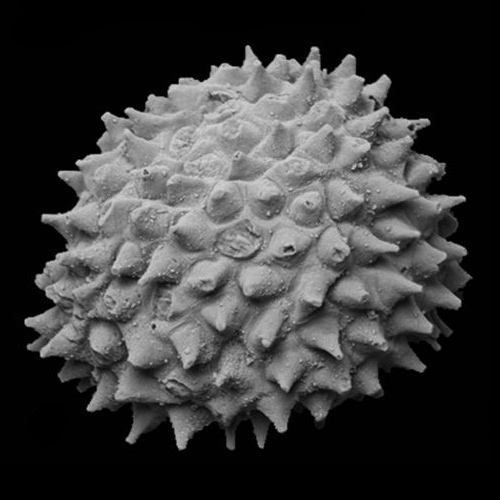
Acritarchs
phylumAcritarcha
Haplosporidians
classHaplosporea
Where it lives
Recorded sightings
—
geo-referenced records in GBIF, from museums, herbaria and field observers.
Drag the globe to turn it. Dots are where records exist, not a range map; darker means more records.
In the stacks
Searching the stacks…
Every page naming Protozoa in the Biodiversity Heritage Library →
This page is assembled live from iNaturalist, GBIF, Wikipedia, the Source Library and the Internet Archive. It is not yet part of the hand-edited codex. iNaturalist taxon 47686.