- Animals
- ›Arthropods
- ›Chelicerates
- ›Arachnids
- ›Spiders
- ›Typical Spiders
- ›Entelegyne Spiders
- ›RTA Clade Spiders
- ›Dionycha clade spiders
- ›Gnaphosoid Spiders
- ›Stealthy Ground Spiders
- ›Herpyllinae
- ›Herpyllus
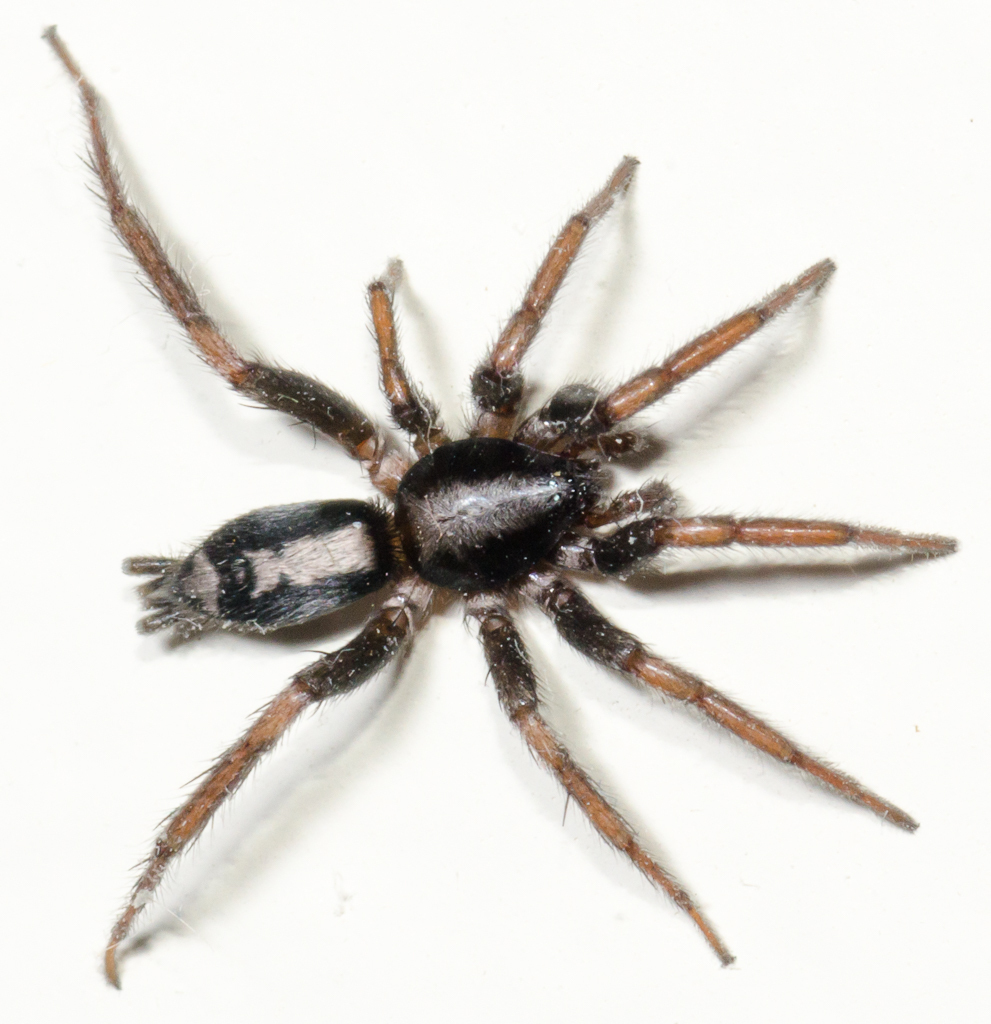
Eastern Parson Spider
Herpyllus ecclesiasticus
Herpyllus ecclesiasticus, commonly called the eastern parson spider, is a species of spider named after the abdominal markings resembling an old-style cravat worn by clergy in the 18th century. It is mainly found in North America east of the Rocky Mountains, from Alberta east to Nova Scotia in Canada, and south through the United States to Tamaulipas, Mexico, and Florida. Individuals can be found throughout the year, both in homes and under rocks or logs in deciduous forests.
From the article Herpyllus ecclesiasticus on Wikipedia (CC BY-SA), quoted section by section
Description
Individuals are covered with black hairs on the cephalothorax and gray hairs on the abdomen. On the back is the distinctive white mark that gives the species its common name; there is a small white spot above the spinnerets.
What it does
During the day, individuals reside in silken retreats. They emerge to hunt at night, actively chasing prey rather than lying in wait. They do not spin webs. They enter houses more often than other spiders while wandering for prey, and, as ground spiders, are usually spotted on the floor or low walls. They flee danger very swiftly.
Wikipedia: “Behavior”
Where it lives
Recorded sightings
—
geo-referenced records in GBIF, from museums, herbaria and field observers.
Drag the globe to turn it. Dots are where records exist, not a range map; darker means more records.
In the stacks
Searching the stacks…
Every page naming Herpyllus ecclesiasticus in the Biodiversity Heritage Library →
This page is assembled live from iNaturalist, GBIF, Wikipedia, the Source Library and the Internet Archive. It is not yet part of the hand-edited codex. iNaturalist taxon 130880.