- Animals
- ›Arthropods
- ›Crustaceans
- ›Typical Crustaceans
- ›Malacostracans
- ›Decapods, Isopods, and allies
- ›Decapods and Krill
- ›Decapods
- ›Crabs, Lobsters, Shrimps, and Allies
- ›Caridean Shrimps
- ›Palaemonoidea
- ›palaemonid shrimps
- ›Urocaridella
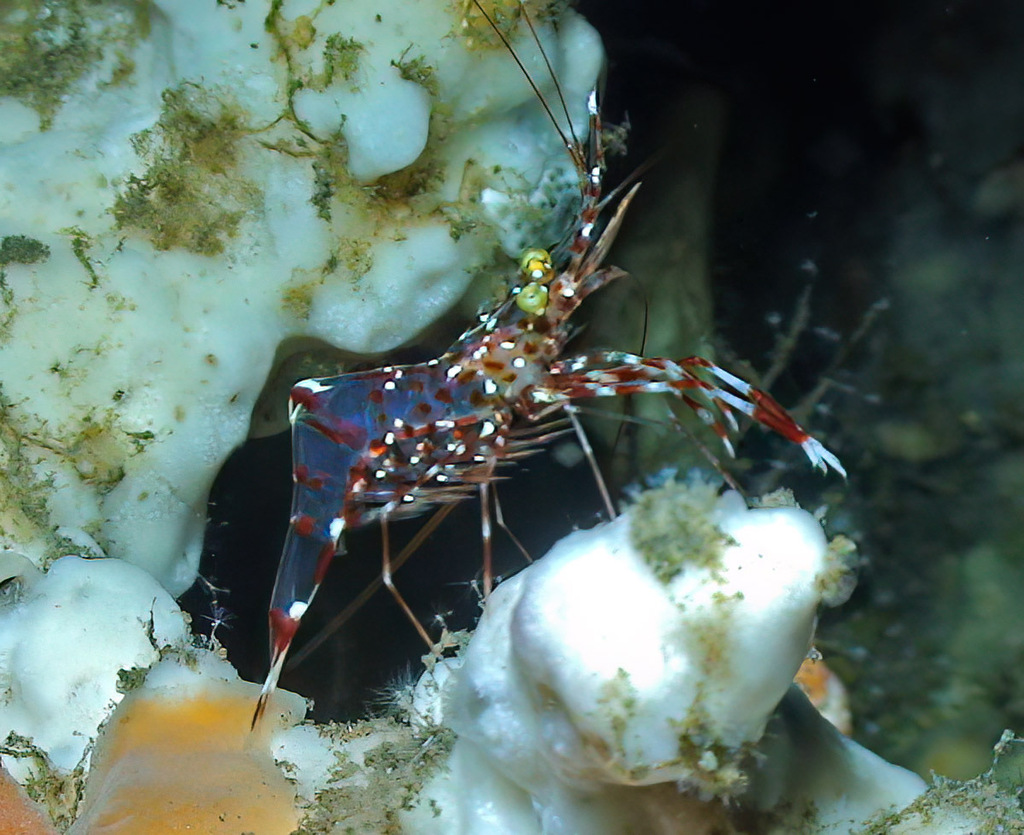
Clear cleaner shrimp
Urocaridella antonbruunii
Urocaridella antonbruunii, common names clear cleaner shrimp or red-white cleaner shrimp, is a species of shrimp belonging to the family Palaemonidae. It was described by A. J. Bruce in 1967. It is one of the species that are known as cleaner shrimps.
From the article Urocaridella antonbruunii on Wikipedia (CC BY-SA), quoted section by section
Description
Urocaridella antonbruunii can reach a body length of about 25–30 mm (0.98–1.18 in). Like the other species of the genus Urocaridella, have very long rostrums curved upwards, transparent bodies, and numerous brightly-coloured red and yellow spots on the carapace and abdomen. Internal organs clearly visible. The translucency provides an effective form of camouflage. The abdomen forms a characteristic right angle where there is a red spot preceded by a white spot. The antennae are long and transparent, but are not white, as is the case in many species of cleaning shrimp. The pereiopods (swimming legs) are banded in red and white. The pleopods under the abdomen are beaten rapidly to move the shrimp towards the client fish, making the shrimp appear to hover.
Range & habitat
This species has a wide distribution throughout the Western Central Indo-Pacific, from Maldives to Thailand, Indonesia, Philippines, Taiwan, Papua-New Guinea up to Fiji and Hawaii These shrimps occur in tropical shallow waters in coral reef environment, at depths of 2 to 66 m (7 to 217 ft), where they can found their preferred hosts.
Wikipedia: “Distribution and habitat”
What it does
Urocaridella antonbruunii is gonochoric. Commonly these shrimps perform a precopulatory courtship ritual. They are cleaner shrimps, because of their habit of removing external parasites from client fish. This is the first shrimp reported cleaning sleeping rabbitfish Siganus canaliculatus at night. These shrimps also exhibit stereotypical behaviour to attract their clients. They position themselves in a conspicuous location near their cleaning station when a potential client is nearby. They feed on parasites and mucus that they find on the host during the cleaning sessions but also capture copepods, small microorganisms and debris on the bottom.
Wikipedia: “Biology and behaviour”
Where it lives
Recorded sightings
—
geo-referenced records in GBIF, from museums, herbaria and field observers.
Drag the globe to turn it. Dots are where records exist, not a range map; darker means more records.
In the stacks
Searching the stacks…
Every page naming Urocaridella antonbruunii in the Biodiversity Heritage Library →
This page is assembled live from iNaturalist, GBIF, Wikipedia, the Source Library and the Internet Archive. It is not yet part of the hand-edited codex. iNaturalist taxon 123395.