- Animals
- ›Arthropods
- ›Crustaceans
- ›Typical Crustaceans
- ›Malacostracans
- ›Decapods, Isopods, and allies
- ›Decapods and Krill
- ›Decapods
- ›Crabs, Lobsters, Shrimps, and Allies
- ›Crayfishes and Lobsters
- ›Parastacoidea
- ›Southern Hemisphere Crayfishes
- ›Euastacus
Murray Crayfish
Euastacus armatus
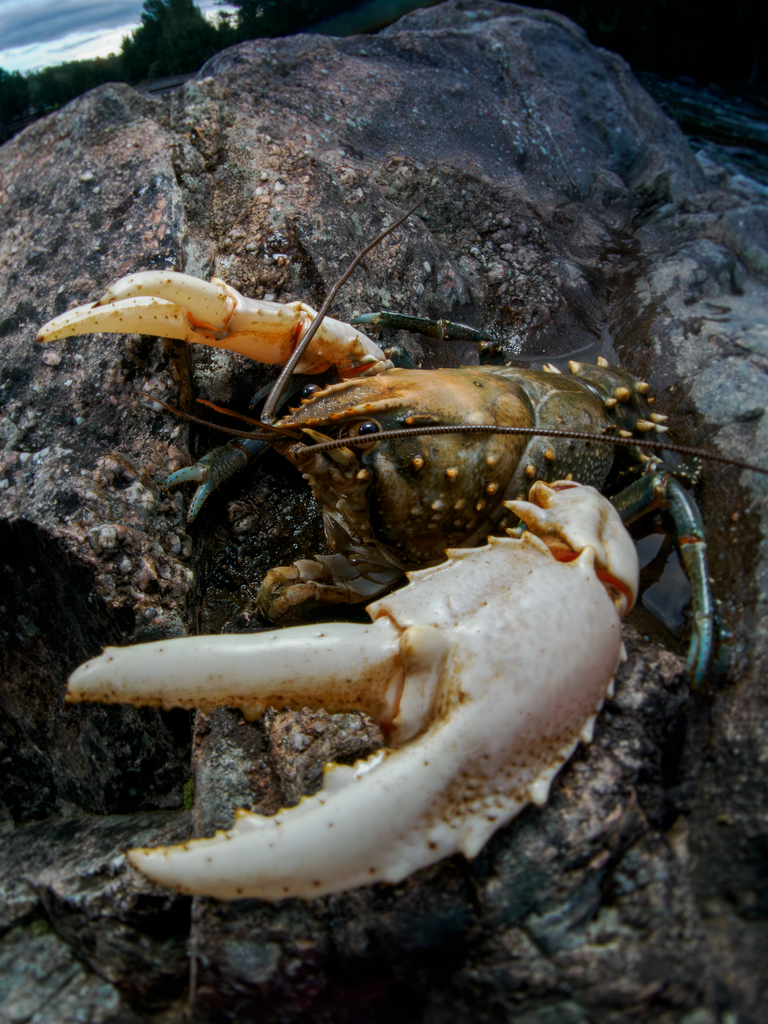
The Murray crayfish, Euastacus armatus, is a species of freshwater crayfish endemic to Australia that belongs to the family Parastacidae. The Murray crayfish has the largest geographic range of any of the Euastacus crayfish in Australia, being found in the Murray and Murrumbidgee Rivers as well as many of their tributaries. Murray crayfish are also known as "Murray River crayfish", "Murray crays", "freshwater crays", "spiny freshwater crays", "spinies" and in the Wagga Wagga region of southern New South Wales they are simply known as "lobsters".
Today adults commonly grow to 20–30 centimetres (8–12 in) in length. In the past however they have been reliably recorded at significantly larger lengths and up to 2 kilograms (4.4 lb) in weight; the Murray crayfish is considered the second largest freshwater crayfish species in the world after the Tasmanian giant freshwater crayfish. Murray crayfish have large white claws and a dark olive/grey/black carapace, all of which are covered in short robust spikes. In small individuals, the claws are green and yellow. The crayfish begin to breed when they are 15–20 cm (6–8 in) long, which takes between 6 and 9 years. When the crayfish has reached sexual maturity the females lay 500 to 1,000 eggs in late autumn; the eggs are carried on the female's pleopods until they hatch in summer. Murray crayfish feed predominantly on decaying aquatic plant matter but will also eat dead animals.
Where it lives
Recorded sightings
—
geo-referenced records in GBIF, from museums, herbaria and field observers.
Drag the globe to turn it. Dots are where records exist, not a range map; darker means more records.
In the stacks
Searching the stacks…
Every page naming Euastacus armatus in the Biodiversity Heritage Library →
This page is assembled live from iNaturalist, GBIF, Wikipedia, the Source Library and the Internet Archive. It is not yet part of the hand-edited codex. iNaturalist taxon 100611.