 NL·0208
Herbarium of the Nature Library
- Name
- Tricholoma matsutake
- Family
- Tricholomataceae
- Native to
- East Asia (Japan, Korea, China incl. Yunnan and Tibet), and northern Europe (Scandinavia, Baltic) and Siberia
- Habitat
- Pine forest, Boreal forest, Montane conifer forest
Matsutake
Tricholoma matsutake
Also calledMatsutake 松茸 (Japanese) · Song rong 松茸 (Chinese) · Songi (Korean) · Pine mushroom (English)
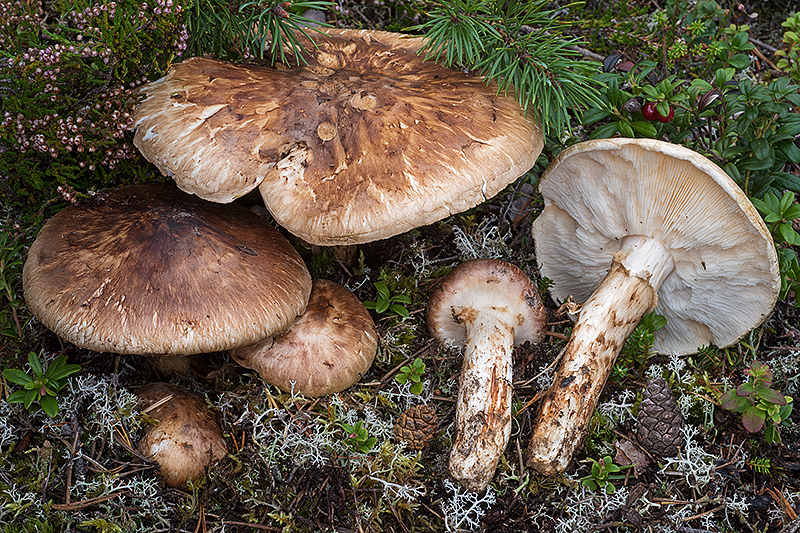
A thick-stemmed, scaly brown mushroom that grows under red pine. It has a spicy, cinnamon-and-pine aroma that Japan treasures as the scent of autumn. Top grades sell for hundreds of dollars a kilo. It is listed as Vulnerable because its pine forests are declining.
Matsutake , Tricholoma matsutake, is a species of mushroom, with a cap that can reach up to 40 centimetres (16 in) wide. It resembles at least one poisonous species. Wikipedia
What it can do
- iEctomycorrhizal mainly with red pine (Pinus densiflora) and other pines; never cultivated
- iiForms a dense white mycelial mat called a 'shiro' that spreads outward in a ring
- iiiIts aroma comes mainly from 1-octen-3-ol and methyl cinnamate
- ivThrives on poor, disturbed mineral soils, which humans maintained in old Japanese satoyama woodland
At the table
Eatenwhole fruiting body (cooked)
Choice edible. Dangerous lookalikes: buttons of deadly white Amanitas (A. phalloides, destroying angels), which have a volva at the base and white, not spicy, odour; and, in North America, Amanita smithiana, which grows with the related T. murrillianum and causes delayed kidney failure. Check the base, the spicy smell and the absence of a volva.
Fruiting body & spores
Spores
Spore print white; spores broadly ellipsoid to subglobose, smooth, about 6–7.5 × 4.5–6 µm
- Dispersal
- Wind-borne basidiospores from the gills
Where it lives
Recorded sightings
—
geo-referenced records in GBIF, from museums, herbaria and field observers.
Native range
East Asia (Japan, Korea, China incl. Yunnan and Tibet), and northern Europe (Scandinavia, Baltic) and Siberia
Drag the globe to turn it. Dots are where records exist, not a range map; darker means more records.
In the old herbals & bestiaries
Woodcuts and engravings matched from the Source Library’s scanned books by name. Plates marked “relative” show a close kin rather than this exact species. Click a plate to read the page it came from, with translation.


In the stacks
Searching the stacks…
Every page naming Tricholoma matsutake in the Biodiversity Heritage Library →
Marginalia
Matsutake appears in the 8th-century Man'yōshū poetry anthology, where its fragrance is praised. Anna Tsing's 'The Mushroom at the End of the World' (2015) follows the global trade in matsutake gathered by foragers in Oregon, Yunnan and Finland.
Curiosity
Pine wilt nematode has killed vast areas of Japan's red pine, and Japan's matsutake harvest has fallen by over 90% since the 1940s.
Kinship
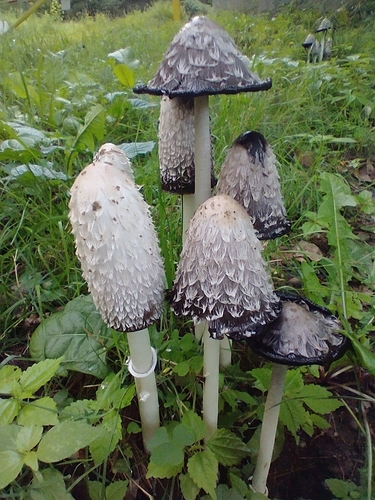
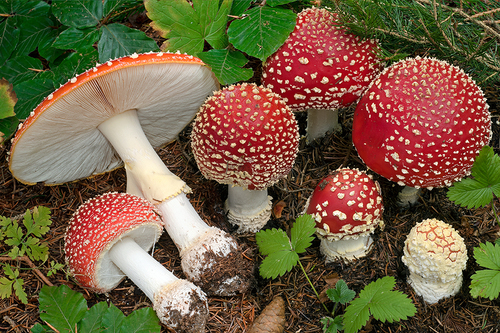


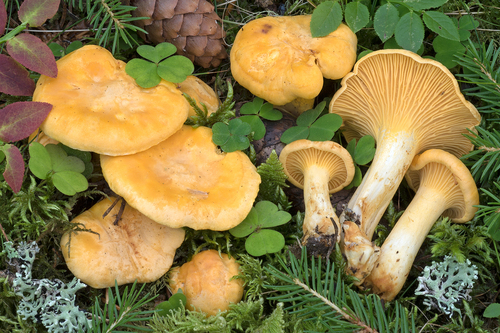
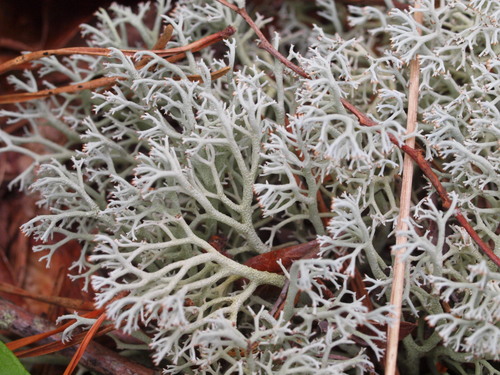
Photographs: iNaturalist contributors under the licences shown. Records: GBIF.org. Historical plates: Source Library (CC BY-SA 4.0; originals public domain). Summary text: Nature Library editors and Wikipedia (CC BY-SA). Medicinal and edibility notes are historical and educational, not advice. iNaturalist taxon 62486.