 NL·0196
Herbarium of the Nature Library
- Name
- Morchella esculenta
- Family
- Morchellaceae
- Native to
- Temperate Northern Hemisphere: Europe, Asia (incl. Himalaya) and North America (the latter partly as cryptic sister species)
- Habitat
- Temperate forest, Old orchards, Riparian woodland, Burned forest
Yellow morel
Morchella esculenta
Also calledMorille (French) · Gucchi (Hindi/Kashmiri) · Yang du jun 羊肚菌 (Chinese) · Colmenilla (Spanish) · Speisemorchel (German)
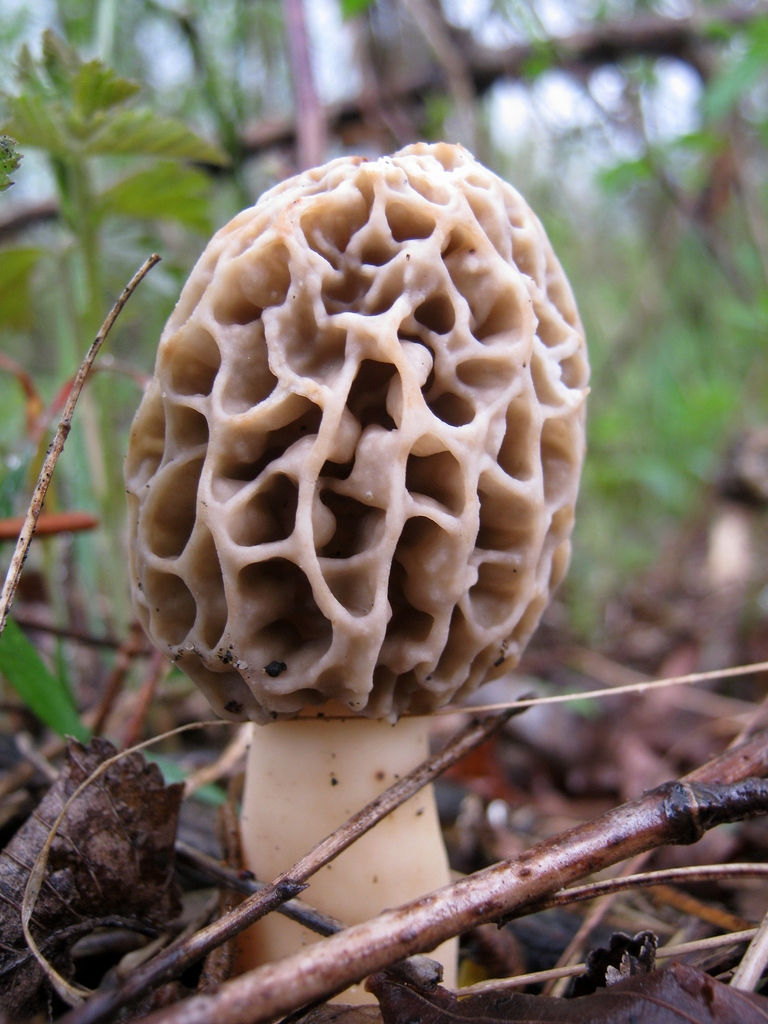
A honeycomb-capped spring mushroom, hollow from cap tip to stem base. It is so prized that wild gucchi from Kashmir and Himachal are among the most expensive foods in South Asia. It is an ascomycete, more closely related to truffles than to gilled mushrooms.
Morchella esculenta is a species of fungus in the family Morchellaceae of the Ascomycota. Wikipedia
What it can do
- iFruits in a short spring window, often after soil temperatures reach about 10–12 °C
- iiProduces sclerotia, hardened stores of hyphae that help it survive and fruit
- iiiSome morels fruit in huge numbers on the ground the year after forest fires
- ivShoots ascospores from pits on the cap in visible puffs
At the table
Eatenwhole fruiting body (thoroughly cooked)
Choice edible, but always cook thoroughly. Raw or undercooked morels cause gastric upset, and some people react even to cooked ones, especially with alcohol. Deadly lookalike: the false morel (Gyromitra esculenta), which has a brain-like, lobed cap and a chambered or cottony interior and contains gyromitrin. Also beware Verpa bohemica, whose cap hangs free like a thimble over a cotton-stuffed stem. A true morel is hollow from tip to base, with the cap attached directly to the stem. Morels from old orchards may contain lead and arsenic from historic pesticides.
Fruiting body & spores
Spores
Ascospores (not seeds), 8 per ascus, ellipsoid, smooth, about 20–24 × 12–14 µm; spore print cream to pale yellow-orange
- Dispersal
- Ascospores forcibly discharged from the pitted cap and carried by wind
How to cultivate it
Hardiness (USDA zones)
- Light
- Shade to dappled light
- Water
- Moist soil in spring
- Soil
- Loamy, calcareous or ash-enriched soil
- Propagation
- Spawn on grain; outdoor beds with nutrient bags (method developed commercially in China for M. importuna and related species)
- To harvest
- Sow spawn in late autumn; harvest the following spring
- Climates
- Temperate
- 1Prepare a shaded outdoor bed of loose loam, ideally with wood ash or lime mixed in
- 2Broadcast morel grain spawn in autumn and cover lightly with soil
- 3After the mycelium spreads, lay 'exogenous nutrient bags' of moist sterilised grain over the bed
- 4Keep the soil damp through winter; fruiting starts when spring soil reaches about 8–15 °C
- 5Results are unreliable outside specialised farms, so treat it as an experiment
Where it lives
Recorded sightings
—
geo-referenced records in GBIF, from museums, herbaria and field observers.
Native range
Temperate Northern Hemisphere: Europe, Asia (incl. Himalaya) and North America (the latter partly as cryptic sister species)
Drag the globe to turn it. Dots are where records exist, not a range map; darker means more records.
In the old herbals & bestiaries
Woodcuts and engravings matched from the Source Library’s scanned books by name. Plates marked “relative” show a close kin rather than this exact species. Click a plate to read the page it came from, with translation.

In the stacks
Searching the stacks…
Every page naming Morchella esculenta in the Biodiversity Heritage Library →
Marginalia
Gucchi gathered in the Himalayan foothills is dried on strings and sold at high prices, and gucchi pulao is a Kashmiri feast dish. In Europe, Carolus Clusius described morels in his 1601 account of the fungi of Pannonia (Hungary), the first book devoted to fungi.
Curiosity
When a morel releases spores you can sometimes see the puff of 'smoke' rise from the cap.
Kinship

Fact-checked: 1 correction made to this sheet. Photographs: iNaturalist contributors under the licences shown. Records: GBIF.org. Historical plates: Source Library (CC BY-SA 4.0; originals public domain). Summary text: Nature Library editors and Wikipedia (CC BY-SA). Medicinal and edibility notes are historical and educational, not advice. iNaturalist taxon 58682.