 NL·0192
Herbarium of the Nature Library
- Name
- Hericium erinaceus
- Family
- Hericiaceae
- Native to
- Temperate Northern Hemisphere: Europe, Asia and North America; rare and legally protected in parts of Europe (e.g. the UK)
- Habitat
- Temperate forest, Old-growth broadleaf woodland
Lion's mane
Hericium erinaceus
Also calledYamabushitake (Japanese) · Hou tou gu 猴头菇 (Chinese) · Igel-Stachelbart (German) · Bearded tooth fungus (English) · Hedgehog mushroom (English)
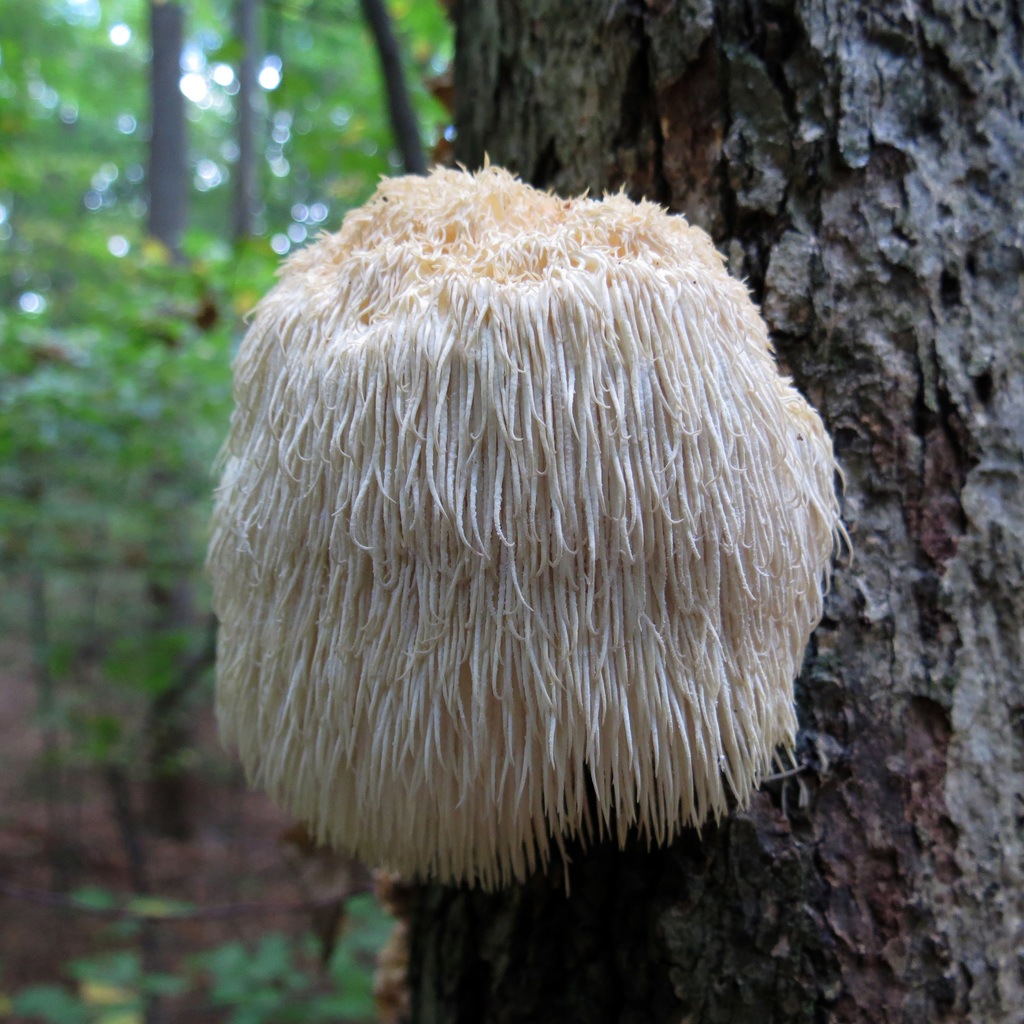
A snow-white cascade of soft icicle-like spines that grows from wounds in old hardwoods. It is a gourmet mushroom with crab-like texture and is studied for compounds that stimulate nerve growth factor in the lab.
Hericium erinaceus, commonly known as lion's mane, yamabushitake, bearded tooth fungus, or bearded hedgehog, is a species of tooth fungus. It tends to grow in a single clump with dangling spines longer than 1 centimetre. It can be mistaken for other Hericium species that grow in the same areas. Wikipedia
What it can do
- iDecays the heartwood of living and dead beech, oak and other hardwoods (white rot)
- iiProduces hericenones (fruiting body) and erinacines (mycelium), which promote nerve growth factor in cell and animal studies
- iiiIts spores form on the outer surfaces of the hanging spines, which can be 1–5 cm long
At the table
Eatenwhole fruiting body (cooked, while still white)
Good edible when young and white; it turns sour and yellow with age. It has no known dangerous lookalikes. Related species such as coral tooth (H. coralloides) and bear's head (H. americanum) are also edible. Wild specimens are rare in Europe and protected in Britain, so eat cultivated ones. Some people develop skin rashes or breathing allergies.
In the medicine cabinet
| Tradition | Use |
|---|---|
| Traditional Chinese medicine | Taken for stomach and digestive complaints and as a general tonic |
| Modern Japanese research | Small trials of the dried mushroom for mild cognitive impairment |
Weight of evidence
Moderate. Some clinical trials with promising but limited or mixed results.
Active compounds
hericenones, erinacines, β-glucans
Fruiting body & spores
Spores
Spore print white; spores subglobose, smooth to faintly roughened, amyloid, about 5–6.5 × 4–5.5 µm
- Dispersal
- Wind-borne basidiospores shed from the hanging spines
How to cultivate it
Hardiness (USDA zones)
- Light
- Indirect light (indoors)
- Water
- High humidity, 85–95%
- Soil
- Supplemented hardwood sawdust (e.g. oak sawdust with 10–20% wheat bran) or hardwood logs
- Propagation
- Grain or sawdust spawn
- To harvest
- About 4–6 weeks from inoculating a sawdust block
- Climates
- Temperate, Subtropical (indoors)
- 1Sterilise bags of moist hardwood sawdust with bran, then inoculate with spawn once cool
- 2Incubate in darkness at 21–24 °C for 2–3 weeks until fully white
- 3Cut a small X in the bag and move to fruiting conditions: 15–21 °C, 85–95% humidity, fresh air and indirect light
- 4Harvest when the spines are about 0.5–1 cm long and still white, before they yellow
Where it lives
Recorded sightings
—
geo-referenced records in GBIF, from museums, herbaria and field observers.
Native range
Temperate Northern Hemisphere: Europe, Asia and North America; rare and legally protected in parts of Europe (e.g. the UK)
Drag the globe to turn it. Dots are where records exist, not a range map; darker means more records.
In the old herbals & bestiaries
Woodcuts and engravings matched from the Source Library’s scanned books by name. Plates marked “relative” show a close kin rather than this exact species. Click a plate to read the page it came from, with translation.

In the stacks
Searching the stacks…
Every page naming Hericium erinaceus in the Biodiversity Heritage Library →
Marginalia
In China, monkey-head mushroom (hou tou gu) has long been prized as a 'mountain delicacy' of banquet cuisine. The Japanese name 'yamabushitake' compares the shaggy mushroom to the pom-pom robes of yamabushi mountain ascetics.
Curiosity
Vegetarian chefs in China and Japan have long shredded lion's mane as a convincing stand-in for crab meat.
Kinship


Fact-checked: 1 correction made to this sheet. Photographs: iNaturalist contributors under the licences shown. Records: GBIF.org. Historical plates: Source Library (CC BY-SA 4.0; originals public domain). Summary text: Nature Library editors and Wikipedia (CC BY-SA). Medicinal and edibility notes are historical and educational, not advice. iNaturalist taxon 49158.