- Plantas
- ›Plantas vasculares
- ›Plantas con flores
- ›pastos, palmeras y parientes (monocotiledóneas)
- ›Palmas o palmeras
- ›Palmas o palmeras
- ›Ceroxyloideae
- ›Juania
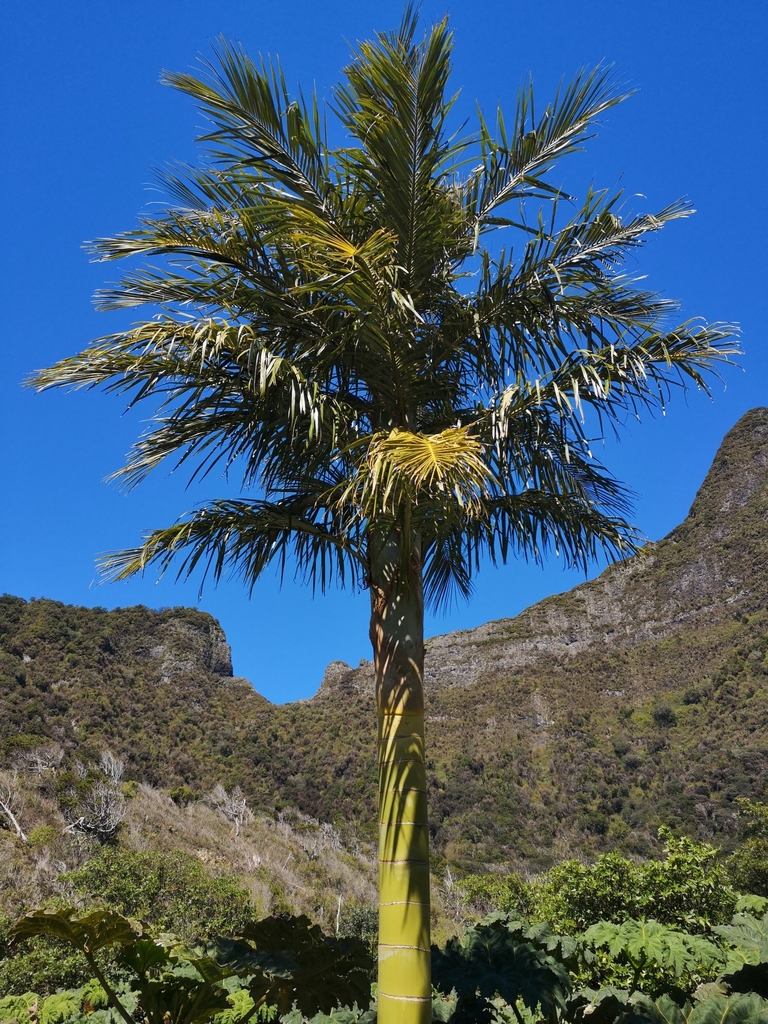
Chonta chilena
Juania australis
Juania australis, the Chonta palm, is a species of flowering plant in the family Arecaceae, the only species in the genus Juania. It is a solitary trunked palm tree which is endemic to the Juan Fernández Islands archipelago in the southeast Pacific Ocean west of Chile.
This palm is slow growing and has a green trunk; plants are either male or female. It is threatened by habitat loss. Only one mature tree grows outside its native island habitat. It is assessed as critically endangered on the IUCN Red List of Threatened Species.
Del artículo Juania de Wikipedia (CC BY-SA), citado sección por sección
Cómo se cultiva
Juania australis is extremely rare in cultivation. Seeds from the Chonta palm are banned from being exported from the Juan Fernández Islands by the Chilean government, and so are virtually impossible to get hold of. The palm is also extremely hard to grow as it has very particular requirements, preferring cool night temperatures and summer temperatures below 25 °C (77 °F). It is cold tolerant to about −5 °C (23 °F). Seed germination in laboratory conditions is reportedly slow, and can span several months. It can grow successfully in cultivation for years and then die for no apparent reason. They have been grown successfully in San Francisco, but two specimens were lost during an unusually hot summer. There is a large 7 m (23 ft) specimen at Earlscliffe in Dublin, Ireland, growing well where the climate seems to suit this rare palm tree.
Wikipedia: «Cultivation»
Dónde vive
Avistamientos registrados
—
registros georreferenciados en GBIF, de museos, herbarios y observadores de campo.
Arrastra el globo para girarlo. Los puntos marcan dónde hay registros, no un mapa de distribución; más oscuro significa más registros.
En los depósitos
Buscando en los depósitos…
Todas las páginas que nombran Juania australis en la Biodiversity Heritage Library →
Esta página se compone en directo a partir de iNaturalist, GBIF, Wikipedia, la Source Library y el Internet Archive. Aún no forma parte del códice editado a mano. Taxón 365437 de iNaturalist.