- Plantas
- ›Plantas vasculares
- ›Plantas con flores
- ›Magnolias, margaritas y parientes (dicotiledóneas)
- ›Nochebuena, nanche, lino y afines
- ›Ochnaceae
- ›Ochnoideae
- ›Ochneae
- ›Ochna
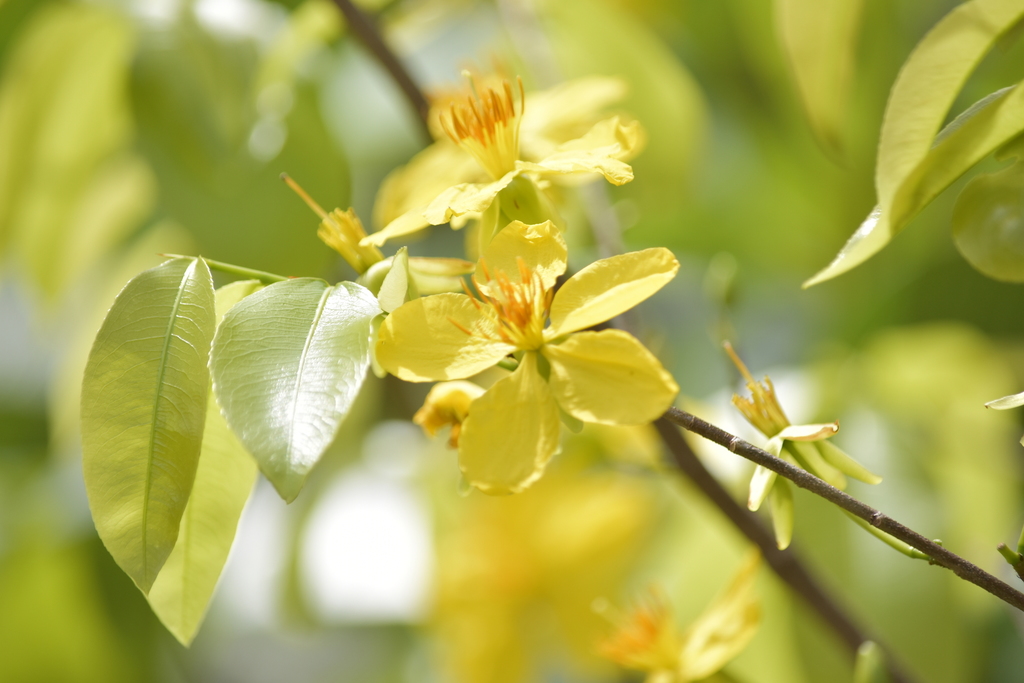
Ochna integerrima
Ochna integerrima, popularly called yellow Mai flower (Vietnamese: mai vàng, hoa mai, hoàng mai in southern Vietnam, although in the north, mai usually refers to Prunus mume), is a plant species in the genus Ochna () and family Ochnaceae. In the wild, it is a small tree or shrub species (2-7 m tall). The timing of the yellow flowers of this plant make it very popular in southern Vietnam, where (often bonsai-style) plants are purchased during Tết.
In Vietnam, the variety of O. integerrima whose flowers have five petals is called mai vàng (yellow mai), whereas mai núi (mountain mai) flowers have between five and nine petals.
Del artículo Ochna integerrima de Wikipedia (CC BY-SA), citado sección por sección
Cómo se cultiva
Ochna integerrima is both easy to grow and to take care of. Farmers choose good seeds, soak them in water, and sow them in moist soil (either in pots or in a garden). Some practices also include coating the seeds with sugar to help them grow stronger. Ochna integerrima likes moist and light soil, cannot stand waterlogging. Therefore, it is necessary to grow Ochna integerrima in high places and water them regularly. If growing in pots, pay attention to fertilizing and change the soil every year. To have a beautiful flower pot, we should often pay attention to cutting branches, bending branches, creating a posture to have unique shaped Ochna integerrima pots.
Wikipedia: «Cultivation»
Dónde vive
Avistamientos registrados
—
registros georreferenciados en GBIF, de museos, herbarios y observadores de campo.
Arrastra el globo para girarlo. Los puntos marcan dónde hay registros, no un mapa de distribución; más oscuro significa más registros.
En los depósitos
Buscando en los depósitos…
Todas las páginas que nombran Ochna integerrima en la Biodiversity Heritage Library →
Esta página se compone en directo a partir de iNaturalist, GBIF, Wikipedia, la Source Library y el Internet Archive. Aún no forma parte del códice editado a mano. Taxón 363256 de iNaturalist.