- Animales
- ›Cordados
- ›Vertebrados
- ›Reptiles
- ›Lagartijas y Serpientes
- ›Serpientes y culebras
- ›Serpientes ciegas
- ›Culebrillas ciegas
- ›Asiatyphlopinae
- ›Cyclotyphlops
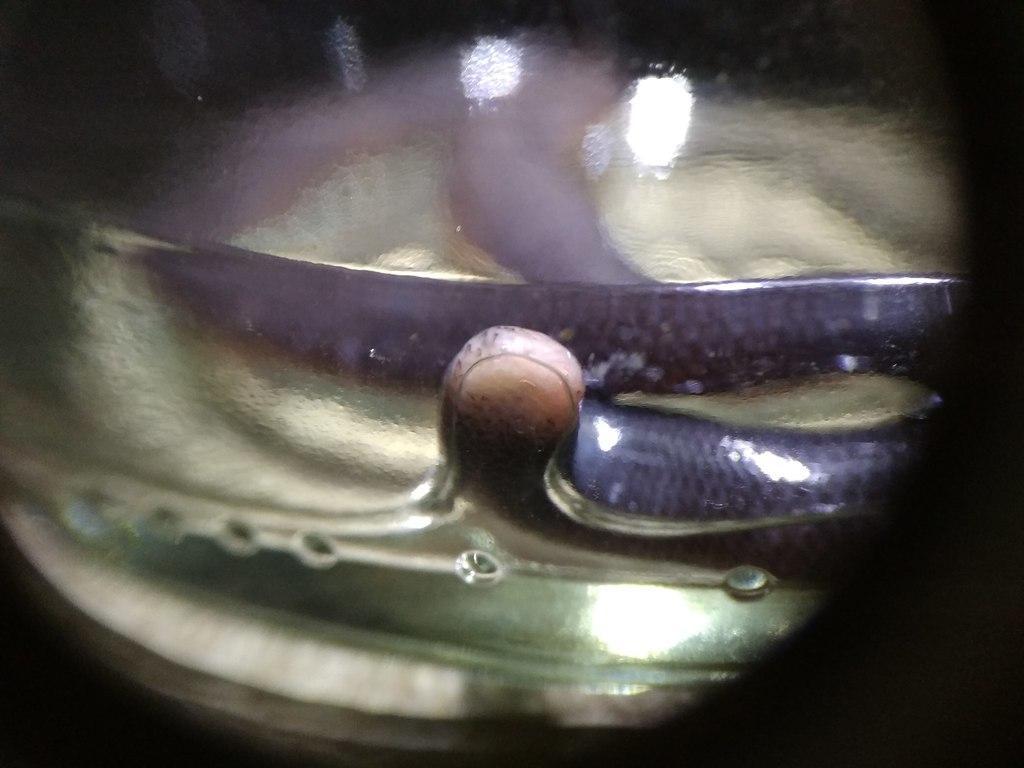
Cyclotyphlops deharvengi
Cyclotyphlops deharvengi, or Deharveng's blind snake, is a species of blind snake placed in the monotypic genus Cyclotyphlops. It is found in southeastern Sulawesi, Indonesia. No subspecies are currently recognized.
Del artículo Cyclotyphlops de Wikipedia (CC BY-SA), citado sección por sección
Descripción
The genus Cyclotyphlops differs from all other genera in the subfamily Asiatyphlopinae by the arrangement of the head scales. There is a large central circular head shield, from which smaller scales radiate. C. deharvengi is dark brown dorsally, and brown ventrally. Maximum recorded total length (including tail) is 14.6 cm (5.7 in).
Wikipedia: «Description»
Distribución y hábitat
C. deharvengi is known only from the type locality, which is "Malawa, between Maros and Bone-Watampon, Selatan Province, southeastern Sulawesi, Indonesia, at an elevation of about 500 m" (1,640 ft).
Wikipedia: «Geographic range»
En la cultura humana
The specific name, deharvengi, is in honor of Louis Deharveng, who is an entomologist at the Muséum national d'histoire naturelle, Paris.
Wikipedia: «Etymology»
Dónde vive
Avistamientos registrados
—
registros georreferenciados en GBIF, de museos, herbarios y observadores de campo.
Arrastra el globo para girarlo. Los puntos marcan dónde hay registros, no un mapa de distribución; más oscuro significa más registros.
En los depósitos
Buscando en los depósitos…
Todas las páginas que nombran Cyclotyphlops deharvengi en la Biodiversity Heritage Library →
Esta página se compone en directo a partir de iNaturalist, GBIF, Wikipedia, la Source Library y el Internet Archive. Aún no forma parte del códice editado a mano. Taxón 32550 de iNaturalist.