- Animales
- ›Cordados
- ›Vertebrados
- ›Reptiles
- ›Lagartos y serpientes
- ›Serpientes y culebras
- ›Víboras y parientes
- ›Crótalos y víboras de foseta
- ›Bothrops
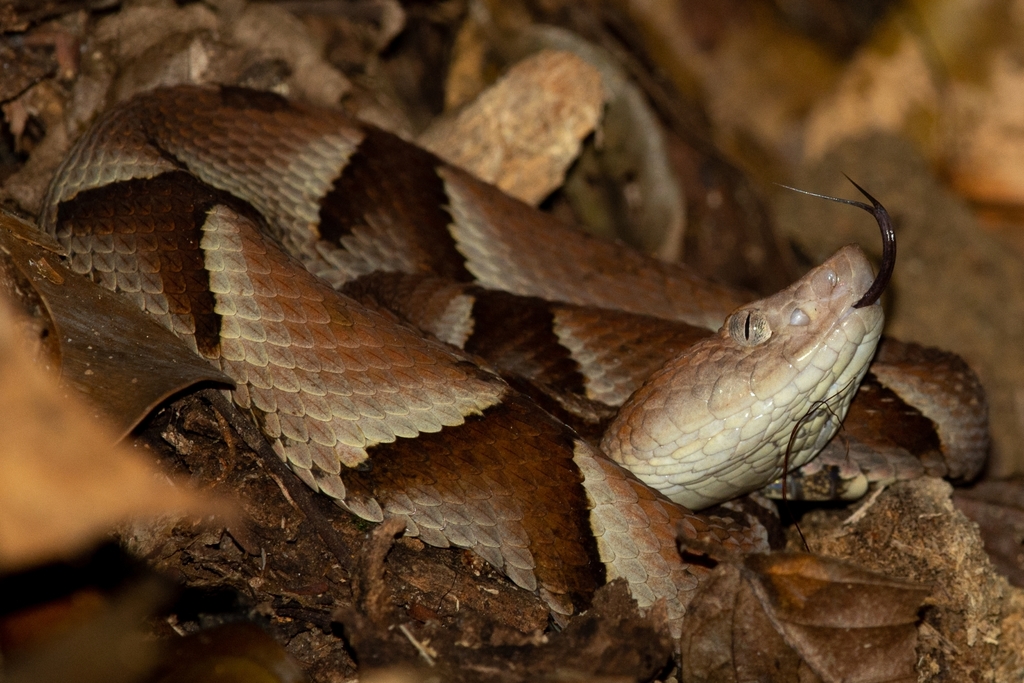
Bothrops muriciensis
Bothrops muriciensis, also known as Jararaca, Jararaca-de-Alagoas, Jararacuçu in Portuguese, is an endangered species of pit viper which is named after the forest it is known to inhabit, Mata de Murici, in Alagoas in the north east of Brazil. As with all vipers, B. muriciensis is venomous.
Del artículo Bothrops muriciensis de Wikipedia (CC BY-SA), citado sección por sección
Descripción
Bothrops muriciensis is distinguishable by its 13-14 dark triangular or trapezoidal markings, and lack of markings between them, as well as the mouth and throat colouring being dark black in males and white in females. These snakes have been discovered up to 77 cm (30 in) (snout-vent length).
Wikipedia: «Description»
Lo que hace
Bothrops muriciensis reproduces sexually, with ovoviviparous birth.
== References ==
Wikipedia: «Reproduction»
Toxicidad
Bothrops muriciensis is considered one of the top 30 most endangered viper species, and are listed on the Brazilian Red List as endangered, as well as globally on the IUCN Red List. Knowledge of the species is lacking and up until 2012 only 9 individuals were known, all close to the first area the species was found in.
Wikipedia: «Endangered status»
Dónde vive
Avistamientos registrados
—
registros georreferenciados en GBIF, de museos, herbarios y observadores de campo.
Arrastra el globo para girarlo. Los puntos marcan dónde hay registros, no un mapa de distribución; más oscuro significa más registros.
En los depósitos
Buscando en los depósitos…
Todas las páginas que nombran Bothrops muriciensis en la Biodiversity Heritage Library →
Esta página se compone en directo a partir de iNaturalist, GBIF, Wikipedia, la Source Library y el Internet Archive. Aún no forma parte del códice editado a mano. Taxón 30802 de iNaturalist.