- Fungi Including Lichens
- ›Ascomycete Fungi
- ›Sac Fungi and Lichens
- ›Sordariomycetes
- ›Hypocreomycetidae
- ›Hypocreales
- ›Sarocladium
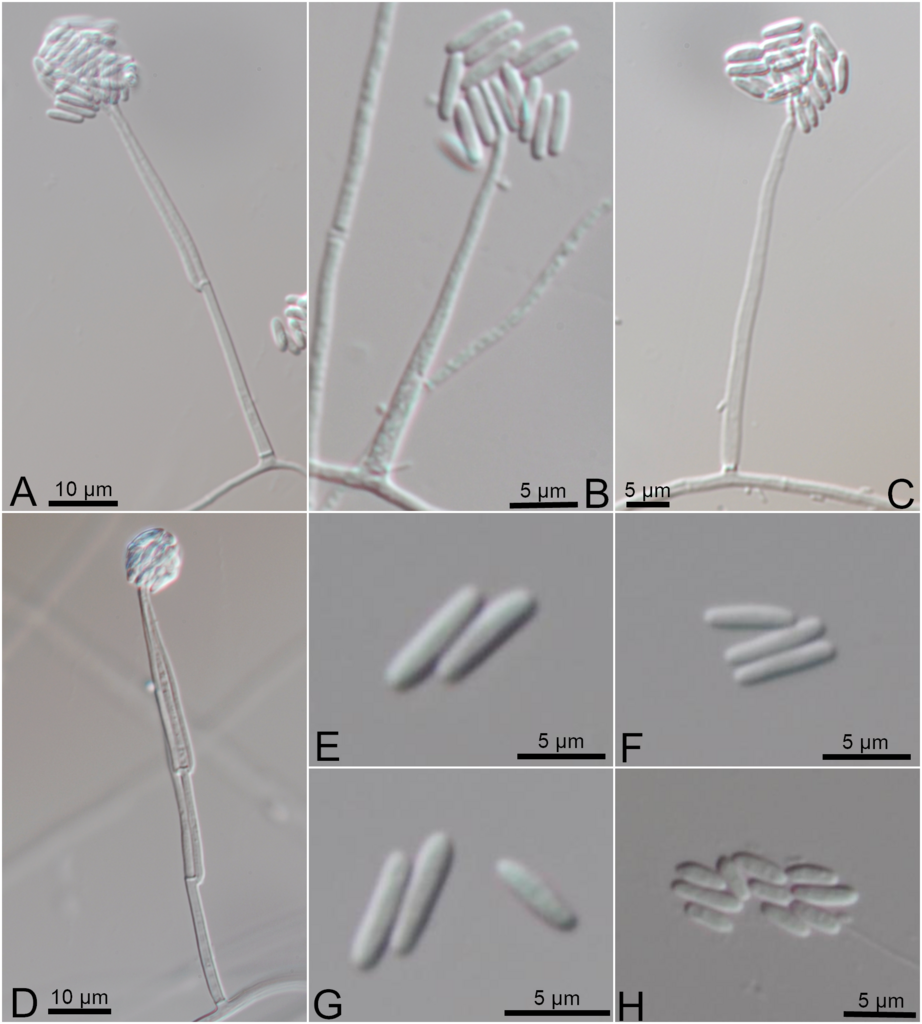
Sarocladium oryzae
Sarocladium oryzae (Sawada) is a plant pathogen causing the sheath rot disease of rice. In culture it produces 0.3–0.627 micrograms of helvolic acid and 0.9–4.8 micrograms of cerulenin per milliliter of culture medium. The level of helvolic acid correlated with a higher incidence of sheath rot disease. Rice grains from infected plants were found to contain 2.2 micrograms helvolic acid and 1.75 micrograms of cerulein per gram of infected seeds, which induce chlorosis and reduce the seed viability
Where it lives
Recorded sightings
—
geo-referenced records in GBIF, from museums, herbaria and field observers.
Drag the globe to turn it. Dots are where records exist, not a range map; darker means more records.
In the stacks
Searching the stacks…
Every page naming Sarocladium oryzae in the Biodiversity Heritage Library →
This page is assembled live from iNaturalist, GBIF, Wikipedia, the Source Library and the Internet Archive. It is not yet part of the hand-edited codex. iNaturalist taxon 976321.