- Fungi Including Lichens
- ›Ascomycete Fungi
- ›Sac Fungi and Lichens
- ›Sordariomycetes
- ›Hypocreomycetidae
- ›Hypocreales
- ›Cordycipitaceae
- ›Cordyceps
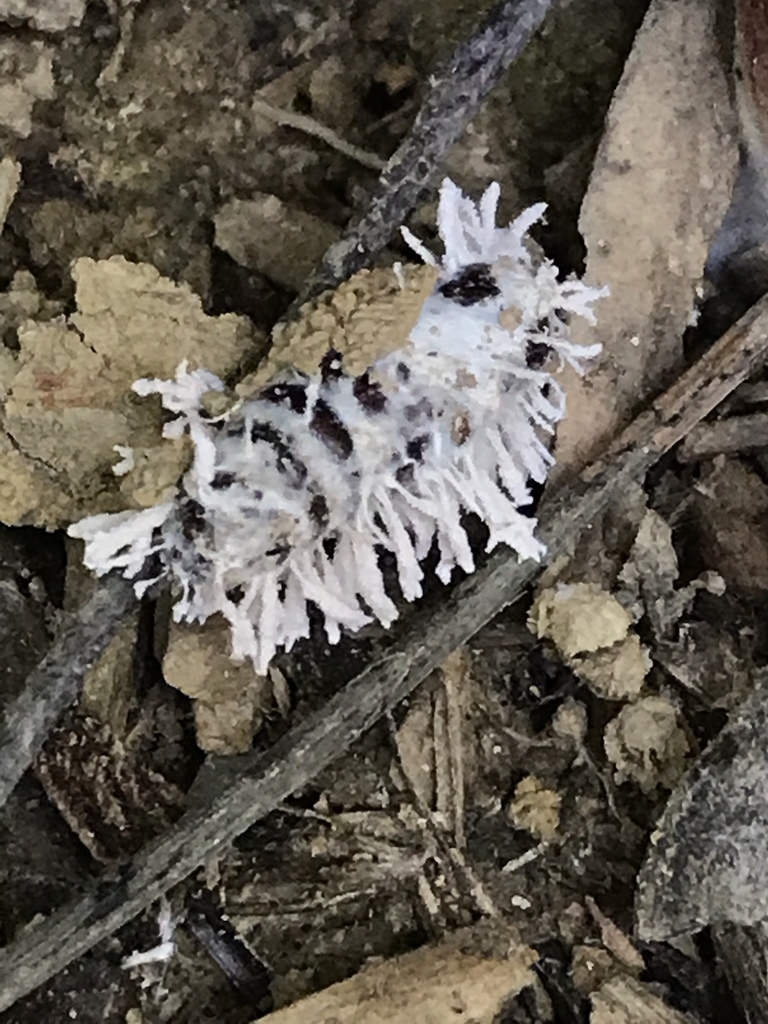
Cordyceps fumosorosea
Isaria fumosorosea is an entomopathogenic fungus, formerly known as Paecilomyces fumosoroseus. It shows promise as a biological pesticide with an extensive host range.
From the article Isaria fumosorosea on Wikipedia (CC BY-SA), quoted section by section
Range & habitat
This fungus has a wide host range that includes insects in over twenty five different families and many species of mite. Agricultural pest insects which are susceptible to infection include the diamondback moth (Plutella xyllostella), the Russian wheat aphid (Diuraphis noxia) and the silverleaf whitefly (Bemisia argentifolii). Among mites, susceptible species include the spotted spider mite (Tetranychus urticae), the European red mite (Panonychus ulmi), the brown mite (Byrobia rubrioculus) and the apple rust mite (Aculus schlectendali).
Wikipedia: “Host range”
What it does
When a conidium or blastospore of Isaria fumosorosea lands on a suitable host, it produces enzymes to penetrate the insect's cuticle. A germ tube then grows into the haemocoel and the fungus proliferates inside the insect’s body. The fungus can also enter through the spiracles, the mouth or the anal opening. The mycelia spread in the haemolymph and tissues, eventually emerging from the insect and producing conidia. Mortality of the insect has been ascribed to the drainage of its nutrients, the destruction of its tissues and the release of toxins.
Wikipedia: “Life cycle”
Where it lives
Recorded sightings
—
geo-referenced records in GBIF, from museums, herbaria and field observers.
Drag the globe to turn it. Dots are where records exist, not a range map; darker means more records.
In the stacks
Searching the stacks…
Every page naming Cordyceps fumosorosea in the Biodiversity Heritage Library →
This page is assembled live from iNaturalist, GBIF, Wikipedia, the Source Library and the Internet Archive. It is not yet part of the hand-edited codex. iNaturalist taxon 960431.