- Fungi Including Lichens
- ›Basidiomycete Fungi
- ›Higher Basidiomycetes
- ›Mushrooms, Bracket Fungi, Puffballs, and Allies
- ›Hymenochaetales
- ›Hymenochaetaceae
- ›Fuscoporia
- ›Fuscoporia gilva
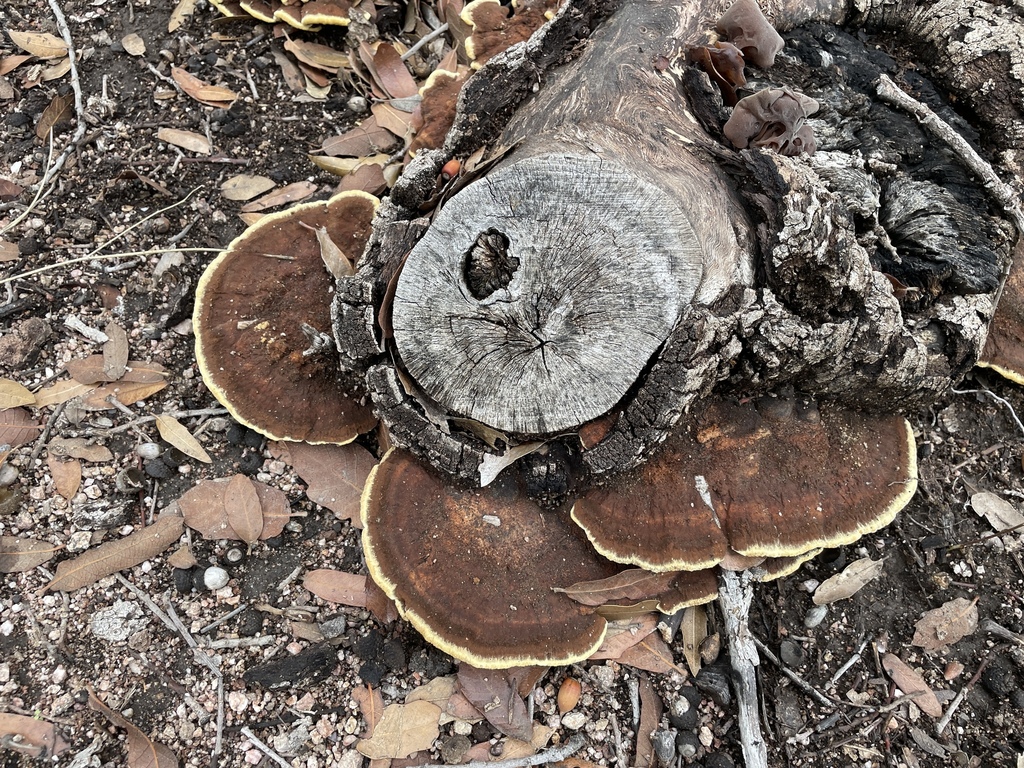
Mustard Yellow Polypore
Fuscoporia gilva
Fuscoporia gilva, commonly known as the oak conk, is a species of fungal plant pathogen which infects several hosts. It produces a tough, corky mushroom when it fruits. In traditional Chinese medicine, it is used to treat stomachaches and cancer; polysaccharides isolated from lab-grown F. gilvus have been shown to inhibit the growth of melanoma in a mouse model.
From the article Fuscoporia gilva on Wikipedia (CC BY-SA), quoted section by section
Description
The fruit bodies typically grow in rows of horizontal platforms, which grow over several years and sometimes "smear" onto the wood. The caps are usually semicircular with lumpy margins, 2–15 centimetres (3⁄4–5+7⁄8 inches) wide, with zonate colouration ranging from dark brown to light reddish-brown or yellowish at the margin, which is up to 1 cm thick and velvety. There are 5–8 pores per square millimetre. The flesh is tough and corky. The spore print is whitish or yellow.
Similar species. Mensularia radiata, the alder bracket, is usually found on non-oak hardwoods; fresh specimens often exhibit white-tipped pores near the margin.
What it does
F.gilva is a plant pathogen that infects several hosts. It is occasionally eaten by the widespread American pleasing fungus beetle Ischyrus quadripunctatus.
Wikipedia: “Ecology”
At the table
In traditional Chinese medicine, it is used to treat stomachaches and cancer; polysaccharides isolated from lab-grown F. gilvus have been shown to inhibit the growth of melanoma in a mouse model.
Wikipedia: “Uses”
Where it lives
Recorded sightings
—
geo-referenced records in GBIF, from museums, herbaria and field observers.
Drag the globe to turn it. Dots are where records exist, not a range map; darker means more records.
In the stacks
Searching the stacks…
Every page naming Fuscoporia gilva in the Biodiversity Heritage Library →
This page is assembled live from iNaturalist, GBIF, Wikipedia, the Source Library and the Internet Archive. It is not yet part of the hand-edited codex. iNaturalist taxon 896124.