- Fungi Including Lichens
- ›Ascomycete Fungi
- ›Sac Fungi and Lichens
- ›Leotiomycetes
- ›Helotiales
- ›Helotiaceae
- ›Hymenoscyphus
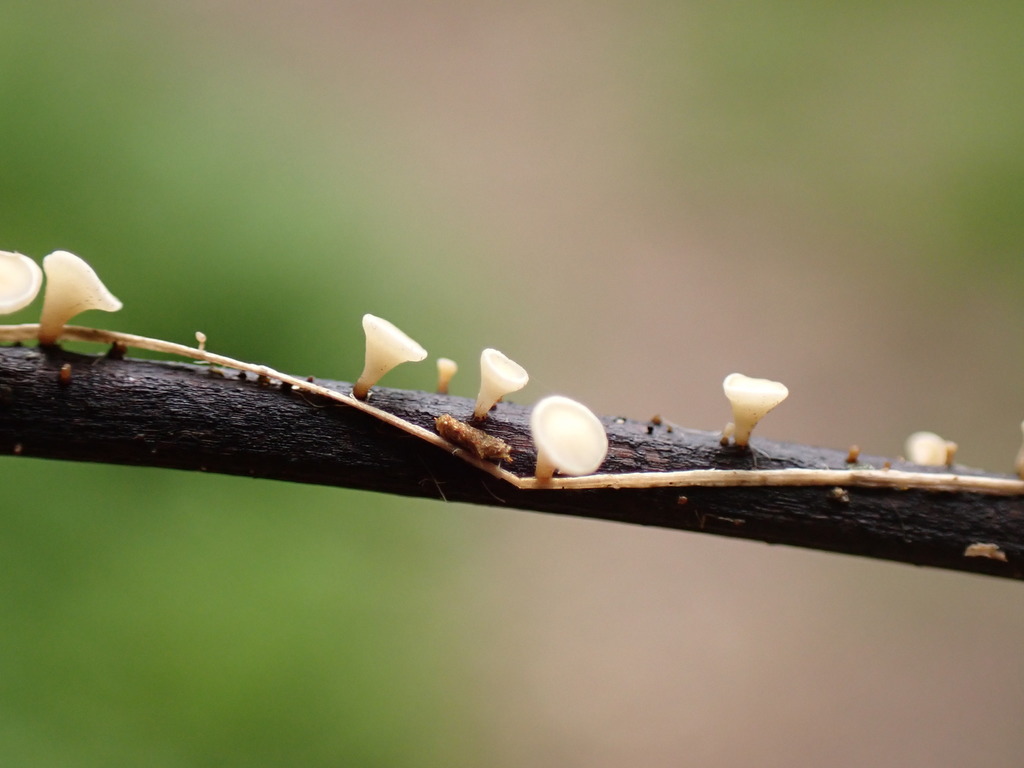
Ash Dieback
Hymenoscyphus fraxineus
Hymenoscyphus fraxineus is an ascomycete fungus that causes ash dieback, a chronic fungal disease of ash trees in Europe characterised by leaf loss and crown dieback in infected trees. The fungus was first scientifically described in 2006 under the name Chalara fraxinea. Four years later it was discovered that Chalara fraxinea is the asexual (anamorphic) stage of a fungus that was subsequently named Hymenoscyphus pseudoalbidus and then renamed as Hymenoscyphus fraxineus.
The first recognised report of this disease was in 1992 after a large number of ash trees had died in Poland. The disease is now widespread in Europe, with up to 85% mortality rates recorded in plantations and 69% in woodlands. It is closely related to a native fungus Hymenoscyphus albidus, which is harmless to European ash trees.
Where it lives
Recorded sightings
—
geo-referenced records in GBIF, from museums, herbaria and field observers.
Drag the globe to turn it. Dots are where records exist, not a range map; darker means more records.
In the stacks
Searching the stacks…
Every page naming Hymenoscyphus fraxineus in the Biodiversity Heritage Library →
This page is assembled live from iNaturalist, GBIF, Wikipedia, the Source Library and the Internet Archive. It is not yet part of the hand-edited codex. iNaturalist taxon 869324.