- Fungi Including Lichens
- ›Basidiomycete Fungi
- ›Higher Basidiomycetes
- ›Mushrooms, Bracket Fungi, Puffballs, and Allies
- ›Agaricomycetidae
- ›Common Gilled Mushrooms and Allies
- ›Tricholomatineae
- ›Lyophyllaceae
- ›Termitomyces
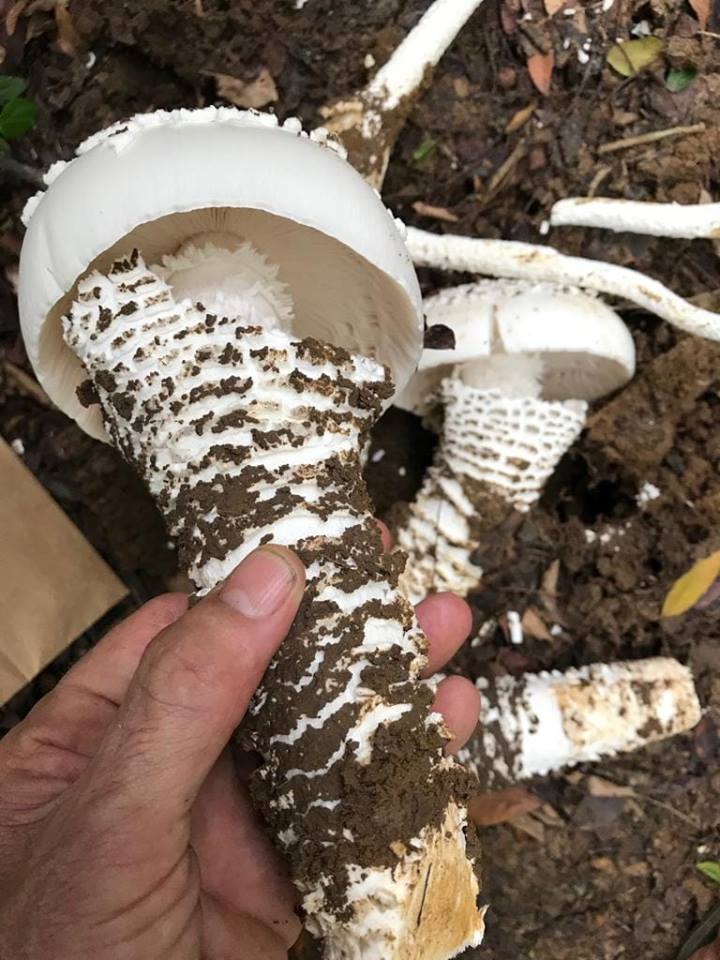
Omajowa
Termitomyces schimperi
Termitomyces schimperi is a large mushroom associated with the termite species Macrotermes michaelseni. It grows in the northern part of Southern Africa, from northern Namibia up to Democratic Republic of Congo (DRC), eastwards to Malawi and Mozambique, and westwards to Ivory Coast.
In Namibia it is commonly referred to by its Herero name Ejova (singular)/ Omajowa (plural). German Namibians refer to the mushroom as "Termitenpilz."
From the article Termitomyces schimperi on Wikipedia (CC BY-SA), quoted section by section
Description
Termitomyces schimperi can grow to the size of a "large frying pan". When they emerge, the fruitbody of the fungus are the "size of a man’s fist", before rapidly expanding to 15–28 cm and sometimes reaching 40 cm in diameter. The tops are white. Yellowish to red-brown discolouration of the thick soft scales may occur by the mound soil. Below the top most layer, the scales are white. The pseudorhiza (a cord-like structure resembling a plant root) is narrower at its origin in the termite nest, and may be as long as 90 cm. Its consistency above ground is less dense. The sporocarps can be seen in groups of 5–10 around the lower parts of termite mound, and grow to around 50 cm above soil level. Up to 50 sporocarps have been reported around a single mound. The Termitomyces schimperi usually appear after soaking rains of 12 mm or more during spring, but the main crop develops during January to March which is the main rainy season. If the hyphae remain in the mound when harvested, they may grow on the same termite mound for many years. The termites consume the partial veil following maturation of the fungus.
Wikipedia: “Characteristics”
In human culture
The mushroom is seen as a symbol of growth and prosperity by Namibians and is highly valued in Namibian culture. Their popularity in Africa is reflected in their appearance on postage stamps. It has high value as an edible source in the Ivory Coast.
== References ==
Wikipedia: “Cultural association”
Where it lives
Recorded sightings
—
geo-referenced records in GBIF, from museums, herbaria and field observers.
Drag the globe to turn it. Dots are where records exist, not a range map; darker means more records.
In the stacks
Searching the stacks…
Every page naming Termitomyces schimperi in the Biodiversity Heritage Library →
This page is assembled live from iNaturalist, GBIF, Wikipedia, the Source Library and the Internet Archive. It is not yet part of the hand-edited codex. iNaturalist taxon 855066.