- Fungi Including Lichens
- ›Ascomycete Fungi
- ›Sac Fungi and Lichens
- ›Common Lichens
- ›Shield Lichens, Sunburst Lichens, Rosette Lichens, and Allies
- ›shield lichens, rim lichens, and allies
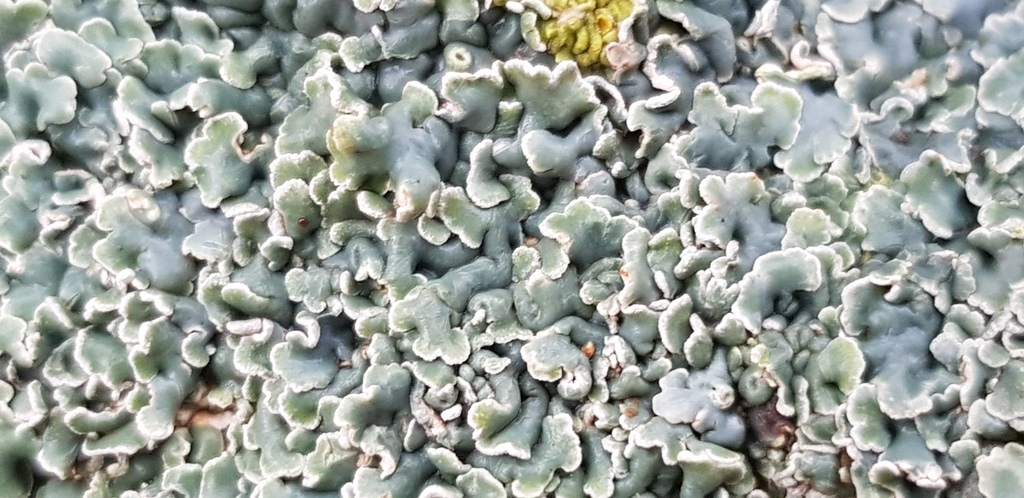
Squamarinaceae
The Cladoniaceae are a family of lichen-forming fungi in the order Lecanorales, comprising about 560 species distributed amongst 18 genera. This family is one of the largest among lichen-forming fungi and is globally distributed, from Arctic tundra to tropical rainforests, favouring humid environments while being intolerant of arid conditions. Molecular phylogenetics has substantially advanced the understanding of their complex taxonomic history, revealing intricate evolutionary relationships and leading to a refined classification. Notable members include reindeer moss and cup lichens of the genus Cladonia, which consist of about 500 species and forms a major part of the diet for large mammals in taiga and tundra ecosystems.
A distinctive feature of many Cladoniaceae species is their dimorphic thallus: a scaly or crust-like primary form and a fruticose (shrub-like) secondary form known as a podetium or pseudopodetium. These lichens typically grow on soil, decaying wood, or tree trunks, with a few species found on rocks. They form symbiotic associations with green algae, usually from the genus Asterochloris. The family is known for its diverse secondary metabolites—over 70 have been identified—which play roles in species identification and ecological functions such as protection against UV radiation and herbivore deterrence. Genomic studies have uncovered considerable variation in mitochondrial DNA among Cladoniaceae species, and this variation has helped clarify relationships within the family.
2 branches of this family, most-observed first
See this branch on the Wheel of Life →
Where it lives
Recorded sightings
—
geo-referenced records in GBIF, from museums, herbaria and field observers.
Drag the globe to turn it. Dots are where records exist, not a range map; darker means more records.
In the stacks
Searching the stacks…
Every page naming Squamarinaceae in the Biodiversity Heritage Library →
This page is assembled live from iNaturalist, GBIF, Wikipedia, the Source Library and the Internet Archive. It is not yet part of the hand-edited codex. iNaturalist taxon 791887.