- Fungi Including Lichens
- ›Basidiomycete Fungi
- ›Higher Basidiomycetes
- ›Mushrooms, Bracket Fungi, Puffballs, and Allies
- ›Agaricomycetidae
- ›Common Gilled Mushrooms and Allies
- ›Agaricineae
- ›Brittlestems and Allies
- ›Homophron
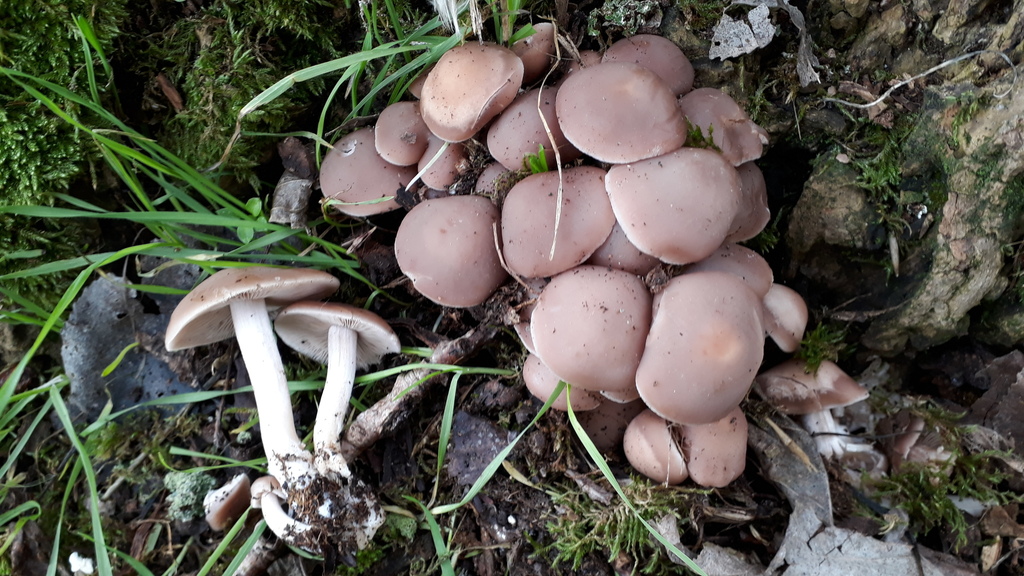
chestnut brittlestem
Homophron spadiceum
Psathyrella spadicea or Homophron spadiceum, commonly known as the chestnut brittlestem, is a species of agaric fungus in the family Psathyrellaceae. The fungus was originally described by German mycologist Jacob Christian Schäffer in 1783 as Agaricus spadiceus. Rolf Singer transferred it to the genus Psathyrella in 1951, in which it was classified in the section Spadiceae. In 2015 Örstadius & Larsson recreated the genus Homophron (a name used at the sub-genus level since 1883) for a
From the article Psathyrella spadicea on Wikipedia (CC BY-SA), quoted section by section
Description
The brown cap is up to 7 centimetres (2+3⁄4 in) wide. The tan to brown gills are very close. The stem is up to 8 cm long and 1 cm thick. The spore print is pinkish-brown. Outside of its genus, it can resemble members of Hebeloma.
Range & habitat
The species can be found near the base of hardwood trees. In North America, it is found in the Pacific Northwest, northern California, and in the east. It is also found in Europe.
Wikipedia: “Habitat and distribution”
Where it lives
Recorded sightings
—
geo-referenced records in GBIF, from museums, herbaria and field observers.
Drag the globe to turn it. Dots are where records exist, not a range map; darker means more records.
In the stacks
Searching the stacks…
Every page naming Homophron spadiceum in the Biodiversity Heritage Library →
This page is assembled live from iNaturalist, GBIF, Wikipedia, the Source Library and the Internet Archive. It is not yet part of the hand-edited codex. iNaturalist taxon 782235.