- Fungi Including Lichens
- ›Basidiomycete Fungi
- ›Higher Basidiomycetes
- ›Mushrooms, Bracket Fungi, Puffballs, and Allies
- ›Russulales
- ›Stereaceae
- ›Stereum
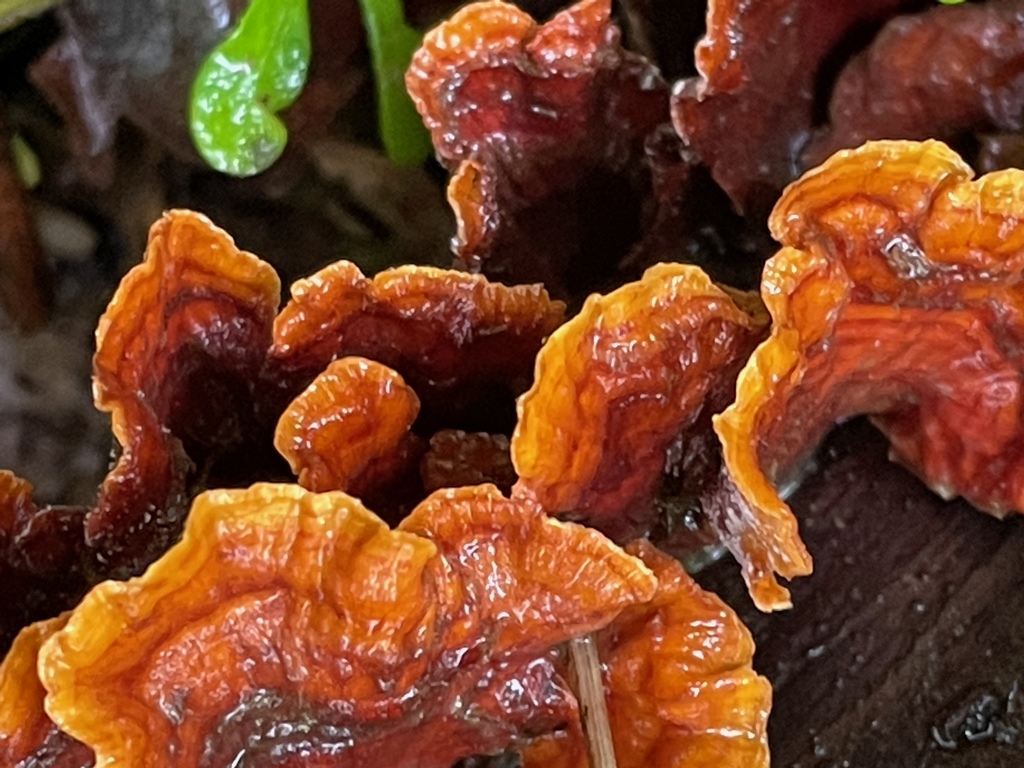
hairy curtain crust
Stereum hirsutum
Stereum hirsutum, also called false turkey tail, is a fungus typically forming multiple brackets on dead wood. It is also a plant pathogen infecting peach trees. S. hirsutum is in turn parasitised by certain other species such as the fungus Tremella aurantia. Substrates for S. hirsutum include dead limbs and trunks of both hardwoods and conifers.
From the article Stereum hirsutum on Wikipedia (CC BY-SA), quoted section by section
Description
The fuzzy orangish fruiting bodies typically form in multiple overlapping brackets on dead wood. The cap is 1–5 centimetres (3⁄8–2 in) wide, sometimes fused to form wider shelves. The flesh is thin and tough. The spores and spore print are white. It is inedible.
Similar species. Similar species include Stereum rameale, S. ostrea, and Trametes versicolor.
Range & habitat
Its substrates include dead limbs and trunks of both hardwoods and conifers. It is found in various parts of the world including North America, Europe (from the Nordic countries south to the Mediterranean sea and the British Isles) and Australia.
Wikipedia: “Habitat and distribution”
What it does
It is a plant pathogen infecting peach trees. S. hirsutum is itself parasitised by species such as the fungus Naematelia aurantia.
Wikipedia: “Ecology”
Where it lives
Recorded sightings
—
geo-referenced records in GBIF, from museums, herbaria and field observers.
Drag the globe to turn it. Dots are where records exist, not a range map; darker means more records.
In the old herbals & bestiaries


In the stacks
Searching the stacks…
Every page naming Stereum hirsutum in the Biodiversity Heritage Library →
This page is assembled live from iNaturalist, GBIF, Wikipedia, the Source Library and the Internet Archive. It is not yet part of the hand-edited codex. iNaturalist taxon 55501.