- Fungi Including Lichens
- ›Basidiomycete Fungi
- ›Higher Basidiomycetes
- ›Mushrooms, Bracket Fungi, Puffballs, and Allies
- ›Phallomycetidae
- ›stinkhorns and allies

stinkhorns
Phallaceae
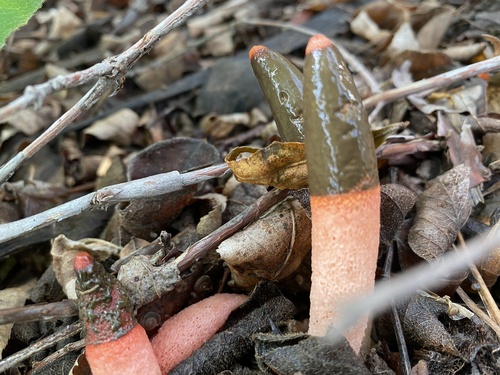
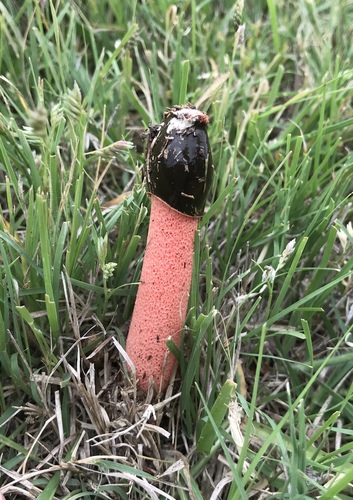
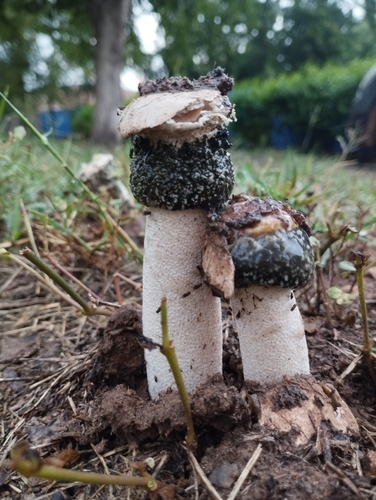
The Phallaceae are a family of fungi, commonly known as stinkhorns, within the order Phallales. Stinkhorns have a worldwide distribution, but are especially prevalent in tropical regions. They are known for their foul-smelling, sticky spore masses, or gleba, borne on the end of a stalk called the receptaculum. The characteristic fruiting-body structure, a single, unbranched receptaculum with an externally attached gleba on the upper part, distinguishes Phallaceae from other families in the Phallales. The spore mass typically smells of carrion or dung, and attracts flies, beetles and other insects to help disperse the spores. Although there is great diversity in body structure shape among the various genera, all species in the Phallaceae begin their development as oval or round structures known as "eggs". The appearance of Phallaceae is often sudden, as gleba can erupt from the underground egg and burst open within an hour. According to a 2008 estimate, the family contains 21 genera and 77 species.



Where it lives
Recorded sightings
—
geo-referenced records in GBIF, from museums, herbaria and field observers.
Drag the globe to turn it. Dots are where records exist, not a range map; darker means more records.
In the stacks
Searching the stacks…
Every page naming Phallaceae in the Biodiversity Heritage Library →
This page is assembled live from iNaturalist, GBIF, Wikipedia, the Source Library and the Internet Archive. It is not yet part of the hand-edited codex. iNaturalist taxon 51136.