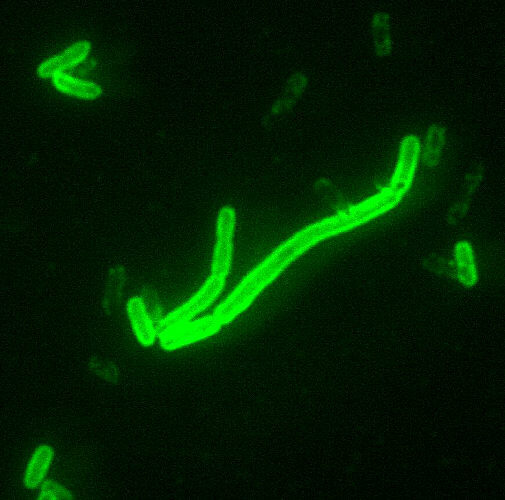
Yersinia
Yersinia is a genus of bacteria in the family Yersiniaceae. Yersinia species are Gram-negative, rod-shaped (bacillus) bacteria, a few micrometers long and fractions of a micrometer in diameter, and are facultative anaerobes. Some members of Yersinia are pathogenic in humans; in particular, Y. pestis is the causative agent of the plague. Rodents are the natural reservoirs of Yersinia; less frequently, other mammals serve as the host. Infection may occur either through blood (in the case of...
8 branches of this genus, most-observed first
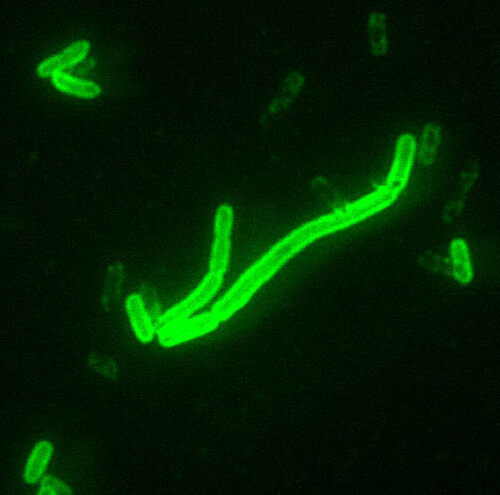
Plague Bacillus
speciesYersinia pestis
Yersinia aldovae
speciesYersinia aldovae
Yersinia aleksiciae
speciesYersinia aleksiciae
Yersinia bercovieri
speciesYersinia bercovieri
Yersinia mollaretii
speciesYersinia mollaretii
Yersinia frederiksenii
speciesYersinia frederiksenii
Yersinia pseudotuberculosis
speciesYersinia pseudotuberculosis
Yersinia entomophaga
speciesYersinia entomophaga
Where it lives
Recorded sightings
—
geo-referenced records in GBIF, from museums, herbaria and field observers.
Drag the globe to turn it. Dots are where records exist, not a range map; darker means more records.
In the stacks
Searching the stacks…
Every page naming Yersinia in the Biodiversity Heritage Library →
This page is assembled live from iNaturalist, GBIF, Wikipedia, the Source Library and the Internet Archive. It is not yet part of the hand-edited codex. iNaturalist taxon 464252.