- Fungi Including Lichens
- ›Ascomycete Fungi
- ›Sac Fungi and Lichens
- ›Common Lichens
- ›Shield Lichens, Sunburst Lichens, Rosette Lichens, and Allies
- ›shield lichens, rim lichens, and allies
- ›Stereocaulaceae
- ›Lepraria
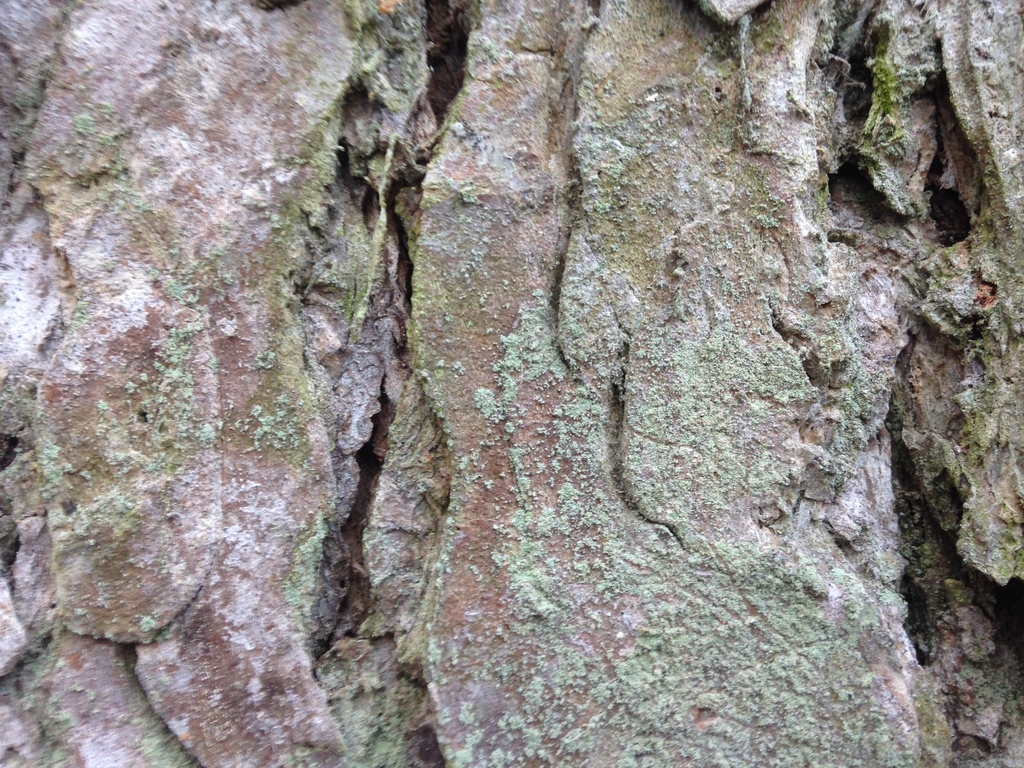
Lepraria hodkinsoniana
Lepraria hodkinsoniana is a species of lichen in the family Stereocaulaceae. It was formally described in 2011 based on specimens from New Jersey that had long been reported under the European name Lepraria incana, a species not thought to occur in North America. It forms a thin, powdery, greenish-blue crust on tree bark. The species is found in eastern North America, where it grows mainly on maples and oaks in hardwood forests, and it is difficult to separate from L. incana by appearance and chemistry alone.
From the article Lepraria hodkinsoniana on Wikipedia (CC BY-SA), quoted section by section
Description
The thallus forms a thin, powdery (leprose) crust made of tiny granules. It develops from isolated granules that divide into small clusters and later merge into a discontinuous, greenish-blue crust, typically less than 0.1 mm thick. A prothallus (a marginal zone of fungal tissue) is usually persistent, while a distinct hypothallus and rhizohyphae are absent or poorly developed. Microscopically, the hyphae are hyaline and are often coated by crystals that dissolve in potassium hydroxide (K). The granules are typically about 15–60 μm in diameter, and they are initially uncorticated but may develop a thin, weak pseudocortex with age; the photobiont (photosynthetic partner) is a green, coccoid alga with roughly spherical cells about 5–16 μm across. Chemically, L. hodkinsoniana is characterized by divaricatic acid and zeorin. Atranorin is often detected but is inconsistent, and nordivaricatic acid has only rarely been reported as a trace component. Chemical spot tests are typically negative (K−, C−), with KC sometimes negative or only very weakly pink; the thallus is UV+ (blue-white).
Range & habitat
Lepraria hodkinsoniana is restricted to eastern North America, where it grows mainly on the bark of hardwood trees, especially maples and oaks. It has also been found occasionally on conifers, and very rarely on non-calcareous rocks in habitats with high humidity. The species is most common in the Mid-Atlantic Coastal Plain, where it is often found in mesic upland hardwood forests and can occur alongside Lepraria caesiella. Records span a broad eastern range, including the Appalachian Mountains, the Ozark region, and the Great Lakes area. It was reported for the first time from Nova Scotia in 2019. Although L. hodkinsoniana is considered infrequent overall, it is not thought to face any imminent threats.
== References ==
Wikipedia: “Habitat and distribution”
Where it lives
Recorded sightings
—
geo-referenced records in GBIF, from museums, herbaria and field observers.
Drag the globe to turn it. Dots are where records exist, not a range map; darker means more records.
In the stacks
Searching the stacks…
Every page naming Lepraria hodkinsoniana in the Biodiversity Heritage Library →
This page is assembled live from iNaturalist, GBIF, Wikipedia, the Source Library and the Internet Archive. It is not yet part of the hand-edited codex. iNaturalist taxon 463348.