- Fungi Including Lichens
- ›Basidiomycete Fungi
- ›Higher Basidiomycetes
- ›Mushrooms, Bracket Fungi, Puffballs, and Allies
- ›Agaricomycetidae
- ›Common Gilled Mushrooms and Allies
- ›Agaricineae
- ›Strophariaceae
- ›Pholiota
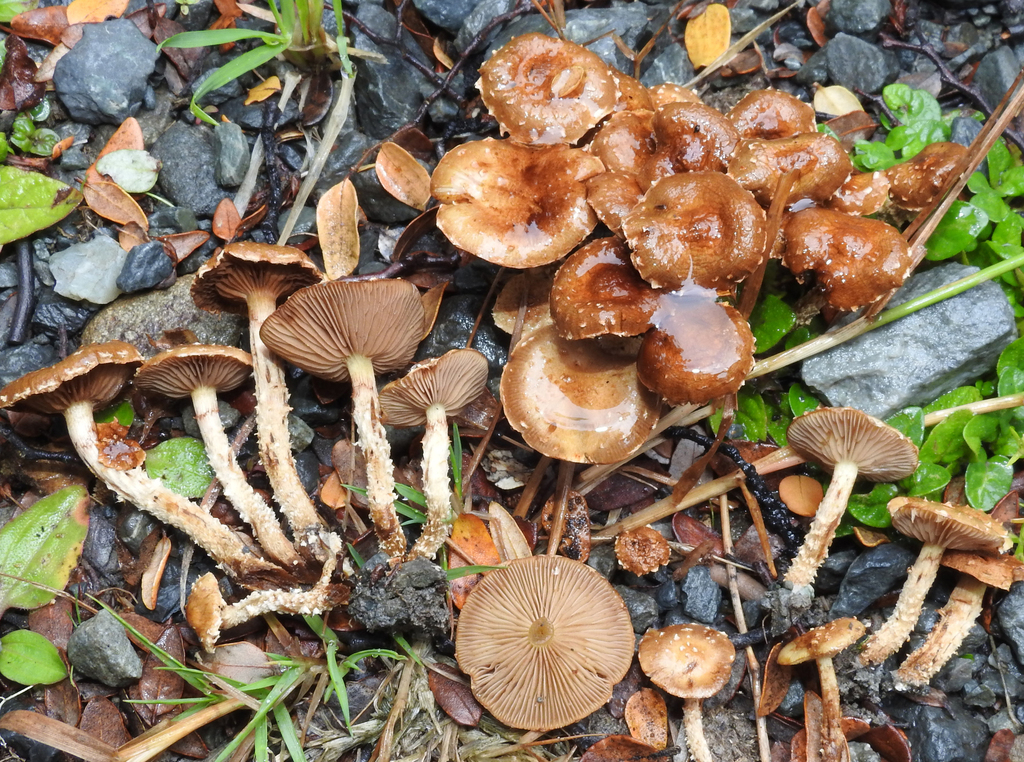
Pholiota subflammans
Pholiota subflammans is a species of mushroom of the family Strophariaceae. It was first described by the Italian mycologist Carlo Luigi Spegazzini in 1887. A saprotroph, P. subflammans can be found on decaying wood or on mossy and grassy soil. It is present in Argentina, Chile, New Zealand, and Papua New Guinea. P. subflammans fruit bodies have a rough and scaly appearance, and the stipes have black rings. The mushroom is inedible.
Where it lives
Recorded sightings
—
geo-referenced records in GBIF, from museums, herbaria and field observers.
Drag the globe to turn it. Dots are where records exist, not a range map; darker means more records.
In the stacks
Searching the stacks…
Every page naming Pholiota subflammans in the Biodiversity Heritage Library →
This page is assembled live from iNaturalist, GBIF, Wikipedia, the Source Library and the Internet Archive. It is not yet part of the hand-edited codex. iNaturalist taxon 383583.