- Fungi Including Lichens
- ›Ascomycete Fungi
- ›Sac Fungi and Lichens
- ›Leotiomycetes
- ›Helotiales
- ›Sclerotiniaceae
- ›Sclerotinia
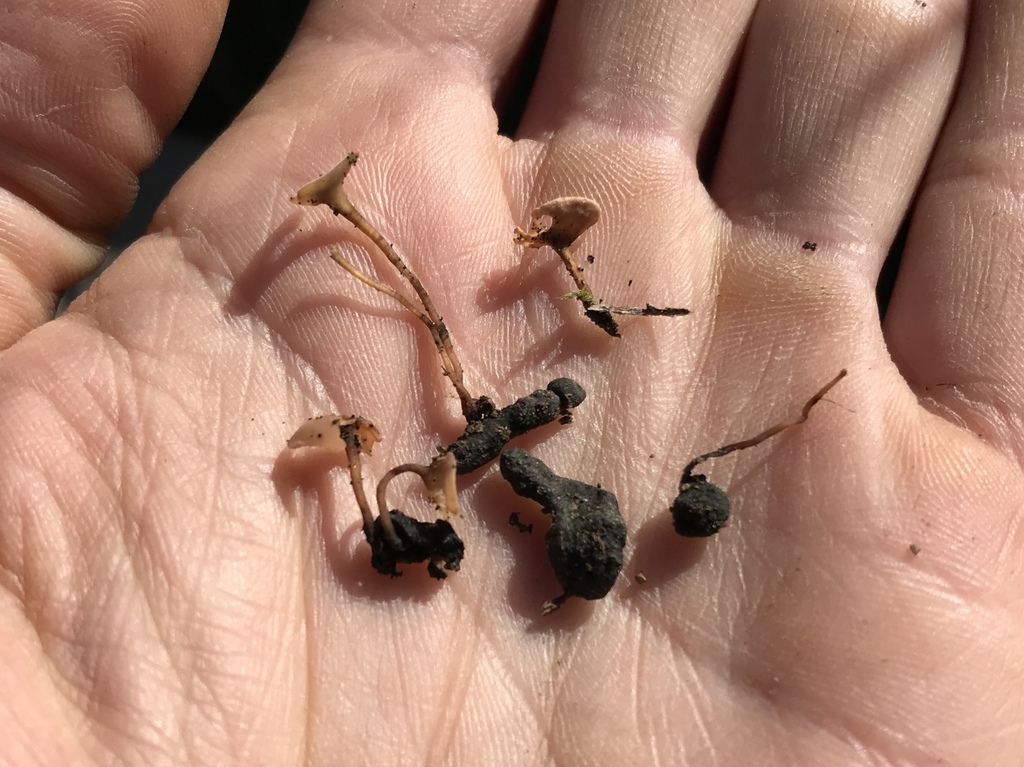
white mold
Sclerotinia sclerotiorum
Sclerotinia sclerotiorum is a plant pathogenic fungus and can cause a disease called white mold if conditions are conducive. S. sclerotiorum can also be known as cottony rot, watery soft rot, stem rot, drop, crown rot and blossom blight. A key characteristic of this pathogen is its ability to produce black resting structures known as sclerotia and white fuzzy growths of mycelium on the plant it infects. These sclerotia give rise to a fruiting body in the spring that produces spores in a sac which is why fungi in this class are called sac fungi (Ascomycota). This pathogen can occur on many continents and has a wide host range of plants. When S. sclerotiorum is onset in the field by favorable environmental conditions, losses can be great and control measures should be considered.
From the article Sclerotinia sclerotiorum on Wikipedia (CC BY-SA), quoted section by section
What it does
The lifecycle of Sclerotinia sclerotiorum can be described as monocyclic, as there are no secondary innoculums produced. During late summer to early fall, the fungus will produce a survival structure called a sclerotium either on or inside the tissues of a host plant. S. sclerotiorum sclerotia can remain viable for at least three years and germinate to produce fruiting bodies called apothecia, which are small, thin stalks ending with a cup-like structure about 3–6 mm in diameter. The cup of the apothecium is lined with asci, in which the ascospores are contained. When the ascospores are released from the asci, they are carried by the wind until they land on a suitable host. The ascospores of S. sclerotiorum infect aboveground plant host tissue and begin to invade the host's tissues via mycelium, causing infection. S. sclerotiorum is capable of invading nearly all tissue types including stems, foliage, flowers, fruits, and roots. Eventually white, fluffy mycelium will begin to grow on the surface of the infected tissues. At the end of the growing season, S. sclerotiorum will once again produce sclerotia. The sclerotia will then remain on the surface of the ground or in the soil, on either living or dead plant parts until the next season. The lifecycle will then continue respectively. There are two theories contending to explain the majority of S. …
Wikipedia: “Life cycle”
Where it lives
Recorded sightings
—
geo-referenced records in GBIF, from museums, herbaria and field observers.
Drag the globe to turn it. Dots are where records exist, not a range map; darker means more records.
In the stacks
Searching the stacks…
Every page naming Sclerotinia sclerotiorum in the Biodiversity Heritage Library →
This page is assembled live from iNaturalist, GBIF, Wikipedia, the Source Library and the Internet Archive. It is not yet part of the hand-edited codex. iNaturalist taxon 360228.