- Fungi Including Lichens
- ›Ascomycete Fungi
- ›Sac Fungi and Lichens
- ›Dothideomycetes
- ›Pleosporomycetidae
- ›Pleosporales
- ›Pleosporaceae
- ›Alternaria
Early Blight
Alternaria solani
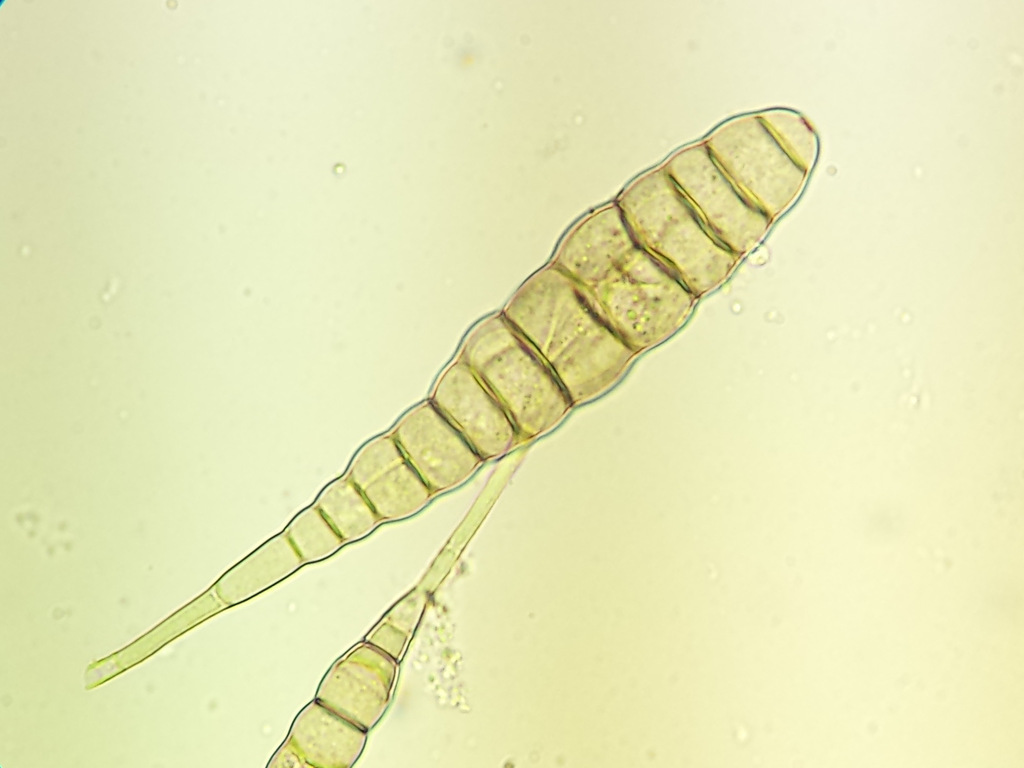
Alternaria solani is a fungal pathogen that produces a disease in tomato and potato plants called early blight. The pathogen produces distinctive "bullseye" patterned leaf spots and can also cause stem lesions and fruit rot on tomato and tuber blight on potato. Despite the name "early", foliar symptoms usually occur on older leaves. If uncontrolled, early blight can cause significant yield reductions. Primary methods of controlling this disease include preventing long periods of wetness on leaf surfaces and applying fungicides. Early blight can also be caused by Alternaria tomatophila, which is more virulent on stems and leaves of tomato plants than Alternaria solani.
Geographically, A. solani is problematic in tomato production areas east of the Rocky Mountains, rather than the drier western United States. A. solani is also present in most potato production regions every year but has a significant effect on yield only when frequent wetting of foliage favors symptom development.
From the article Alternaria solani on Wikipedia (CC BY-SA), quoted section by section
In human culture
Clear infected debris from field to reduce inoculum for the next year. Water plants in the morning so plants are wet for the shortest amount of time. Use a drip irrigation system to minimize leaf wetness. Wet leaves provide optimal conditions for fungal growth. Use mulch so spores that were already in the soil are blocked from splashing onto the leaves. Rotate to a non-solanaceous crop for at least three years. The more potato-free years, the less infection. If possible control wild population of Solanaceae. This will decrease the amount of inoculum to infect your plants. Closely monitor the field, especially in warm damp weather when it grows fastest, to reduce loss of crop and spray fungicide in time. Plant resistant cultivars. Increase air circulation in rows. Damp conditions allow for optimal growth of A. solani and the disease spreads more rapidly. Better air circulation can be achieved by planting farther apart or by trimming leaves.
Wikipedia: “Cultural control”
Where it lives
Recorded sightings
—
geo-referenced records in GBIF, from museums, herbaria and field observers.
Drag the globe to turn it. Dots are where records exist, not a range map; darker means more records.
In the stacks
Searching the stacks…
Every page naming Alternaria solani in the Biodiversity Heritage Library →
This page is assembled live from iNaturalist, GBIF, Wikipedia, the Source Library and the Internet Archive. It is not yet part of the hand-edited codex. iNaturalist taxon 360210.