- Fungi Including Lichens
- ›Ascomycete Fungi
- ›Sac Fungi and Lichens
- ›Dothideomycetes
- ›Pleosporomycetidae
- ›Pleosporales
- ›Torulaceae
- ›Torula
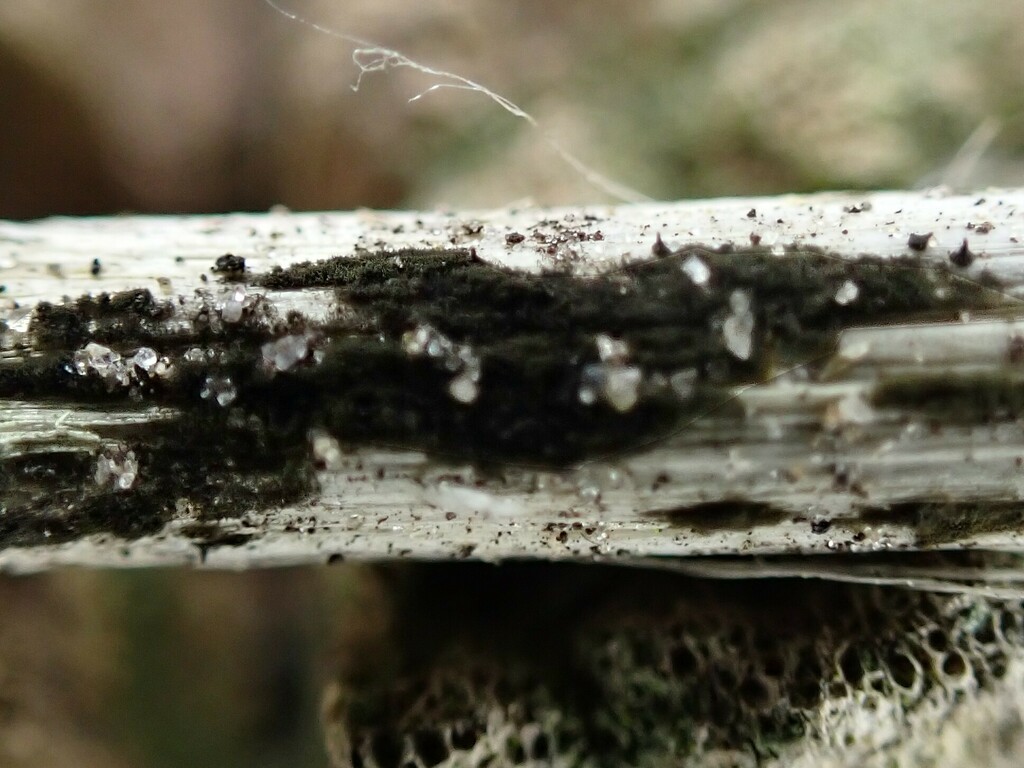
Torula herbarum
Torula herbarum is a darkly-pigmented filamentous fungus. It is often included in the unrelated but morphologically similar group of fungi known as sooty molds. It was first described by German mycologist Christiaan Hendrik Persoon in the genus Monilinia based on similarity to the agent of brown rot of stone fruit but later transferred to the genus Torula by Johann Heinrich Friedrich Link. Conidia of T. herbarum are dark brown or olivaceous colour and have a distinctive shape and number of cells. T. herbarum produces secondary metabolites with cytotoxic activity towards bacteria and human cancer cells.
From the article Torula herbarum on Wikipedia (CC BY-SA), quoted section by section
Range & habitat
T. herbarum is a cosmopolitan species that is most commonly found in temperate climate regions, and exists in most areas with a suitable climate, including: Canada, India, United States of America, Cuba, Kenya, India, etc. It thrives on plant debris, on trees and in soil, often on or in dead herbaceous stems. It is a rot fungus that creates dark brown lesions sometimes in bands. A blight disease of ber, Ziziphus mauritiana, is caused by T. herbarum. In one study, T. herbarum accounted for 47% of the fungi recovered from earthworm casts and 6% of the mycota from non-earthworm associated soils. Less commonly, it can be found on wood and calcareous and siliceous rocks as well. Accordingly, items made out of those materials such as baskets, wood furniture, paper, tiles, linoleum and concrete may contain spores of this species. In autumn, T. herbarum grows on large dry stems of herbs. The main method of transmission is by dissemination of the conidia components of this fungus making them present in the air. Hyphal fragments of T. herbarum have been recovered from marine air above the Mediterranean Sea. T. herbarum is frequently found on plant hosts in the genera: Alnus, Aceuthobium, Bambusa Carya, Impatiens, Juncus, Mesembryanthemum, Pinus, and Yucca. Owing in part to their abundance in the air, conidia of T. herbarum contributing to seasonal fungal allergy in some people. …
Wikipedia: “Habitat and ecology”
In human culture
Torula herbarum was first described by Christiaan Hendrik Persoon under the genus Monilia or Monilinia, in 1801 in Göttingen. In 1809, Johann Heinrich Friedrich Link transferred the fungus to the genus Torula, as T. herbarum. Several forms and variations of T. herbarum have been named, including T. herbarum f. quaternella in 1913 and T. herbarum var. cereicola in 1921.
Wikipedia: “History and taxonomy”
Where it lives
Recorded sightings
—
geo-referenced records in GBIF, from museums, herbaria and field observers.
Drag the globe to turn it. Dots are where records exist, not a range map; darker means more records.
In the stacks
Searching the stacks…
Every page naming Torula herbarum in the Biodiversity Heritage Library →
This page is assembled live from iNaturalist, GBIF, Wikipedia, the Source Library and the Internet Archive. It is not yet part of the hand-edited codex. iNaturalist taxon 352529.