- Fungi Including Lichens
- ›Ascomycete Fungi
- ›budding yeasts
- ›budding yeasts
- ›Budding Yeasts
- ›Dipodascaceae
- ›Geotrichum
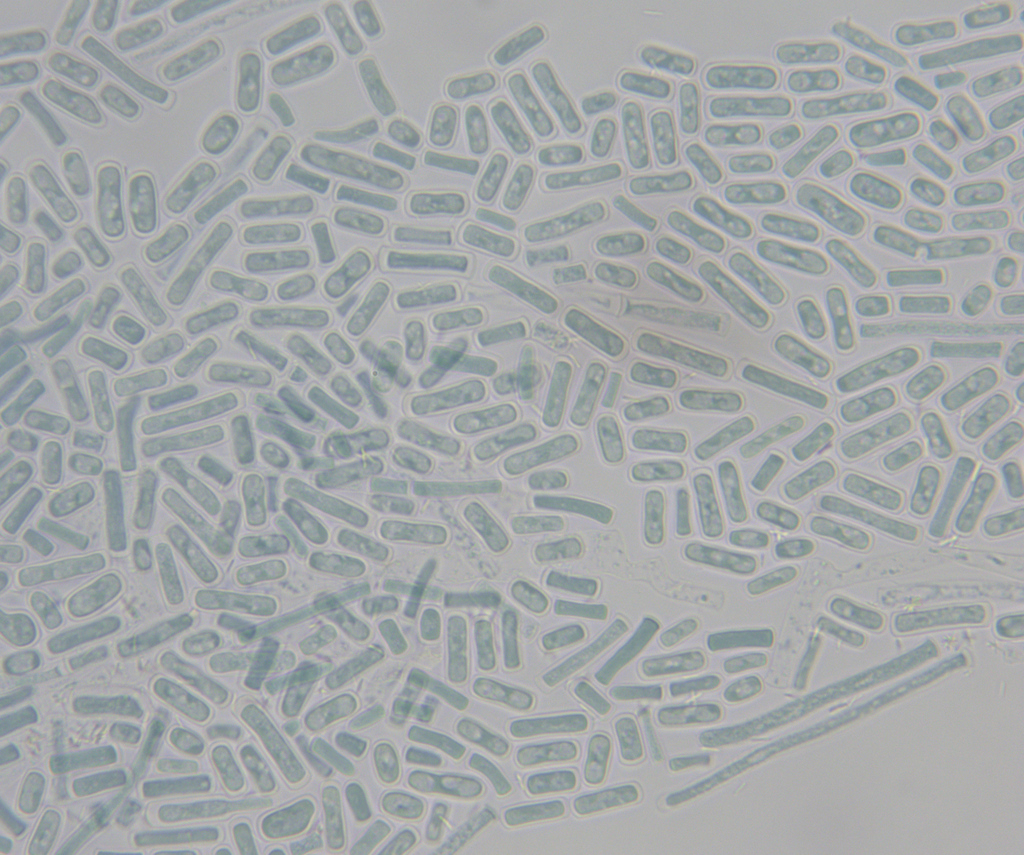
Geotrichum candidum
Geotrichum candidum is a fungus which is a member of the human microbiome, notably associated with skin, sputum, and faeces where it occurs in 25–30% of specimens. It is common in soil and has been isolated from soil collected around the world, in all continents.
G. candidum is the causative agent of the human disease geotrichosis and the plant disease sour rot which infects citrus fruits, tomatoes, carrots, and other vegetables. It can affect harvested fruit of durians such as Durio graveolens.
From the article Geotrichum candidum on Wikipedia (CC BY-SA), quoted section by section
Range & habitat
G. candidum is extremely common in soil and has been isolated from substrates in Canada, United States, Britain, Germany, Austria, India, South Africa, Japan, Brazil and Peru. It is also found as a causal agent in sour rot in citrus fruits— a soft rot associated with the emission of a fruity odour. The fungus is also known as a post-harvest spoilage agent of muskmelon, squash and cucumber. It plays a role in tomato fruit rot when it is stored at 0–5 °C (32–41 °F). It is a naturally occurring colonist of certain dairy products (particularly cheeses) and is sometimes used to inoculate wash-rind and bloomy rind cheeses.
Wikipedia: “Distribution”
At the table
G. candidum can be used commercially to inoculate wash-rinds and bloomy rind cheeses. Cultures can be added to milk, brine or sprayed onto cheese surface. The optimum pH range for growth on cheese ranges from 4.4 to 6.7. The fungus colonizes nearly the entire surface of the cheese during the early stages of ripening. It is found on soft cheeses like Camembert cheese and semi-hard cheese Saint-Nectaire and Reblochon. For the Camembert cheese the fungi grows on the outside of the cheese forming a rind. The fungus is responsible for the uniform, white, velvety coat on Saint-Marcellin cheese. Lipases and proteases from G. candidum release fatty acids and peptides that provide the cheese with distinctive flavors. G. candidum reduces the bitterness in Camembert cheese through the activity of the aminopeptidases that hydrolyze low molecular weight hydrophobic peptides. Aminopeptidases also contributes an aroma in traditional Norman Camembert. The fungus also neutralizes the curd by catabolizing lactic acid produced by bacteria. G. candidum prepares the cheese for colonization of other acid sensitive bacteria such as Brevibacterium. The fungus inhibits growth of the bacteria Listeria monocytogenes. Commercial strains of G. candidum are available for cheese ripening.
Wikipedia: “Commercial uses”
Where it lives
Recorded sightings
—
geo-referenced records in GBIF, from museums, herbaria and field observers.
Drag the globe to turn it. Dots are where records exist, not a range map; darker means more records.
In the stacks
Searching the stacks…
Every page naming Geotrichum candidum in the Biodiversity Heritage Library →
This page is assembled live from iNaturalist, GBIF, Wikipedia, the Source Library and the Internet Archive. It is not yet part of the hand-edited codex. iNaturalist taxon 350849.