- Fungi Including Lichens
- ›Basidiomycete Fungi
- ›Higher Basidiomycetes
- ›Mushrooms, Bracket Fungi, Puffballs, and Allies
- ›Agaricomycetidae
- ›Common Gilled Mushrooms and Allies
- ›Agaricineae
- ›Galeropsidaceae
- ›Panaeolus
- ›Panaeolina
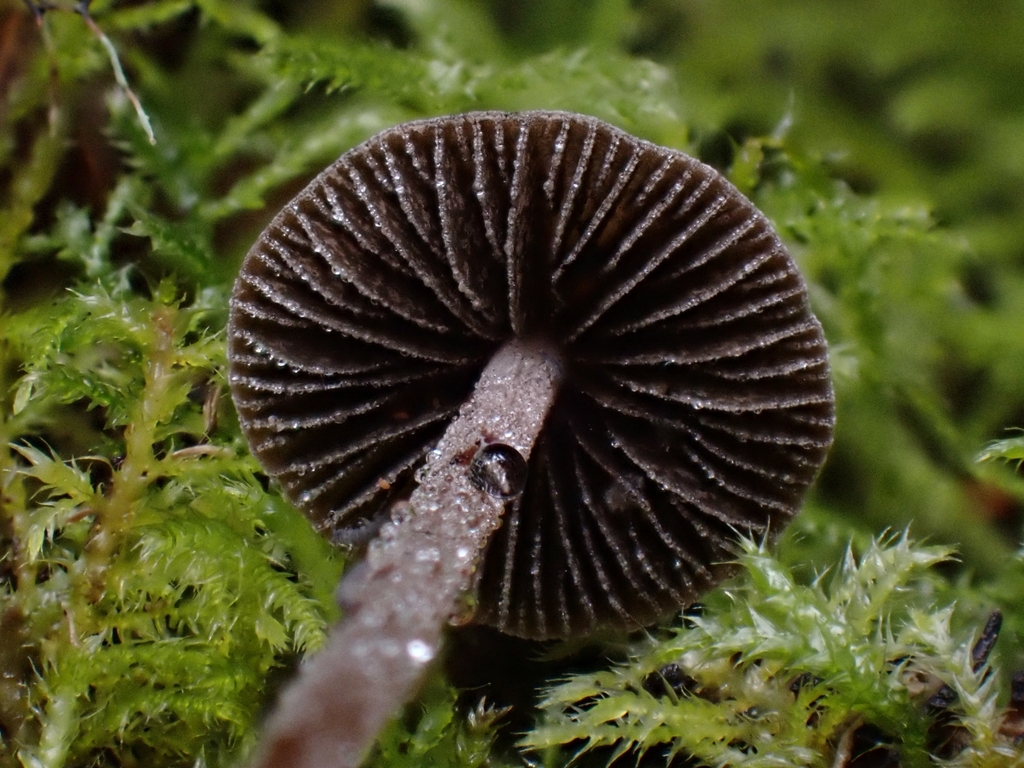
Dewdrop Mottlegill
Panaeolus acuminatus
Panaeolus acuminatus, also known as Panaeolus rickenii, is a species of mushroom in the family Bolbitiaceae.
This species contains small amounts of serotonin, 5-HTP, and tryptophan.
From the article Panaeolus acuminatus on Wikipedia (CC BY-SA), quoted section by section
Description
P. acuminatus is a small brown mushroom that has black spores. It has a cap that is less than 4 cm across, hygrophanous, conic to campanulate to plane, usually with an umbo. The gills are dark purplish black, crowded, with several tiers of intermediate gills. The spores are (11) 13 - 15 (17) x 9 - 11 (12) x (6.5) 7 - 8 (9) micrometers, smooth, black, and shaped like lemons. Cheilocystidia present.
Range & habitat
P. acuminatus grows in grass and dung. It has been found throughout North America and Europe and is very widely distributed.
Wikipedia: “Habitat and distribution”
Where it lives
Recorded sightings
—
geo-referenced records in GBIF, from museums, herbaria and field observers.
Drag the globe to turn it. Dots are where records exist, not a range map; darker means more records.
In the stacks
Searching the stacks…
Every page naming Panaeolus acuminatus in the Biodiversity Heritage Library →
This page is assembled live from iNaturalist, GBIF, Wikipedia, the Source Library and the Internet Archive. It is not yet part of the hand-edited codex. iNaturalist taxon 348990.