- Fungi Including Lichens
- ›Ascomycete Fungi
- ›Sac Fungi and Lichens
- ›Common Lichens
- ›Shield Lichens, Sunburst Lichens, Rosette Lichens, and Allies
- ›shield lichens, rim lichens, and allies
- ›spindles and structured lichens
- ›Cladonia
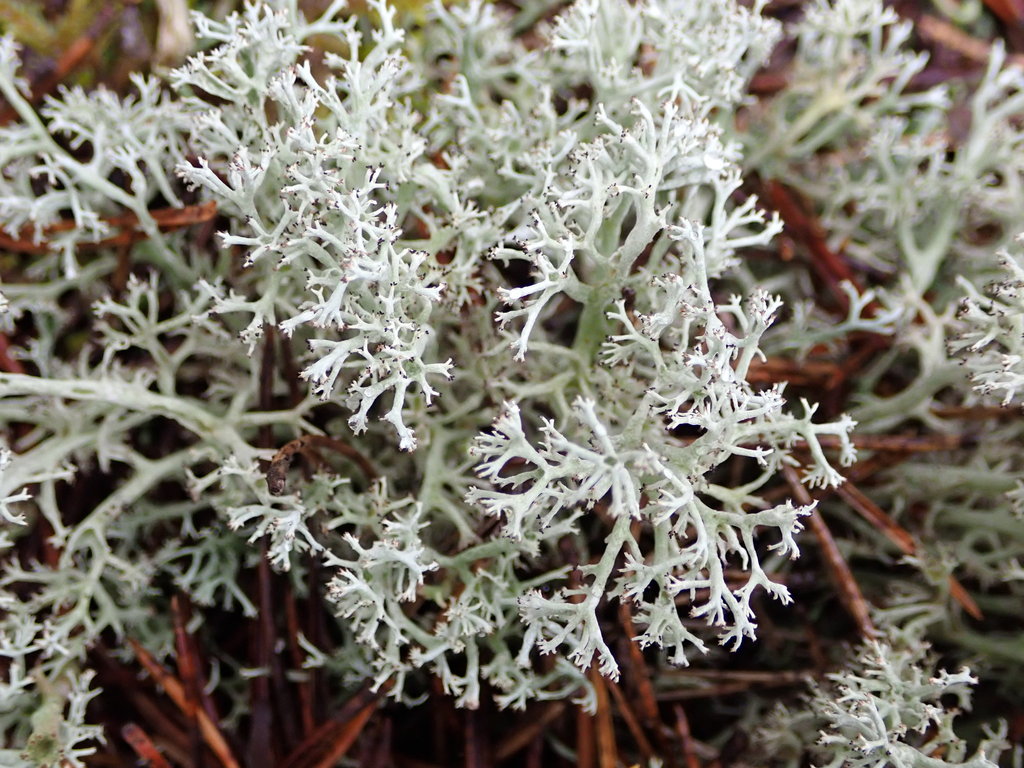
Green Reindeer Lichen
Cladonia arbuscula
Cladonia arbuscula, also referred to as shrubby cup lichen or green reindeer lichen, is a species of cup lichen in the family Cladoniaceae.
From the article Cladonia arbuscula on Wikipedia (CC BY-SA), quoted section by section
Description
The lichen is composed of two thalli; an initial primary squamulose thallus growing across bark in a scaly, flaking pattern, followed by a secondary fruticose thallus (podetium), with cup shaped podetia (4–10 cm tall) bearing terminal ascocarps contained in apothecial structures. The coloring of C. arbuscula varies between subspecies, but is primarily white-gray, pale yellow, or bright green, with darker orange tips where ascocarps are formed. The thallus shows negative results in typical K-tests with no color change.
Range & habitat
C. arbuscula is found throughout the world, tolerating harsh conditions that many vegetative plants cannot. It is widely spread in Canada and the Northern United States (mostly Alaska), but also found in Wyoming, Idaho, and Montana. Although it is relatively uncommon in the Pacific Northwest, it can be found there. Common in Labrador and Newfoundland and found throughout England and Ireland. It has been found in more southern latitudes such as Chile, Tasmania, and New Zealand as well, but is most dominant in northern latitudes. The lichen is considered to be secure in terms of conservation, but in some subspecies there are areas of concern in which the species is declining.
Wikipedia: “Global distribution”
What it does
C. arbuscula can reproduce both asexually and sexually. The asexual reproduction process can occur through fragmentation of the primary thallus in which a small portion of the thallus can regenerate a fully productive new thallus as long as the original portion contains both algal and fungal cells. Asexual spores known as conidia are produced on pycnidia borne at the edges of the podetia cups and are used to reproduce asexually via fragmentation. Due to the microscopic nature of these asexual reproductive elements, not many studies have been done to describe the in depth reproduction of C. arbuscula.
Wikipedia: “Asexual reproduction”
Where it lives
Recorded sightings
—
geo-referenced records in GBIF, from museums, herbaria and field observers.
Drag the globe to turn it. Dots are where records exist, not a range map; darker means more records.
In the stacks
Searching the stacks…
Every page naming Cladonia arbuscula in the Biodiversity Heritage Library →
This page is assembled live from iNaturalist, GBIF, Wikipedia, the Source Library and the Internet Archive. It is not yet part of the hand-edited codex. iNaturalist taxon 320843.