- Fungi Including Lichens
- ›Basidiomycete Fungi
- ›Higher Basidiomycetes
- ›Mushrooms, Bracket Fungi, Puffballs, and Allies
- ›Hymenochaetales
- ›Hymenochaetaceae
- ›Inonotus
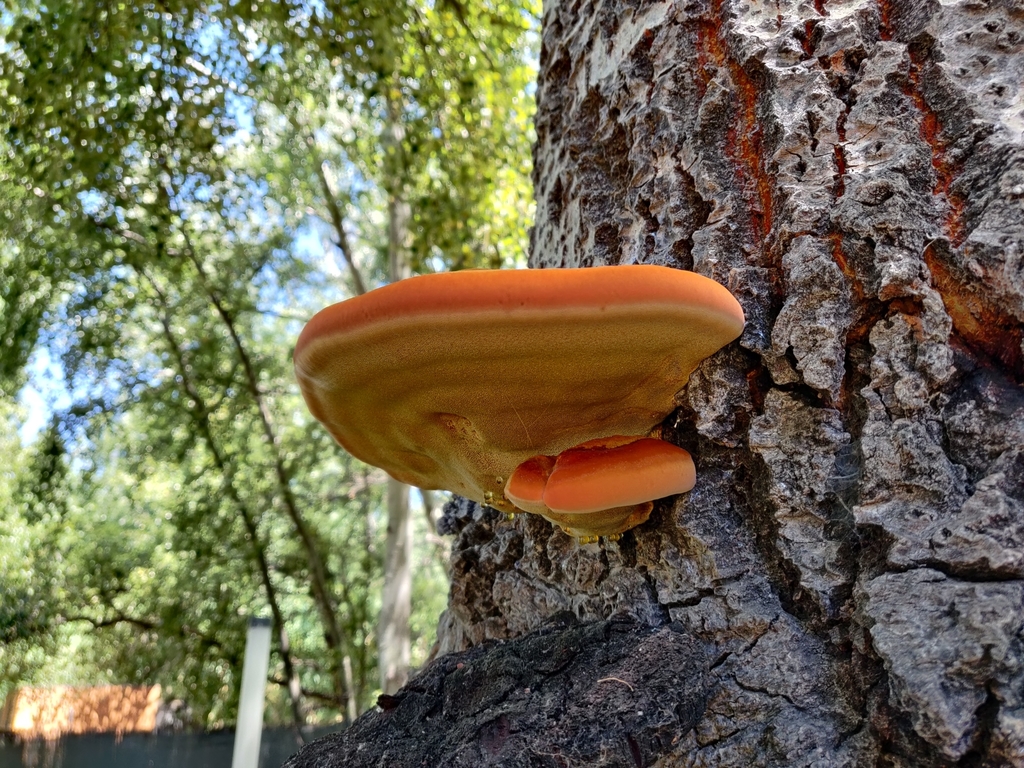
Shaggy Bracket
Inonotus hispidus
Inonotus hispidus, commonly known as shaggy bracket, is a fungus and plant pathogen found in Europe, Asia and North America.
From the article Inonotus hispidus on Wikipedia (CC BY-SA), quoted section by section
Description
The fruit bodies are generally semicircular and lumpy, measuring 10–20 centimetres (4–8 in) across. They are orangish with a lighter margin when fresh, blackening in age. The flesh is orangish and the spore print is brown.
Similar species. Inonotus quercustris is more frequent to the south, with Ischnoderma resinosum and Laetiporus persicinus also being similar.
At the table
This fungus has been used in eastern Asia as a popular remedy for many illnesses like cancer, diabetes, and other stomach ailments. In modern pharmacology, it has aided in lowering blood glucose levels, showing anti-tumor responses and improving overall health in mice.
Wikipedia: “Uses”
Where it lives
Recorded sightings
—
geo-referenced records in GBIF, from museums, herbaria and field observers.
Drag the globe to turn it. Dots are where records exist, not a range map; darker means more records.
In the old herbals & bestiaries

In the stacks
Searching the stacks…
Every page naming Inonotus hispidus in the Biodiversity Heritage Library →
This page is assembled live from iNaturalist, GBIF, Wikipedia, the Source Library and the Internet Archive. It is not yet part of the hand-edited codex. iNaturalist taxon 194483.