- Fungi Including Lichens
- ›Basidiomycete Fungi
- ›Higher Basidiomycetes
- ›Mushrooms, Bracket Fungi, Puffballs, and Allies
- ›Russulales
- ›Milkcaps, Brittlegills and Allies
- ›Russula
- ›Heterophyllidiae
- ›Virescentinae
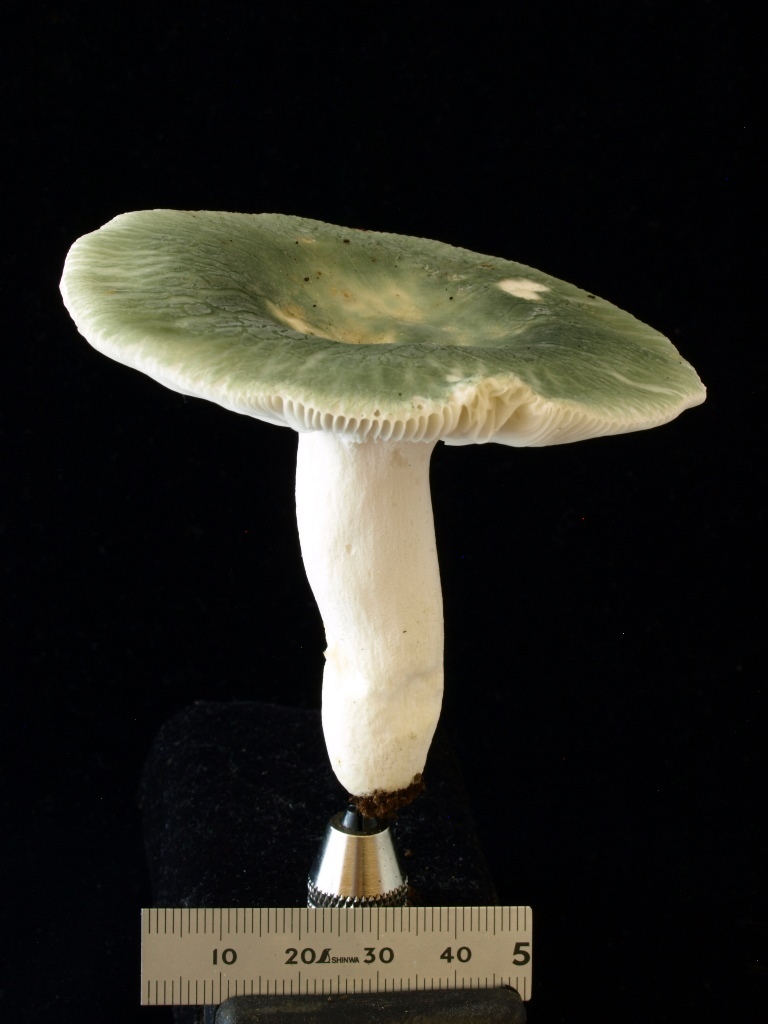
Russula virescens
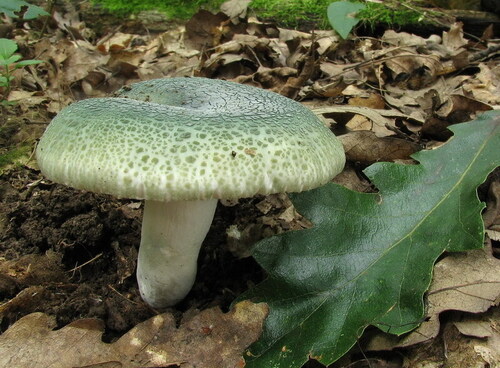
Russula virescens is a basidiomycete mushroom of the genus Russula, and is commonly known as the green-cracking russula, the quilted green russula, or "green brittlegill" (which usually refers to Russula aeruginea). The species was described as new to science in 1774 by Jacob Christian Schaeffer. It can be recognized by its distinctive pale green cap that measures up to 15 cm (6 in) in diameter, the surface of which is covered with darker green angular patches. It has crowded white gills, and a firm, white stipe that is up to 8 cm (3 in) tall and 4 cm (1.6 in) thick. It resembles species such as Russula parvovirescens and R. crustosa.
Its distribution encompasses Eurasia, North Africa, and possibly Central America. It fruits singly or scattered on the ground in both deciduous and mixed forests, forming mycorrhizal associations with broadleaf trees such as oak, European beech, and aspen. In Asia, it associates with several species of tropical lowland rainforest trees of the family Dipterocarpaceae.
2 branches of this group, most-observed first
See this branch on the Wheel of Life →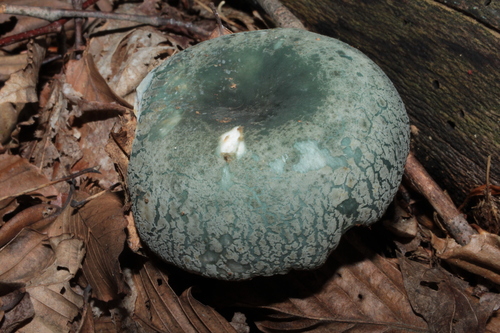
Where it lives
Recorded sightings
—
geo-referenced records in GBIF, from museums, herbaria and field observers.
Drag the globe to turn it. Dots are where records exist, not a range map; darker means more records.
In the stacks
Searching the stacks…
Every page naming Russula virescens in the Biodiversity Heritage Library →
This page is assembled live from iNaturalist, GBIF, Wikipedia, the Source Library and the Internet Archive. It is not yet part of the hand-edited codex. iNaturalist taxon 1640754.