- Fungi Including Lichens
- ›Basidiomycete Fungi
- ›Higher Basidiomycetes
- ›Mushrooms, Bracket Fungi, Puffballs, and Allies
- ›Shelf Fungi
- ›Irpicaceae
- ›Irpex
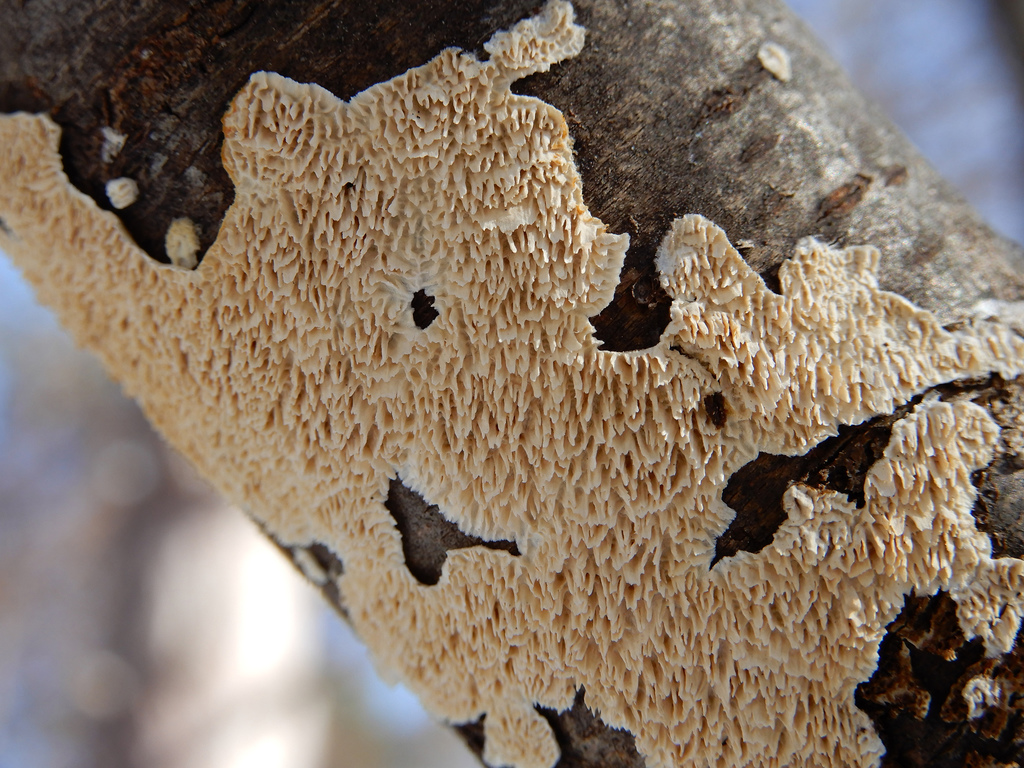
Milk-white Toothed Polypore
Irpex lacteus
Irpex lacteus is a common crust fungus distributed throughout temperate areas of the world. It is the type of the genus Irpex. Irpex lacteus is considered a polypore, but depending on growth conditions it can also produce a hydnoid hymenophore. Due to this variability and abundance of the species it has been described as a new species to science numerous times and subsequently has an extensive synonymy. The complete genome sequence of Irpex lacteus was reported in 2017.
From the article Irpex lacteus on Wikipedia (CC BY-SA), quoted section by section
What it does
Irpex lacteus is a white-rot fungus that inhabits mainly angiosperm branches and trunks. It is one of the most common wood-rotting fungi for instance in urban North America. It is inedible. This fungus has been identified as a cause of pulmonary infections in immuno-compromised humans. It is occasionally eaten by the widespread American pleasing fungus beetle Ischyrus quadripunctatus. Adults of the related beetle Tritoma biguttata biguttata are more rarely recorded from this mushroom, and it does not seem to be a regular food source for them.
Wikipedia: “Ecology”
Where it lives
Recorded sightings
—
geo-referenced records in GBIF, from museums, herbaria and field observers.
Drag the globe to turn it. Dots are where records exist, not a range map; darker means more records.
In the stacks
Searching the stacks…
Every page naming Irpex lacteus in the Biodiversity Heritage Library →
This page is assembled live from iNaturalist, GBIF, Wikipedia, the Source Library and the Internet Archive. It is not yet part of the hand-edited codex. iNaturalist taxon 130910.