- Fungi Including Lichens
- ›Ascomycete Fungi
- ›Sac Fungi and Lichens
- ›Sordariomycetes
- ›Hypocreomycetidae
- ›Hypocreales
- ›Hypocreaceae
- ›Trichoderma
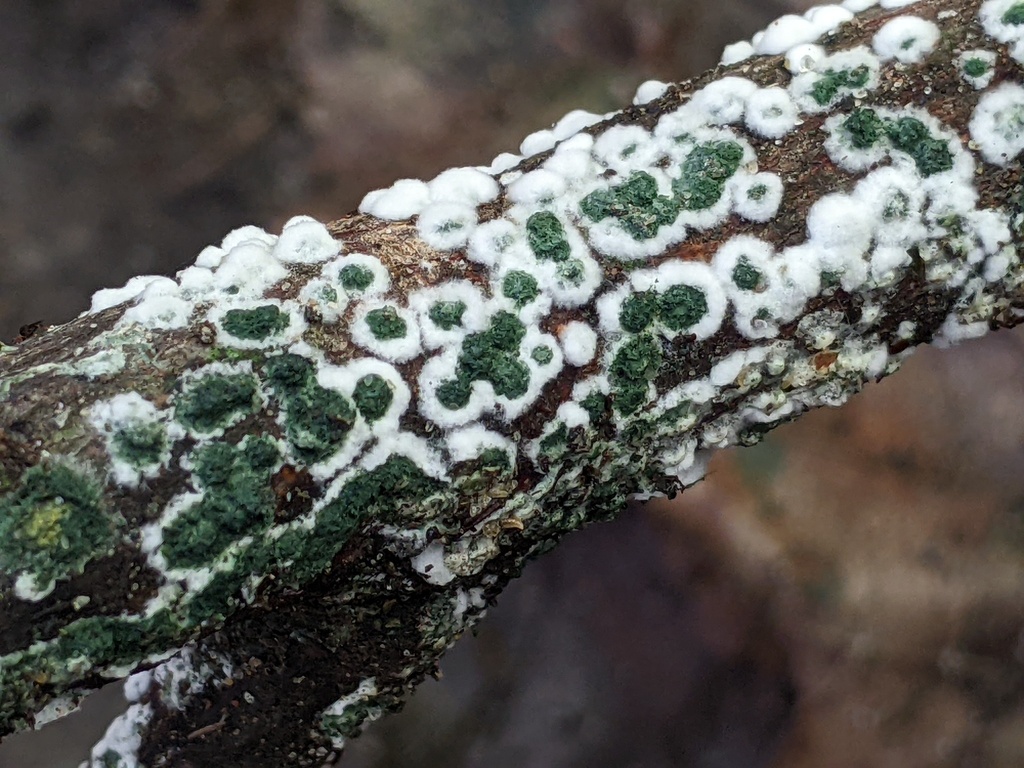
Trichoderma atroviride
Trichoderma atroviride is a filamentous fungal species commonly found in the soil. This fungal species is of particular interest to researchers due to the plethora of secondary metabolites it makes which are used in industry. The genus Trichoderma is known for its ubiquity in almost all soils and being easy to culture. Many Trichoderma's are also avirulent plant symbionts.
From the article Trichoderma atroviride on Wikipedia (CC BY-SA), quoted section by section
Description
Images of T. atroviride growing on plates show green fruiting bodies and light-responsive conidiation. In these pictures they can also be seen growing in concentric circle zones on the face of the agar (see species box image). Trichoderma species are ubiquitously described as having long filamentous hyphae and the ability to germinate on many different substrates. When the fungus grows it starts off as white, but then becomes various shades of green. Conidiophores are generally irregular in shape and number of conidia release and are also photosensitive and release when exposed to light. Finally, Trichoderma are known for their fast growth rates, and ability to colonize most substrates.
Range & habitat
Trichoderma atroviride are fairly ubiquitous organisms, they are found in soils in both tropical and temperate locations around the world. This fungus is found on every continent, and is commonly found in Europe, North and South America and Australia (see range map). T. atroviride is a mycoparasite saprophyte, meaning it parasitizes other fungi and it obtains its food by absorbing dissolved organic matter. T. atroviride are found in many substrates including decaying wood, and fungal fruiting bodies, and are known to be able to use a wide range of substrates for carbon and nitrogen sources. Finally, T. atroviride has a wide temperature survival range from -1 to 35°C.
Wikipedia: “Habitat and ecology”
Where it lives
Recorded sightings
—
geo-referenced records in GBIF, from museums, herbaria and field observers.
Drag the globe to turn it. Dots are where records exist, not a range map; darker means more records.
In the stacks
Searching the stacks…
Every page naming Trichoderma atroviride in the Biodiversity Heritage Library →
This page is assembled live from iNaturalist, GBIF, Wikipedia, the Source Library and the Internet Archive. It is not yet part of the hand-edited codex. iNaturalist taxon 1309010.