- Fungi Including Lichens
- ›Basidiomycete Fungi
- ›Higher Basidiomycetes
- ›Mushrooms, Bracket Fungi, Puffballs, and Allies
- ›Agaricomycetidae
- ›Common Gilled Mushrooms and Allies
- ›Hygrophorineae
- ›Waxcaps and Allies
- ›Hygrophoroideae
- ›Hygrophoreae
- ›Hygrophorus
- ›Colorati
- ›Pudorini
- ›Pudorini
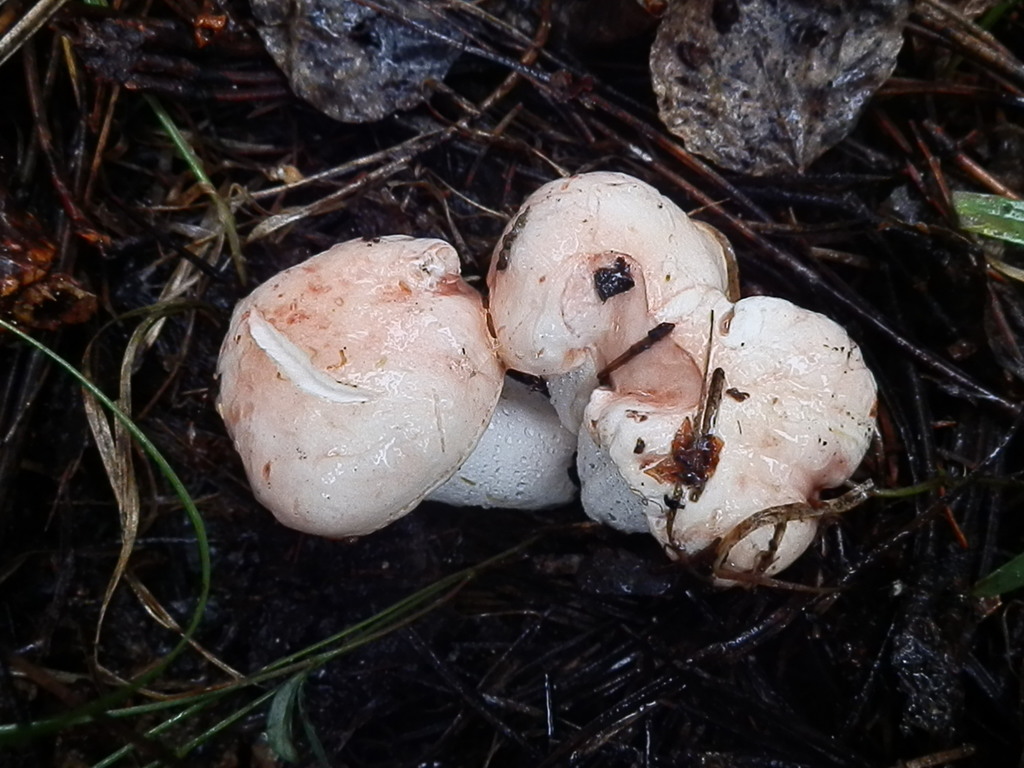
rosy woodwax
Hygrophorus pudorinus
Hygrophorus pudorinus, commonly known as the blushing waxycap, turpentine waxycap, or spruce waxy cap, is a species of fungus in the genus Hygrophorus.
From the article Hygrophorus pudorinus on Wikipedia (CC BY-SA), quoted section by section
Description
The pink to golden cap is 5–12 cm (2–4+3⁄4 in) wide, convex and with a downrolled margin that is lighter in colour. The cap surface is sticky. The pink to yellow-white gills are decurrent. The thick stipe is 4–16 cm (1+5⁄8–6+1⁄4 in) tall and 1–3 cm (3⁄8–1+1⁄8 in) wide. The spore print is white and the oval spores measure 7–10 × 5–6 micrometres. The thick flesh is pale pink or orange to white. The mushroom does not bruise red and has no distinctive odour, though it can taste like turpentine.
Range & habitat
Hygrophorus pudorinus is found in coniferous woodlands under fir and spruce trees across western and northeastern North America; it is particularly common in Canada and the Rocky Mountains. The mushrooms appear in groups or fairy rings in late summer and autumn. They often grow in boggy places in sphagnum moss.
Wikipedia: “Habitat and distribution”
At the table
Despite its taste, it is edible after cooking. Its variable appearance makes identification difficult and hence raises risk of misidentification.
== References ==
Wikipedia: “Uses”
Where it lives
Recorded sightings
—
geo-referenced records in GBIF, from museums, herbaria and field observers.
Drag the globe to turn it. Dots are where records exist, not a range map; darker means more records.
In the stacks
Searching the stacks…
Every page naming Hygrophorus pudorinus in the Biodiversity Heritage Library →
This page is assembled live from iNaturalist, GBIF, Wikipedia, the Source Library and the Internet Archive. It is not yet part of the hand-edited codex. iNaturalist taxon 118323.