- Fungi Including Lichens
- ›Ascomycete Fungi
- ›Sac Fungi and Lichens
- ›Leotiomycetes
- ›Phacidiales
- ›Phacidiaceae
- ›Phacidiopycnis
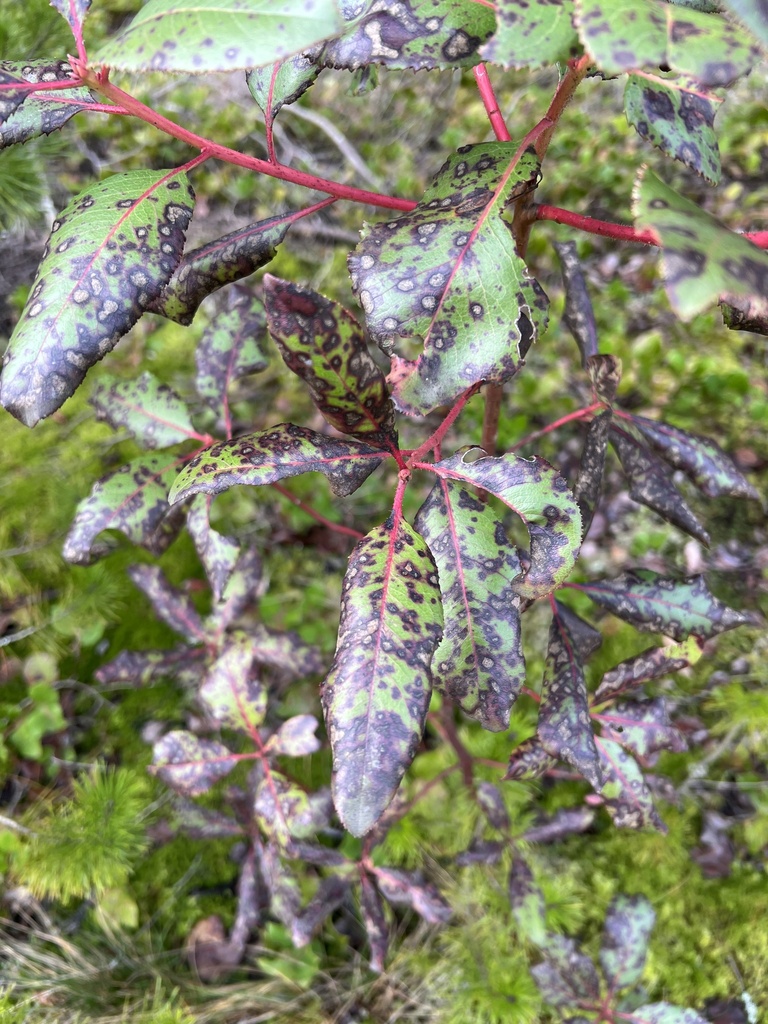
Phacidiopycnis washingtonensis
Phacidiopycnis washingtonensis, is a species of fungus in the family Phacidiaceae, first described by C.L. Xiao & J.D. Rogers in 2005. It is a weak orchard pathogen and a cause of rubbery rot, also known as speck rot, in postharvest apples. First described in North Germany, it affects several apple varieties, including commercially important Jonagold and Elstar. Losses caused by P. washingtonensis during storage are usually below 1% but can reach 5–10% of apples.
P. washingtonensis is a weak canker pathogen to apple trees, but while commercial trees in orchards don't seem to be at risk, crabapple pollinators can be susceptible. The fungus causes small black dots (fruiting bodies) to form on infected twigs and tree branches. Fruiting bodies contain millions of spores which serve as the source for fruit infection.
Where it lives
Recorded sightings
—
geo-referenced records in GBIF, from museums, herbaria and field observers.
Drag the globe to turn it. Dots are where records exist, not a range map; darker means more records.
In the stacks
This page is assembled live from iNaturalist, GBIF, Wikipedia, the Source Library and the Internet Archive. It is not yet part of the hand-edited codex. iNaturalist taxon 1021219.