- Fungi Including Lichens
- ›Ascomycete Fungi
- ›Sac Fungi and Lichens
- ›Sordariomycetes
- ›Hypocreomycetidae
- ›Hypocreales
- ›Nectriaceae
- ›Fusarium
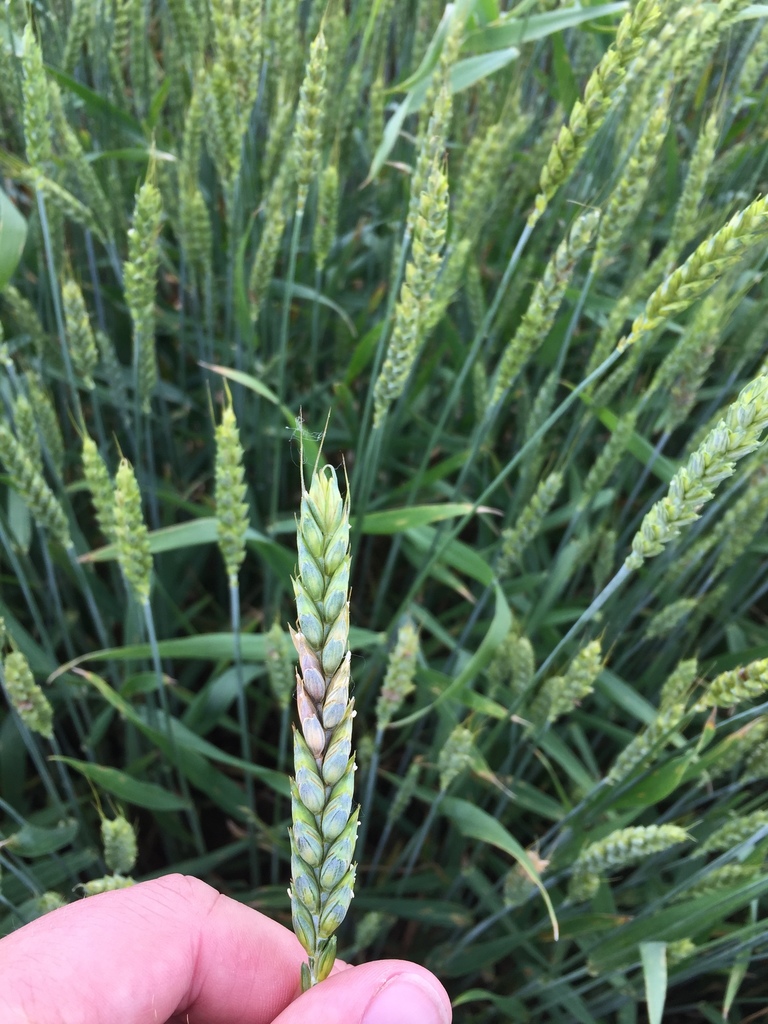
Fusarium graminearum
Gibberella zeae, also known by the name of its anamorph Fusarium graminearum, is a fungal plant pathogen which causes fusarium head blight (FHB), a devastating disease on wheat and barley. The pathogen is responsible for billions of dollars in economic losses worldwide each year. Infection causes shifts in the amino acid composition of wheat, resulting in shriveled kernels and contaminating the remaining grain with mycotoxins, mainly deoxynivalenol (DON), which inhibits protein biosynthesis; and zearalenone, an estrogenic mycotoxin. These toxins cause vomiting, liver damage, and reproductive defects in livestock, and are harmful to humans through contaminated food. Despite great efforts to find resistance genes against F. graminearum, no completely resistant variety is currently available. Research on the biology of F. graminearum is directed towards gaining insight into more details about the infection process and reveal weak spots in the life cycle of this pathogen to develop fungicides that can protect wheat from scab infection.
From the article Gibberella zeae on Wikipedia (CC BY-SA), quoted section by section
What it does
F. graminearum is a haploid homothallic ascomycete. The fruiting bodies, perithecia, develop on the mycelium and give rise to ascospores, which land on susceptible parts of the host plant to germinate. The fungus causes fusarium head blight on wheat, barley, and other grass species, as well as ear rot on corn. The primary inocula are the ascospores, sexual spores which are produced in the perithecia. Spores are forcibly discharged and can germinate within six hours upon landing on the plant surface. The scab disease is monocyclic; after one cycle of infection with ascospores, the fungus produces macroconidia by asexual reproduction. These structures overwinter in the soil or in plant debris on the field and give rise to the mycelium in the next season.
Wikipedia: “Life cycle”
Where it lives
Recorded sightings
—
geo-referenced records in GBIF, from museums, herbaria and field observers.
Drag the globe to turn it. Dots are where records exist, not a range map; darker means more records.
In the stacks
Searching the stacks…
Every page naming Fusarium graminearum in the Biodiversity Heritage Library →
This page is assembled live from iNaturalist, GBIF, Wikipedia, the Source Library and the Internet Archive. It is not yet part of the hand-edited codex. iNaturalist taxon 1007775.