 NL·0194
Herbarium of the Nature Library
- Name
- Psilocybe cubensis
- Family
- Hymenogastraceae
- Native to
- Pantropical and subtropical; grows on cattle dung in the Americas, Southeast Asia, India and Australia
- Habitat
- Tropical pasture, Subtropical grassland
Golden cap (magic mushroom)
Psilocybe cubensis
Also calledHongo de San Isidro (Mexican Spanish) · Cogumelo mágico (Portuguese) · Magic mushroom (English)
A golden-capped, dung-loving mushroom that bruises blue. It is the world's most widely grown psilocybin mushroom. Psilocybin, the compound it carries, is in late-stage clinical trials for depression, and it is illegal to possess in most countries.
Psilocybe cubensis, commonly known as the magic mushroom, shroom, golden halo, cube, gold cap, or bluestain smoothcap, is a species of psilocybin mushroom of moderate potency whose principal active compounds are psilocybin and psilocin. It belongs to the fungus family Hymenogastraceae and was previously known as Stropharia cubensis. It is the best-known psilocybin mushroom due to its wide distribution and ease of cultivation. Wikipedia
What it can do
- iProduces psilocybin, which the body converts to psilocin, a serotonin 5-HT2A receptor agonist
- iiBruises blue-black from oxidised and polymerised psilocin
- iiiGrows on the dung of cattle and water buffalo, which spread its spores
- ivIts spores survive passage through a cow's gut
At the table
Not a food. It causes strong hallucinations, anxiety and panic, raised heart rate and impaired judgement, which can lead to dangerous accidents. It is controlled by law in most countries. Foragers have died after mistaking deadly amatoxin-containing Galerina marginata or Pholiotina rugosa (P. filaris) for Psilocybe; non-psychoactive Panaeolus and Agrocybe also grow on dung.
In the medicine cabinet
| Tradition | Use |
|---|---|
| Mazatec ceremony (Oaxaca, Mexico) | Psilocybe mushrooms (traditionally other species, e.g. P. mexicana and P. caerulescens) used in velada healing rituals |
| Modern clinical psychiatry | Synthetic psilocybin with psychological support, trialled for treatment-resistant depression, end-of-life distress and addiction |
Weight of evidence
Moderate. Some clinical trials with promising but limited or mixed results.
Active compounds
psilocybin, psilocin, baeocystin, norbaeocystin
Fruiting body & spores
Spores
Spore print dark purple-brown to purple-black; spores ellipsoid to subellipsoid, thick-walled with a germ pore, about 11–17 × 7–12 µm
- Dispersal
- Wind; also passes through grazing animals and lands in dung
Where it lives
Recorded sightings
—
geo-referenced records in GBIF, from museums, herbaria and field observers.
Native range
Pantropical and subtropical; grows on cattle dung in the Americas, Southeast Asia, India and Australia
Drag the globe to turn it. Dots are where records exist, not a range map; darker means more records.
In the old herbals & bestiaries
No plate in the Source Library names this exact species, so these show its closest relatives as the old naturalists drew them: same genus, or the same kind of plant. Click a plate to read the page it came from, with translation.

Illustrations of British Mycology, First Series
Relative · Anna Maria Hussey (1805-1853) · n.d. · p.380

History of the Fungi of the Kingdom of Naples
Relative · Vincenzo Briganti · 1848 · p.256

Histoire des Champignons de la France, Vol 2
Relative · Pierre Bulliard · 1791 · p.263

Illustrations of Fungi which Grow in Bavaria and the Palatinate around Ratisbon, Vols 1–2
Relative · Jacob Christian Schaeffer; C.H. Persoon (ed.) · 1800 · p.137

Illustrations of Fungi which Grow in Bavaria and the Palatinate around Ratisbon, Vols 1–2
Relative · Jacob Christian Schaeffer; C.H. Persoon (ed.) · 1800 · p.177

History of the Fungi of the Kingdom of Naples
Relative · Vincenzo Briganti · 1848 · p.260

Iconography of the Mushrooms of Paulet
Relative · J.H. Léveillé; plates by Paulet · 1855 · p.480

Histoire des Champignons de la France, Vol 2
Relative · Pierre Bulliard · 1791 · p.237

Coloured Figures of English Fungi or Mushrooms
Relative · James Sowerby · 1797 · p.750

Coloured Figures of English Fungi or Mushrooms
Relative · James Sowerby · 1797 · p.888
In the stacks
Searching the stacks…
Every page naming Psilocybe cubensis in the Biodiversity Heritage Library →
Marginalia
R. Gordon Wasson's 1957 Life magazine article 'Seeking the Magic Mushroom', about the Mazatec curandera María Sabina, introduced psilocybin mushrooms to the West. Albert Hofmann isolated psilocybin in 1958. P. cubensis itself was first described from Cuba in 1906, as Stropharia cubensis.
Curiosity
'Teonanácatl', the Nahuatl name recorded by 16th-century Spanish friars, is often translated 'flesh of the gods'.
Kinship
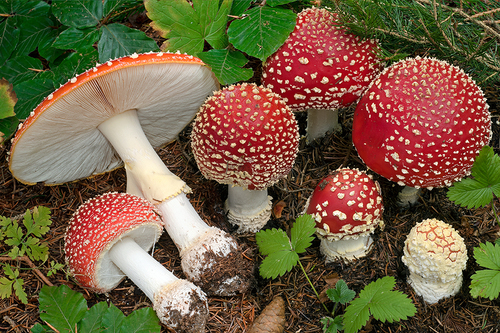
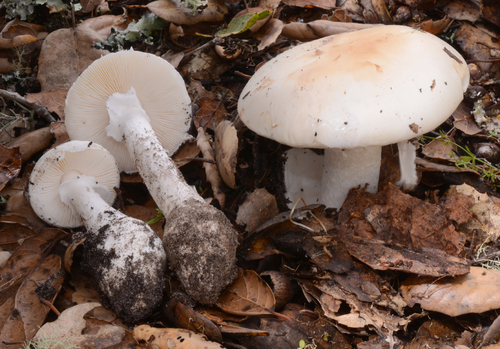
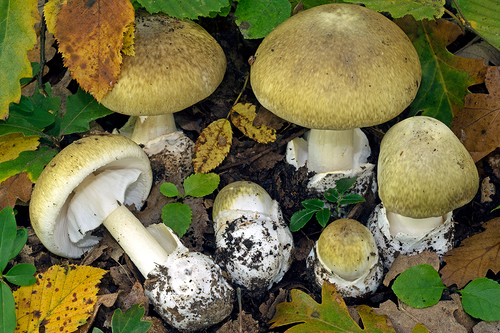


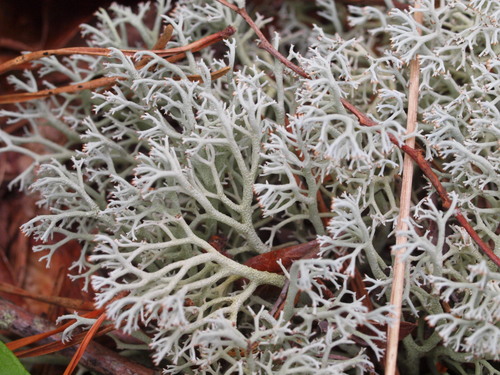
Photographs: iNaturalist contributors under the licences shown. Records: GBIF.org. Historical plates: Source Library (CC BY-SA 4.0; originals public domain). Summary text: Nature Library editors and Wikipedia (CC BY-SA). Medicinal and edibility notes are historical and educational, not advice. iNaturalist taxon 328244.