 NL·0204
Herbarium of the Nature Library
- Name
- Ganoderma lingzhi
- Family
- Polyporaceae
- Native to
- East Asia (China, Korea, Japan, Taiwan); widely cultivated
- Habitat
- Temperate forest, Subtropical broadleaf forest
Lingzhi (reishi)
Ganoderma lingzhi
Also calledLingzhi 灵芝 (Chinese) · Reishi / Mannentake (Japanese) · Yeongji (Korean) · Linh chi (Vietnamese) · Mushroom of immortality (English)
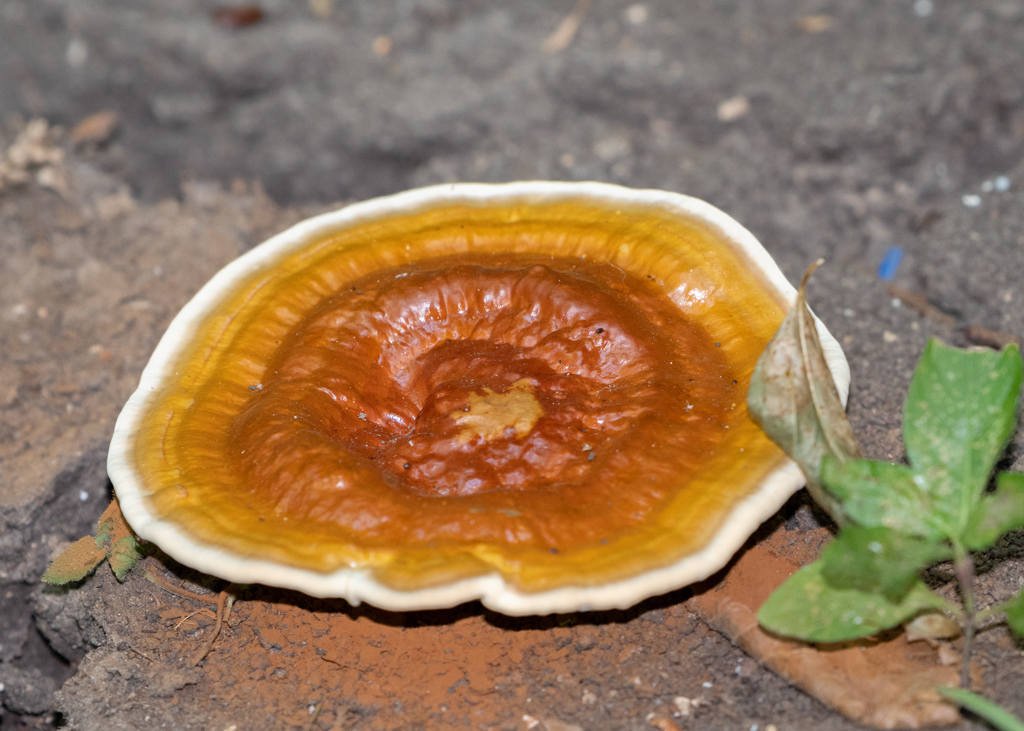
A glossy, lacquer-red bracket on a side stalk. For two thousand years it has stood in East Asian art for longevity and immortality. DNA studies show most commercial 'reishi' is this East Asian species, not the European Ganoderma lucidum whose name it long carried.
Lingzhi, also known as reishi, is a polypore fungus native to East Asia belonging to the genus Ganoderma. Wikipedia
What it can do
- iCauses white rot in hardwood stumps and roots
- iiProduces more than 150 triterpenoids (ganoderic acids), which make it intensely bitter
- iiiIts varnished surface comes from a resinous crust that forms as the bracket grows
- ivGrows into antler shapes instead of caps when kept in high carbon dioxide
At the table
Eatensliced fruiting body (decoction or tea) · extracts
Too woody to eat. It is simmered as a bitter tea or taken as an extract. There are case reports of liver toxicity linked to powdered reishi products. Many products contain other Ganoderma species, and some contain only mycelium grown on grain.
In the medicine cabinet
| Tradition | Use |
|---|---|
| Traditional Chinese medicine | A 'superior' tonic in the Shennong Bencao Jing, for calming the spirit, longevity and vitality |
| Japanese and Korean folk medicine | Tea for fatigue, sleep problems and general resilience |
| Modern integrative oncology | Studied as an adjunct to cancer treatment for immune markers and quality of life |
Weight of evidence
Traditional. Long historical use; little or no modern clinical evidence.
Active compounds
ganoderic acids (triterpenoids), β-D-glucans, ganodermanontriol
Fruiting body & spores
Spores
Spore print brown; spores ovoid with a truncated tip, double-walled with an ornamented inner wall, about 9–12 × 6–8 µm
- Dispersal
- Wind; mature brackets dust nearby surfaces with cocoa-brown spores
How to cultivate it
Hardiness (USDA zones)
- Light
- Indirect light
- Water
- High humidity, 85–95%
- Soil
- Hardwood logs (oak, maple) or supplemented hardwood sawdust
- Propagation
- Sawdust or plug spawn
- To harvest
- 2–4 months on sawdust; logs fruit in the first or second summer
- Climates
- Temperate, Subtropical
- 1Inoculate sterilised hardwood sawdust (or fresh-cut short logs) with spawn
- 2Incubate at 24–29 °C until fully colonised
- 3Fruit at 24–28 °C with high humidity; keep the air still and CO₂ high for antlers, or ventilate for caps
- 4Harvest when the white growing edge turns red-brown and spores begin to drop; dry and slice for tea
Where it lives
Recorded sightings
—
geo-referenced records in GBIF, from museums, herbaria and field observers.
Native range
East Asia (China, Korea, Japan, Taiwan); widely cultivated
Drag the globe to turn it. Dots are where records exist, not a range map; darker means more records.
In the old herbals & bestiaries
Woodcuts and engravings matched from the Source Library’s scanned books by name. Plates marked “relative” show a close kin rather than this exact species. Click a plate to read the page it came from, with translation.


In the stacks
Searching the stacks…
Every page naming Ganoderma lingzhi in the Biodiversity Heritage Library →
Marginalia
The Shennong Bencao Jing (c. 1st–2nd century CE) lists lingzhi among the highest grade of herbs. Han dynasty courts recorded its appearance as an auspicious omen. The cloud-shaped ruyi sceptre of Chinese art is modelled on its form.
Curiosity
The scientific name is a 2012 description; before that, East Asian reishi was misfiled for over a century under the name of a European mushroom.
Kinship


Photographs: iNaturalist contributors under the licences shown. Records: GBIF.org. Historical plates: Source Library (CC BY-SA 4.0; originals public domain). Summary text: Nature Library editors and Wikipedia (CC BY-SA). Medicinal and edibility notes are historical and educational, not advice. iNaturalist taxon 480130.