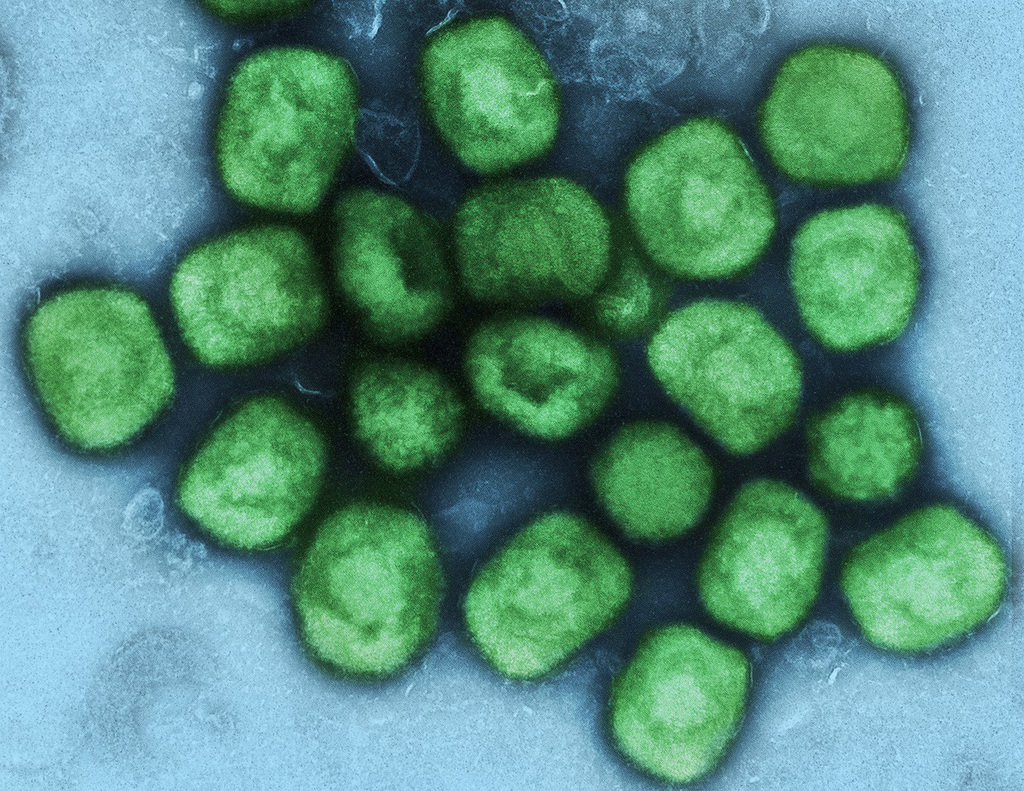
mpox virus
Monkeypox virus
The monkeypox virus (MPV, MPXV, or hMPXV) is a species of double-stranded DNA viruses that causes mpox disease in humans and other mammals. It is a zoonotic virus belonging to the Orthopoxvirus genus, making it closely related to the variola, cowpox, and vaccinia viruses. MPV is oval, with a lipoprotein outer membrane. Its genome is approximately 190 kb.
Smallpox and monkeypox viruses are both orthopoxviruses, and the smallpox vaccine is effective against mpox if given within 3–5 years before the disease is contracted. Symptoms of mpox in humans include a rash that forms blisters and then crusts over, fever, and swollen lymph nodes. The virus is transmissible between animals and humans by direct contact to the lesions or via bodily fluids.
From the article Monkeypox virus on Wikipedia (CC BY-SA), quoted section by section
What it does
As an Orthopoxvirus, MPV replication occurs entirely in the cell cytoplasm within 'factories' – created from the host rough endoplasmic reticulum (ER) – where viral mRNA transcription and translation also take place. The factories are also where DNA replication, gene expression, and assembly of mature virions (MV) are located. MPV virions (MVs) are able to bind to the cell surface with the help of viral proteins. Virus entry into the host cell plasma membrane is dependent on a neutral pH, otherwise entry occurs via a low-pH dependent endocytic route. The MV of the monkeypox virus has an Entry Fusion Complex (EFC), allowing it to enter the host cell after attachment. The viral mRNA is translated into structural virion protein by the host ribosomes. Gene expression begins when MPV releases viral proteins and enzymatic factors that disable the cell. Mature virions are infectious. However, they will stay inside the cell until they are transported from the factories to the Golgi/endosomal compartment. Protein synthesis allows for the ER membrane of the factory to dismantle, while small lipid-bilayer membranes will appear to encapsulate the genomes of new virions, now extracellular viruses (EVs). The VPS52 and VPS54 genes of the GARP complex, which is important for transport, are necessary for wrapping the virus, and formation of EVs. …
Wikipedia: “Replication and life cycle”
In human culture
Monkeypox virus was first identified by Preben von Magnus in Copenhagen, Denmark, in 1958 in crab-eating macaque monkeys (Macaca fascicularis) being used as laboratory animals. The virus was originally given the name monkeypox virus because it had been isolated from monkeys; subsequent research reveals that monkeys are not the main host. Other small mammals in the tropical forests of Central and West Africa are suspected to form a natural reservoir. The first human infection was diagnosed 1970, in the Democratic Republic of Congo. Small viral outbreaks with secondary human-to-human infection occur routinely in endemic areas of Central Africa; the primary route of infection is thought to be contact with the infected animals or their bodily fluids. The first reported outbreak in humans outside of Africa occurred in 2003 in the United States; it was traced to Gambian pouched rats which had been imported as exotic pets. There have subsequently been a number of outbreaks to regions outside of the endemic areas in Central Africa, and 2 public health emergencies of international concern, the 2022–2023 mpox outbreak and the 2023–2026 mpox epidemic. In August 2024, it was reported that the UAE will donate Monkeypox vaccines to the Democratic Republic of Congo, Nigeria, South Africa, Ivory Coast, and Cameroon.
Wikipedia: “History”
Where it lives
Recorded sightings
—
geo-referenced records in GBIF, from museums, herbaria and field observers.
Drag the globe to turn it. Dots are where records exist, not a range map; darker means more records.
In the stacks
Searching the stacks…
Every page naming Monkeypox virus in the Biodiversity Heritage Library →
This page is assembled live from iNaturalist, GBIF, Wikipedia, the Source Library and the Internet Archive. It is not yet part of the hand-edited codex. iNaturalist taxon 1145182.